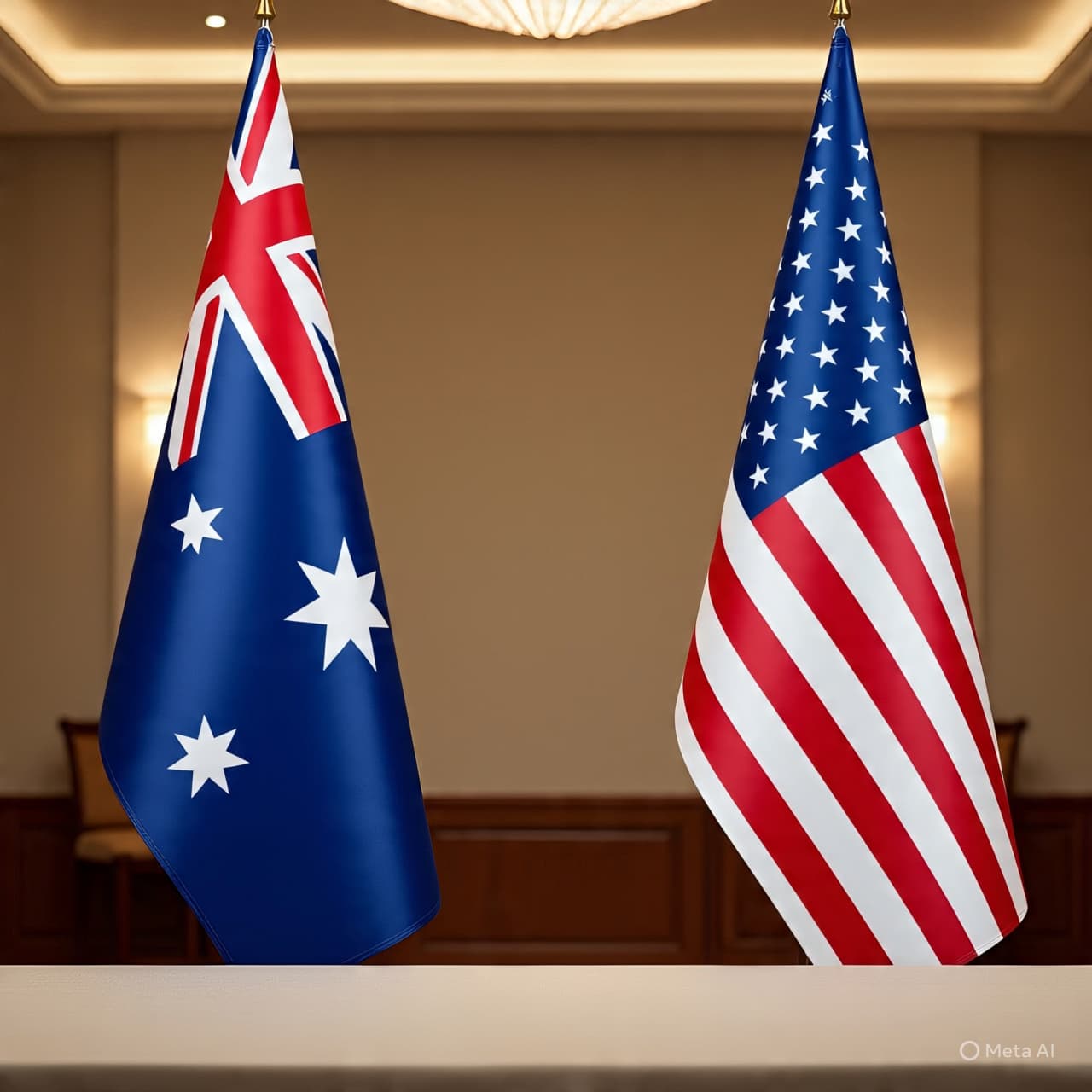
Trade policy often moves like weather—announced in forecasts, felt in markets, and discussed in offices where strategy takes shape. When new tariffs are proposed, governments begin reviewing charts, agreements, and diplomatic channels, considering how best to navigate the shifting currents of global commerce.
Officials in Australia have indicated that they will “examine all options” in response to newly announced 15% tariffs attributed to Donald Trump. The statement reflects a measured approach to assessing trade implications while maintaining engagement with longstanding economic partners.
Tariffs—taxes imposed on imported goods—can influence pricing, supply chains, and bilateral trade balances. When announced, they often prompt consultations among trade ministries, industry representatives, and diplomatic advisers. In Australia’s case, reviewing available options may involve analyzing existing trade agreements, potential exemptions, and discussions under international trade frameworks.
The economic relationship between Australia and the United States has historically included cooperation across sectors such as agriculture, technology, defense, and services. Both countries participate in broader regional and global economic systems that emphasize rules-based trade. When changes arise, governments typically evaluate their impact on exporters, importers, and domestic industries.
An announcement of new tariffs can affect industries differently. Exporters may assess competitiveness in U.S. markets, while policymakers consider measures to support affected sectors. Options available to governments may include diplomatic negotiations, engagement through trade bodies, or internal policy adjustments aimed at reducing economic disruption.
Trade discussions between allies often continue through formal channels, even amid policy differences. Statements indicating that “all options” are under examination generally signal a willingness to respond strategically rather than react immediately. Such language is common in international economic exchanges, where measured responses help maintain stability while negotiations proceed.
In global commerce, tariff decisions can also influence market sentiment. Investors and businesses monitor developments closely, as adjustments in trade policy may affect production costs and pricing structures. Governments, in turn, consider both short-term and long-term implications before implementing countermeasures or pursuing exemptions.
Australia’s trade architecture includes multiple agreements with regional and international partners. Any review of potential responses would likely consider these existing commitments and how they align with broader economic goals. The process of examining options typically involves interdepartmental consultations and assessments of economic data.
While policy announcements can introduce uncertainty, diplomatic dialogue remains a central tool in addressing trade disagreements. Engagement between economic counterparts provides space to clarify intentions and explore solutions that balance national interests with international cooperation.
For now, the focus in Australia appears to be on analysis and evaluation. Officials have framed their approach as comprehensive, reflecting the importance of stable trade relations and predictable policy environments. As discussions continue, both countries are likely to rely on established communication channels to manage the evolving situation.
Trade policy, like other elements of international relations, unfolds through a series of steps—announcement, assessment, and response. In this instance, the examination of options marks the beginning of that sequence, setting the stage for further dialogue and potential adjustments in the days ahead.
AI Image Disclaimer The visuals provided are AI-generated and intended as conceptual representations, not real photographs.
Sources Reuters Associated Press BBC News The Australian Financial Review Department of Foreign Affairs and Trade (Australia)
Published by Banx Network. This article is part of the Banx decentralized media programme, powered by the BXE token on the XRP Ledger.