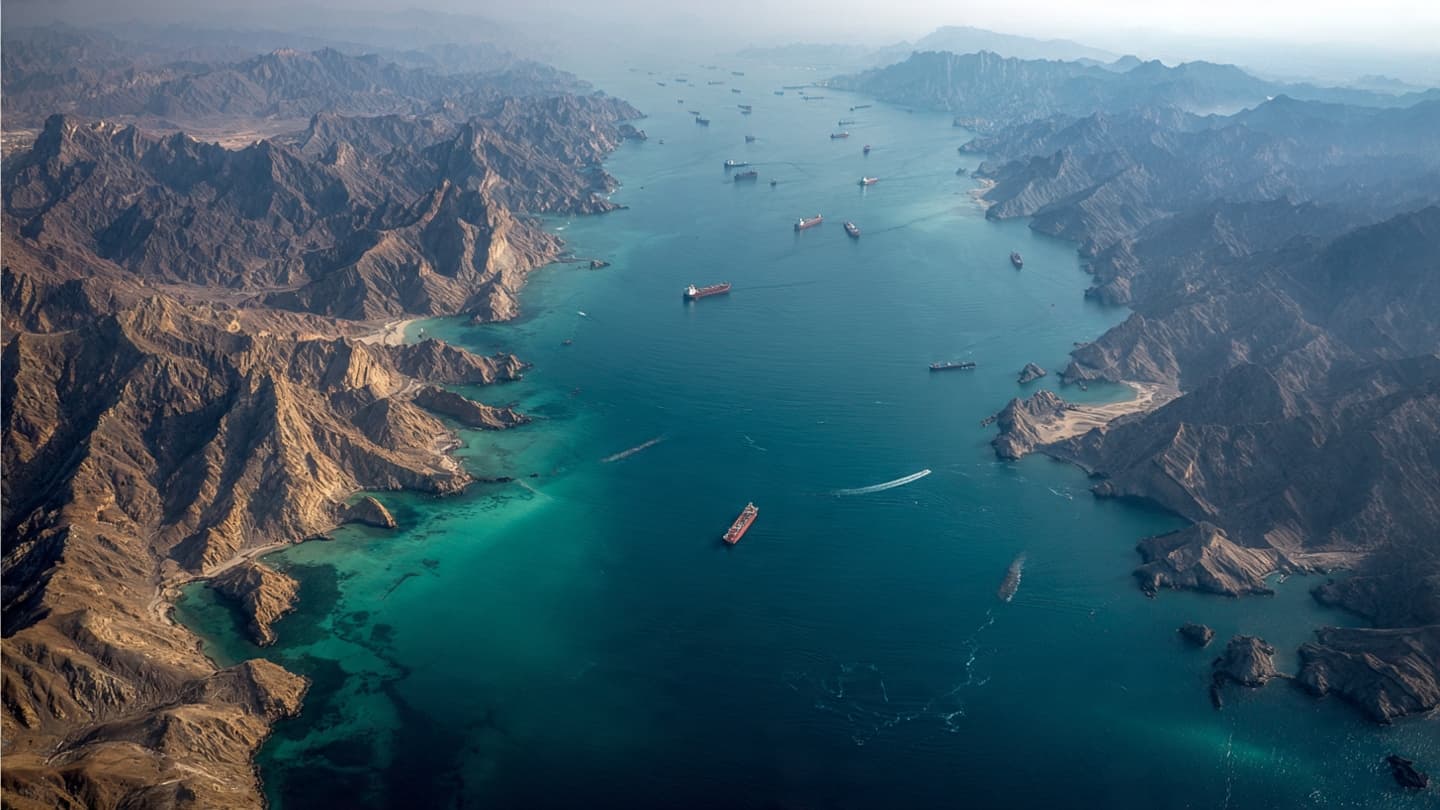
Between the Iranian mainland and the Arabian Peninsula, the Strait of Hormuz stretches like a narrow gateway connecting the energy-rich region to the world's oceans. Every ship that passes through carries more than just cargo; it carries a part of the long global trade chain.
Now, that gateway is increasingly filled with rules and uncertainties. Iran has expanded restrictions on ships deemed non-compliant with navigation regulations in the Strait of Hormuz, adding pressure to a maritime route already facing disruptions due to prolonged conflicts.
In early September, Iranian authorities added 11 ships to the blacklist. With this addition, the total number of ships on the list has risen to 56. The listed vessels include crude oil tankers, LNG and LPG carriers, as well as oil product carriers.
Iran had previously stated that ships violating navigation rules could face fines, confiscation, or detention. Tehran has also warned other vessels that conduct cargo transfers with ships already on the restricted list.
This move comes as shipping activity in Hormuz has already seen a decline. Vessel tracking data cited by Reuters shows that only seven commodity ships passed through the strait on Wednesday, down from 12 ships the day before and below the 10-day average of 14 ships.
Among the ships exiting the strait was a very large crude carrier carrying nearly two million barrels of crude oil. However, no LNG carriers were recorded leaving on that day. This situation illustrates how sensitive energy flows are to changes in security in the region.
Before the conflict, Hormuz was one of the world's most important energy routes, with about one-fifth of global oil shipments passing through the area. As traffic shrinks, shipping companies must reassess risks, insurance, fuel costs, and travel times.
Travel costs have also increased. Reuters reported that war risk premiums and insurance costs can account for a significant portion of a cargo's value, while the total transit costs for ships through the area can reach millions of dollars. Some companies have even chosen to avoid the route when the risk calculations no longer align with the benefits.
However, global energy trade does not simply stop. Several Gulf countries have begun using alternative export routes, while markets seek other supply sources. This adaptation means that the impact of Hormuz disruptions is not entirely translated into greater global shortages, although physical markets remain under pressure.
Ultimately, the Strait of Hormuz once again demonstrates how thin the line is between trade routes and geopolitical uncertainty. Ships are still moving, but with more calculations. Amid the sea currents and long coastlines, each journey now carries new questions about costs, security, and the direction of global energy trade.
Image Disclaimer: The visuals in this article are AI-generated conceptual illustrations regarding shipping and energy trade in the Strait of Hormuz, not actual photos of the ships or restrictions reported.
Sources: Reuters Persian Gulf Strait Authority
Published by Banx Network. This article is part of the Banx decentralized media programme, powered by the BXE token on the XRP Ledger.