
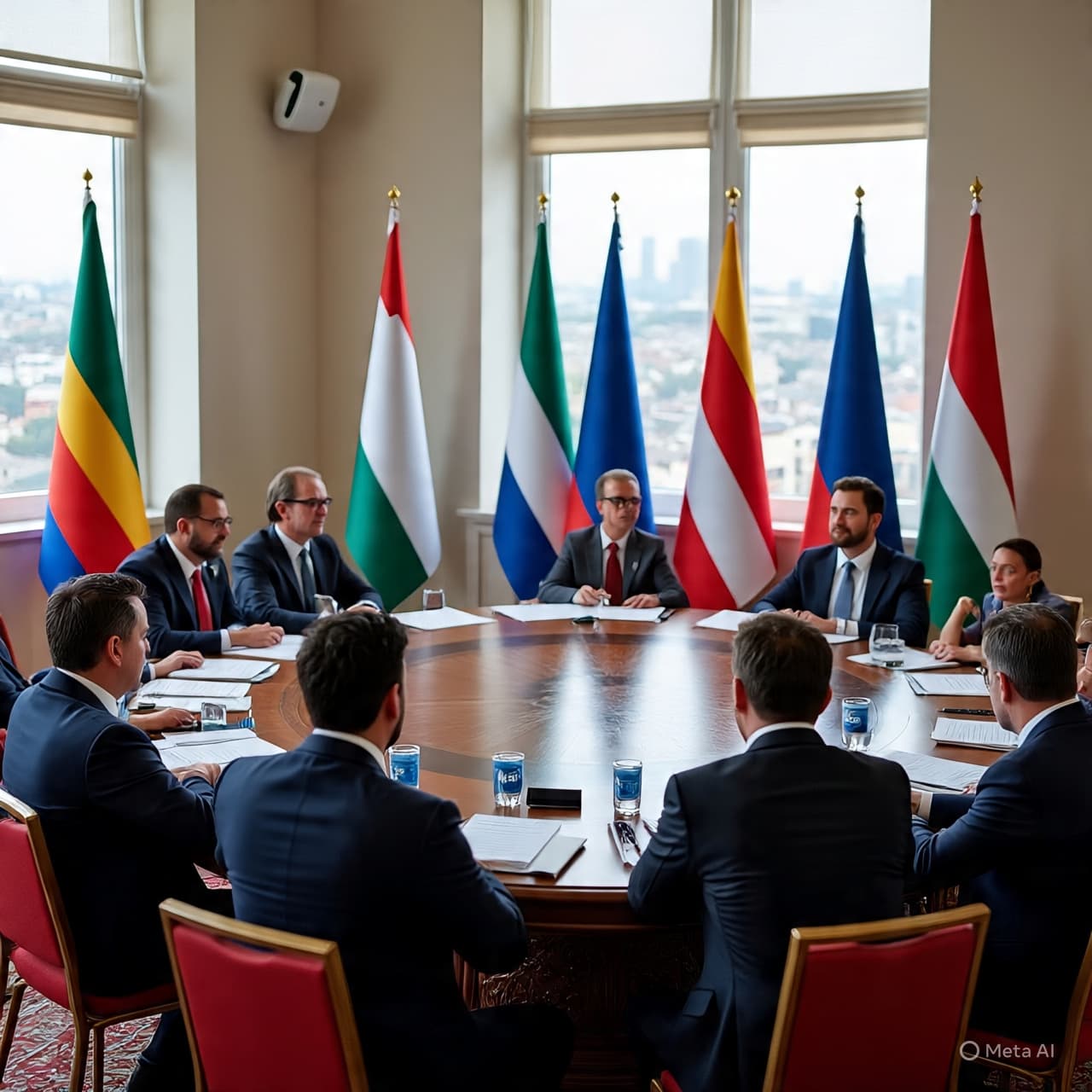
Key Highlights
- Current Situation:Tensions rise as military actions are suspected amid diplomatic overtures.
- U.S. Stance: Washington emphasizes engagement while maintaining military readiness.
- Regional Dynamics:The Middle East's complex interplay of local and global interests shapes perceptions.
In the realm of global affairs, moments arise when actions and intentions seem to diverge yet remain intertwined. This phenomenon often gives rise to uncertainty, manifesting in the subtle tension between spoken words and underlying suspicions. It resembles a conversation obscured by a veil, where clarity is more sensed than seen.
This delicate balance is particularly evident as accusations surface regarding military preparations for a potential ground assault, juxtaposed against Washington's ongoing signals of openness to dialogue. Such contrasts are not new in international relations, where diplomacy and deterrence frequently coexist, each influencing the other in nuanced ways.
From Tehran's perspective, concerns are often rooted in historical patterns rather than isolated incidents. Military positioning, regional movements, and past precedents contribute to a broader interpretation that transcends official statements. In this context, even gestures toward negotiation can be scrutinized through a lens of caution, where intent is gauged not solely by words but also by perceived capabilities.
Conversely, the United States maintains a public stance that emphasizes engagement, suggesting that avenues for discussion remain viable. However, history illustrates that military readiness does not inherently negate diplomatic intent; rather, it can serve as leverage, reinforcing seriousness while preserving options.
What emerges is not merely a contradiction but a dual narrative. One narrative speaks in terms of caution and suspicion, while the other articulates dialogue and possibility. Both narratives coexist, often uneasily, within the same timeframe. For observers, this creates a landscape characterized less by definitive direction and more by the interpretation of complex signals.
Beyond immediate exchanges, the broader region remains vigilant. The Middle East has long been a theater where local dynamics intersect with global interests, crafting a tapestry that is both intricate and fragile. In such an environment, perceptions can wield as much influence as actions, shaping decisions that resonate outward in unforeseen ways.
A quieter question lingers beneath the surface: how do nations cultivate trust when past experiences weigh heavily? Accusations and assurances, when juxtaposed, reveal not only current concerns but also the reverberations of historical events. These echoes do not dictate future outcomes but significantly influence the understanding of new developments.
As the situation evolves, the interplay between suspicion and outreach remains pivotal. Whether these parallel tracks converge or diverge will likely hinge on the choices made in the coming days—choices that will be measured, deliberate, and closely scrutinized.
Currently, there has been no confirmation of a ground assault, and diplomatic signals persist. Officials from both sides continue to issue statements, while international observers monitor developments with cautious vigilance.
Published by Banx Network. This article is part of the Banx decentralized media programme, powered by the BXE token on the XRP Ledger.



