
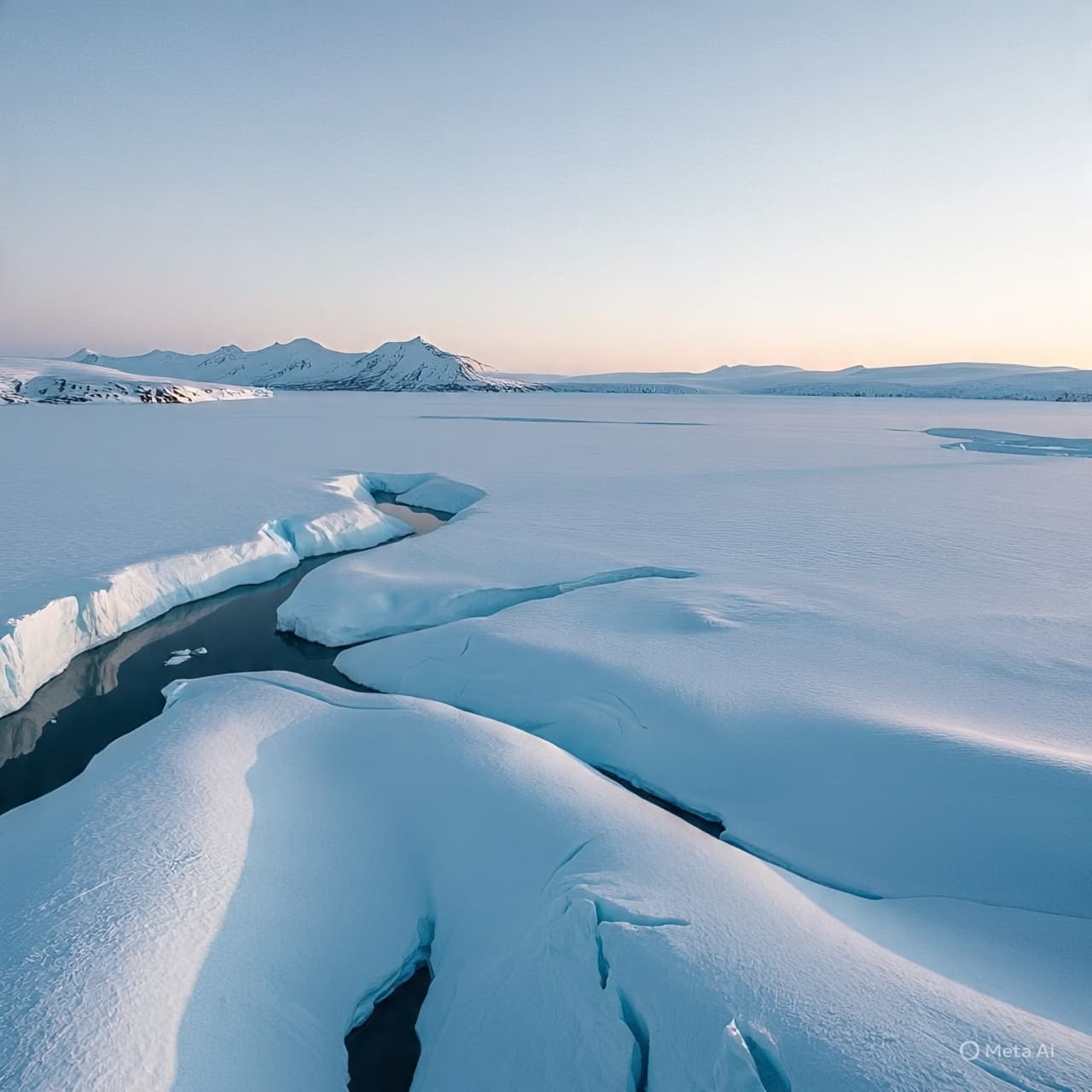
The Arctic has always resisted haste. Ice forms slowly, cracks gradually, and carries the memory of centuries in its layers. From afar, Greenland appears untouched by urgency, its vastness indifferent to the tempo of human ambition. Yet even places shaped by patience are not immune to language spoken elsewhere.
In recent weeks, President Donald Trump’s renewed threats regarding Greenland have shifted from suggestion to insistence. What was once framed as interest or leverage has hardened into rhetoric that implies possession — not negotiated partnership, but assertion. The words arrive without maps or timelines, yet they carry a weight that history recognizes.
Conquest is an old term, rarely spoken aloud in modern diplomacy. It fell out of favor not because it lost meaning, but because the world agreed, at least publicly, to replace it with rules. Borders would be respected. Sovereignty would be acknowledged. Influence would be pursued through alliance rather than acquisition. These principles were never absolute, but they formed a shared grammar.
That grammar now feels less certain. Greenland’s appeal is not mysterious. Its geography anchors the Arctic. Its resources promise value in a warming world. Its location carries military significance as polar routes open and global competition shifts northward. These facts are widely known and quietly discussed in policy circles. What is new is the willingness to speak of them without restraint.
Trump’s remarks do not outline invasion or treaty. They do something subtler. They normalize the idea that territorial acquisition remains a legitimate ambition for a modern state. By refusing to rule out force or coercion, the rhetoric reframes Greenland not as a partner with agency, but as an object of strategic desire.
Denmark, which governs Greenland, has responded with firmness. Greenland’s leaders have reiterated their right to self-determination. No legal pathway exists for seizure. Yet history suggests that the most consequential shifts often begin not with action, but with language that reconditions expectation.
For the United States, this moment carries particular resonance. The nation’s expansion was once justified through similar certainty — a belief that growth was both inevitable and deserved. Over time, that belief was tempered by institutions, treaties, and norms that positioned America as a steward of order rather than a pursuer of land. To speak again in the tones of acquisition unsettles that identity.
The danger is not immediate conflict, but precedent. When powerful nations test the limits of language, others listen. If conquest becomes conceivable again in speech, it edges closer to legitimacy in thought. And when thought shifts, action eventually follows — sometimes quietly, sometimes suddenly.
Greenland remains unchanged for now. Its ice still holds. Its people still govern their daily lives far from the podiums where they are discussed. But the road invoked by these threats does not require immediate travel to exist. It only requires acknowledgment.
In setting words loose that point backward rather than forward, the United States risks reminding the world of paths it once promised not to walk again. The Arctic may seem distant, but the implications are not. They move south, carried not by ships or soldiers, but by sentences that reopen a door history worked hard to close.
AI Image Disclaimer
Visuals are AI-generated and serve as conceptual representations.
Sources (names only)
Reuters Associated Press BBC News The New York Times Financial Times
Published by Banx Network. This article is part of the Banx decentralized media programme, powered by the BXE token on the XRP Ledger.


.jpg&w=3840&q=75 "Blake Lively Awarded $400,000 in Legal Fees After Justin Baldoni Lawsuit Dismissed")