
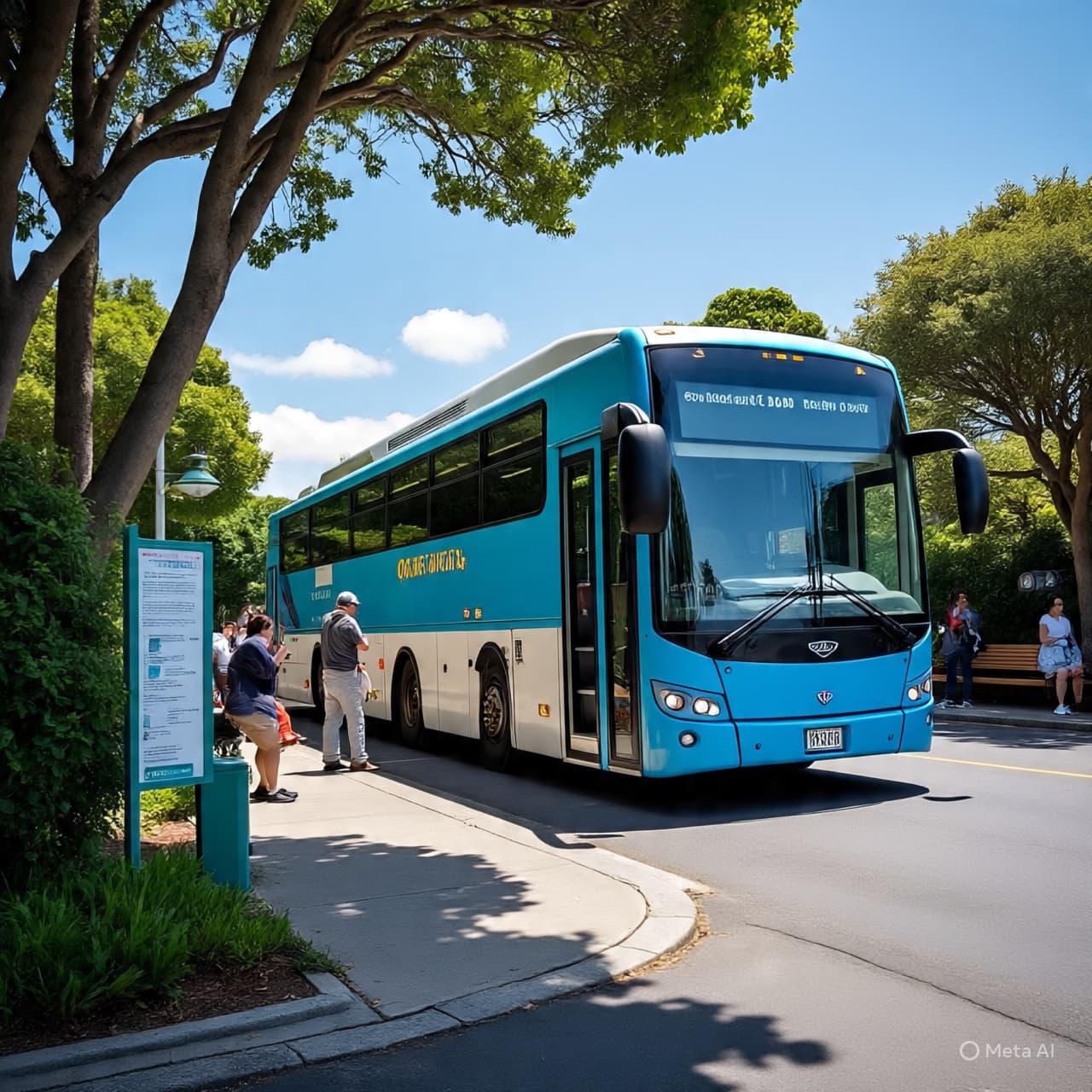
There’s a rhythm to public transport in Auckland — the sound of engines starting, the subtle hiss of doors opening and closing, the murmur of passengers settling into their seats as the city slides slowly by the windows. Buses carry stories that are mostly ordinary: a commute, an errand, a student returning home. But last Thursday, on a Onehunga route bathed in summer light, that ordinary rhythm was ruptured by an encounter that left one traveller injured and many others unsettled.
The victim, travelling alone on a bus between the hours of about 1:15 p.m. and 3:40 p.m., was confronted by a group described by police as having carried out an unprovoked attack. What began as another leg of an everyday journey quickly became a distressing experience, ending with the injured person needing medical treatment and prompting a broader appeal for witnesses.
Officers were notified later that evening and launched an inquiry, urging anyone with information — even small details — to come forward. Police can be contacted through the non‑emergency number 105 or anonymously via Crime Stoppers. Authorities hope that public insight will help identify those responsible for the incident.
This attack comes amid a string of violent episodes on Auckland buses in recent months, stirring conversations about safety on public transport. Last week alone, a driver on a Mount Eden route was assaulted, and late last year a passenger was fatally stabbed on a bus in East Auckland. These events — while isolated — stitch together in the public mind into a broader concern about well‑being and security on services that many depend on daily.
For those onboard that afternoon in Onehunga, the suddenness of the encounter serves as a stark reminder that even familiar pathways can carry unexpected peril. Passengers often trust the journey between stops as a neutral space — a pause between destinations where life unfolds without extraordinary disruption. On this day that trust was shaken.
Yet in the quiet days that follow, there is also resilience. Commuters continue to board buses, drivers resume their routes, and investigators work patiently through reports and leads to clarify what happened. There is a collective hope that compassion, awareness, and community vigilance can help prevent such moments from recurring.
As inquiries continue and the injured person recovers, the incident stands not simply as a news item but also as a gentle call to reflect on how we look out for one another in shared spaces — and how we navigate the unexpected turns on even the most ordinary journeys.
AI Image Disclaimer “Visuals are created with AI tools and are not real photographs.”
Sources 1News RNZ News NZ Herald (via RNZ)
Published by Banx Network. This article is part of the Banx decentralized media programme, powered by the BXE token on the XRP Ledger.


