
Key Highlights
- U.S. Defense Secretary Pete Hegseth announces global expansion of the blockade on Iran.
- The blockade, initiated on April 13, targets Iranian ports and oil shipments.
- The Strait of Hormuz is crucial, carrying about 20% of the world's oil supply.
The Strait of Hormuz, a vital maritime corridor, has become a focal point of geopolitical tension as the United States expands its blockade on Iran. This strategic waterway, flanked by dry mountains and bustling trade, is where oil tankers traverse a narrow passage that is critical for global commerce. Recently, however, the atmosphere has shifted dramatically, with U.S. warships now patrolling these waters more assertively than ever.
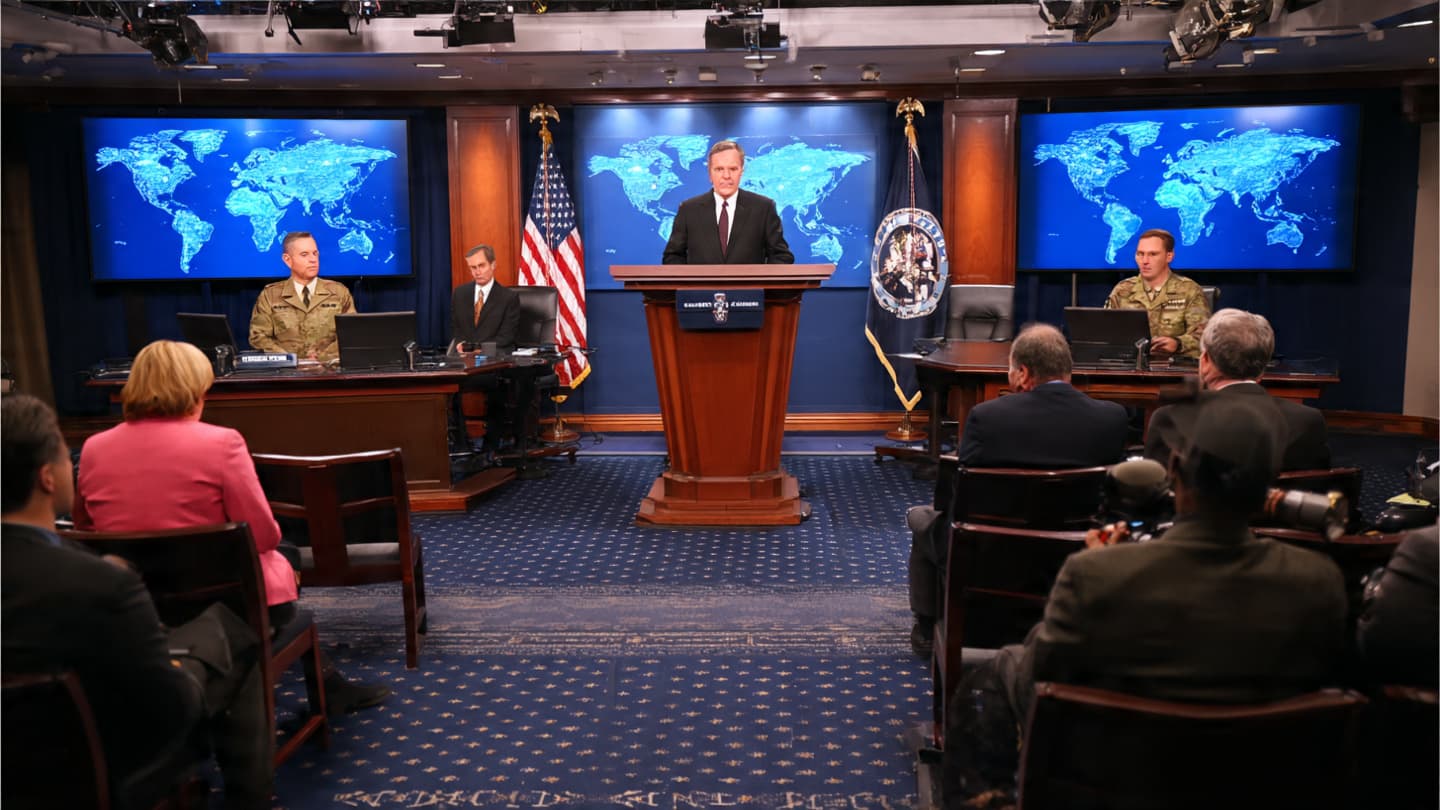
During a recent Pentagon briefing, U.S. Defense Secretary Pete Hegseth stated that America’s blockade on Iran is “growing and going global.” His declaration underscores a significant shift in U.S. strategy, moving from regional containment to a broader international enforcement mechanism. “No one sails from the Strait of Hormuz to anywhere in the world without the permission of the United States Navy,” he emphasized, marking a new chapter in U.S.-Iran relations.
The blockade was initiated on April 13, following stalled negotiations between Washington and Tehran. Initially intended as a pressure tactic aimed at Iranian ports and oil shipments, the blockade has expanded into a comprehensive maritime operation. U.S. officials report that 34 ships have already turned back under American pressure, with naval forces actively tracking and intercepting vessels linked to Iranian ports across the Pacific and Indian Oceans.
The implications of this blockade are profound. The Strait of Hormuz is responsible for approximately one-fifth of the world’s oil supply, and any hint of instability in this region sends shockwaves through global fuel markets and political landscapes. Economists in distant capitals monitor shipping routes closely, while consumers in cities far from the Gulf feel the impact as gasoline prices rise.
For Iran, the blockade exacerbates an already fragile economy. Oil exports are the lifeblood of the Iranian state, and each delayed tanker represents not just cargo, but critical revenue and survival. While Tehran has yet to respond with significant military action, U.S. officials have warned that any attempt to lay naval mines in the Strait would be seen as a violation of the ceasefire and would provoke an immediate response.
The U.S. maintains that Iran still has an “open window” for negotiations, contingent upon abandoning its nuclear ambitions in a “meaningful and verifiable” manner. Hegseth reiterated President Donald Trump’s stance that the U.S. is “not anxious” for a deal, suggesting that the current pressure tactics may be a means to force Iran back to the negotiating table. However, the pace of events indicates that time is of the essence, with peace talks potentially resuming in Pakistan after a previous round collapsed.
Blockades are paradoxical; they embody both acts of waiting and acts of force. While no cities fall and no invasions occur, pressure builds slowly, akin to a storm gathering offshore. As ships are stopped and routes are altered, costs rise, and diplomatic tensions escalate. The world watches as the situation unfolds, with allies in Asia and Europe facing renewed calls from Washington to contribute to the security of maritime routes. Hegseth has indicated that “the time for free riding is over,” suggesting that the burden of military and economic costs may no longer rest solely on the U.S.
As the blockade extends its reach, it not only affects the Gulf region but ripples through global markets and diplomatic relations. The sea, indifferent to human conflict, continues to reflect both moonlight and missile light, serving as a stark reminder of the delicate balance between diplomacy and military might.
In the Strait of Hormuz, another ship slows its journey, while in Tehran, critical decisions are made. The world watches closely as the situation evolves, with the potential for significant consequences looming on the horizon.
Published by Banx Network. This article is part of the Banx decentralized media programme, powered by the BXE token on the XRP Ledger.



