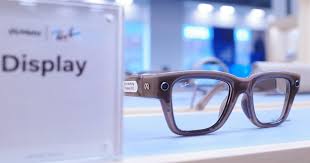
The next generation of artificial intelligence may not arrive primarily through another smartphone application. It may sit on a person’s face, hang from clothing or remain within reach throughout the day. Smart glasses and AI pins are being developed as devices capable of seeing, hearing and responding to the world around their users.
The technology offers an appealing idea: information without the need to constantly hold a phone. A user could receive directions, ask a question, identify an object or interact with an AI assistant while keeping both hands free. For technology companies, such devices represent an opportunity to move AI into everyday physical environments.
Yet the same sensors that make these products useful create a difficult question about people who are not wearing them. A camera mounted on a pair of glasses can potentially capture people, conversations and surroundings that have nothing to do with the wearer’s request.
The Japan Times, citing Reuters, reported that privacy concerns around AI-powered wearables are already emerging in several countries. Meta’s Ray-Ban smart glasses have become a particular focus of the debate, while some venues in the United Kingdom have restricted their use because of concerns about recording and privacy.
The issue is different from traditional smartphone photography because smart glasses can appear much less conspicuous. A person may not always know whether someone nearby is taking a photograph, recording a conversation or using an AI function that processes what the camera sees.
That uncertainty introduces the question of consent. In a public space, people are generally accustomed to being photographed by security cameras or smartphones, but wearable AI can make sensing more continuous and less obvious. The boundaries between intentional recording and ordinary interaction therefore become less clear.
Companies developing these devices face the challenge of making privacy protections understandable as well as technically effective. Indicators that show when recording is taking place, restrictions on sensitive locations and controls over stored data can all influence how people perceive the technology.
Adoption may depend not only on how intelligent the devices become but also on how comfortable other people feel around them. A product can perform useful tasks for its owner while still creating discomfort for everyone else in the same room.
The debate also reaches beyond smart glasses. AI pins and other wearable devices could eventually collect information about location, conversations, movement and surroundings. Each additional capability expands the potential usefulness of the device while also increasing the number of questions about data handling.
The next stage of AI hardware may therefore be shaped as much by social rules as by engineering. The technology is becoming capable of moving quietly through ordinary life, but whether people accept it will depend partly on whether privacy can remain visible in an environment where machines increasingly see and hear alongside humans.
Image Disclaimer: The illustrations are AI-generated conceptual representations of emerging AI wearable technology and do not depict specific commercial products in actual use.
Sources: The Japan Times Reuters Meta EssilorLuxottica
Published by Banx Network. This article is part of the Banx decentralized media programme, powered by the BXE token on the XRP Ledger.

.jpg&w=3840&q=75 "Pope Warns a “Paradise of Machines” Could Undermine Humanity as He Opens France Trip")