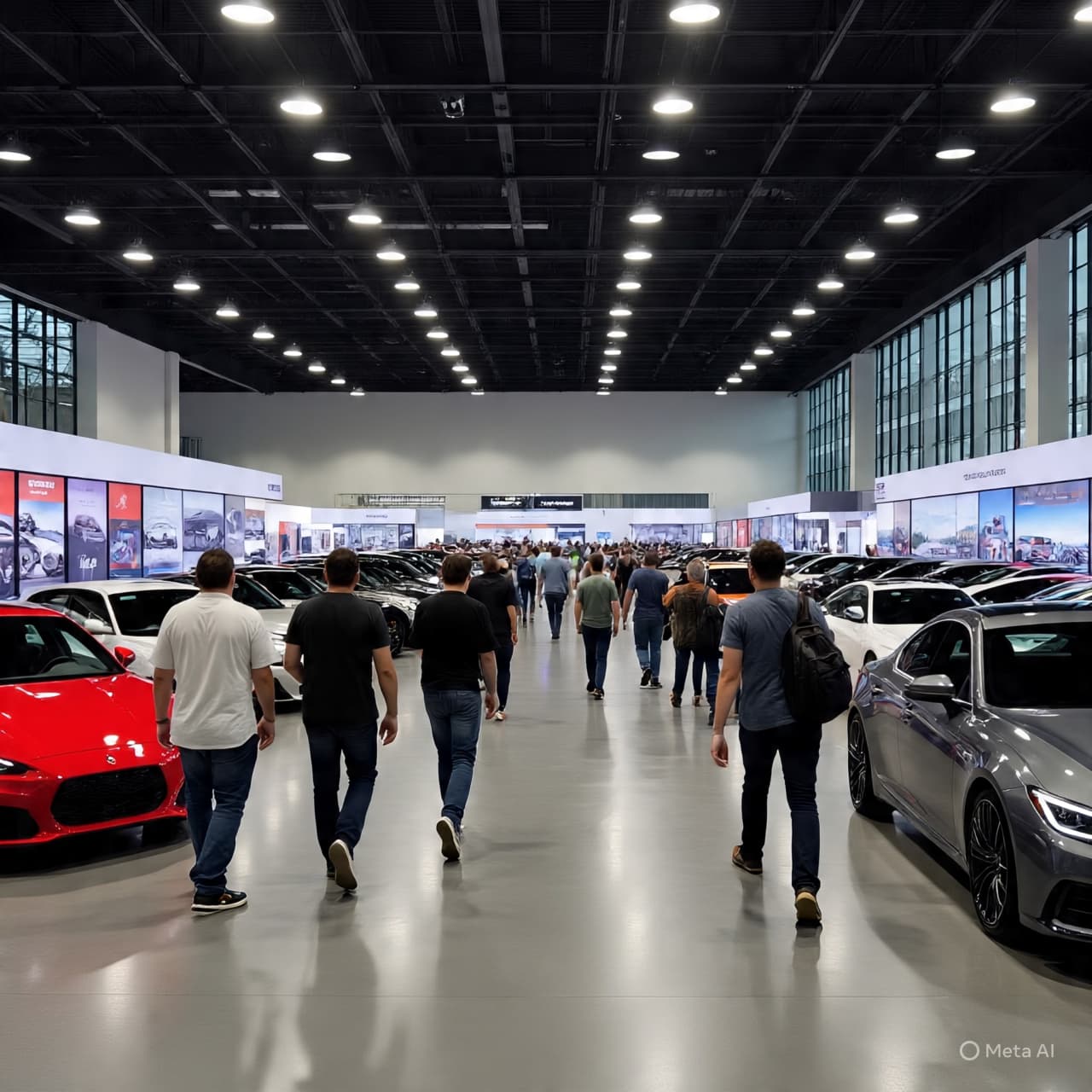
Outside, winter presses gently against the river and the streets of downtown Detroit move at a measured pace. Inside the broad halls of Huntington Place, however, another rhythm takes hold. It is carried not by engines but by footsteps, voices, and the quiet excitement of people gathering for something familiar yet renewed. On the first public day of the 2026 Detroit Auto Show, the city’s long conversation with the automobile resumed once more.
Children arrive first with energy that seems to outrun the cold they’ve just left behind. They climb into driver’s seats far too large for them, fingers resting lightly on steering wheels, eyes tracing dashboards as if memorizing a future. Nearby, parents and grandparents linger a step back, watching with the kind of patience that comes from having once stood in the same place themselves. For some, cars are dreams; for others, they are memories shaped by factory floors, road trips, or long commutes home at dusk.
Across the exhibition floor, more than forty automakers have arranged their offerings in careful rows and open stages. Electric vehicles sit quietly beside familiar trucks and SUVs, their surfaces catching the overhead light. Visitors move slowly, pausing to compare lines, to ask questions, to sit and imagine. Test tracks and interactive displays draw steady lines, especially where the promise of motion briefly replaces the stillness of display.
Groups of longtime attendees weave through the crowds, turning the visit into a ritual as much as an outing. They speak in shorthand about models and years, about what has changed and what endures. Their conversations drift easily between technical detail and personal story, blending the past with the present in a way that feels natural here, in a city shaped by both.
In recent years, auto shows have faced questions about relevance in a digital age, where unveilings often happen on screens rather than stages. Yet the appeal of being present remains evident. There is something unreplicable about standing close to a vehicle, about hearing others’ reactions, about sharing space with strangers drawn together by curiosity. The show floor becomes less a marketplace and more a meeting ground.
As the day unfolds, the crowd thickens but never hardens. Children tire and rest against railings, older visitors slow their pace, and still the movement continues — a gentle flow of interest passing from one display to the next. It is not spectacle that dominates the room, but continuity.
By day’s end, the picture is clear. The 2026 Detroit Auto Show’s first public day brought together car fans of all ages, filling the hall with families, enthusiasts, and casual visitors exploring vehicles from dozens of brands and taking part in hands-on experiences that continue to anchor the show in shared, physical experience.
AI Image Disclaimer Illustrations were created using AI tools and are not real photographs.
Sources (Media Names Only) Detroit Free Press Associated Press Yahoo Autos
Published by Banx Network. This article is part of the Banx decentralized media programme, powered by the BXE token on the XRP Ledger.