
Key Highlights
- Israeli airstrikes have targeted neighborhoods in Beirut associated with Hezbollah.
- Thousands of residents have sought refuge in schools and shelters across the city.
- Lebanese political leaders are increasingly questioning Hezbollah's military actions.
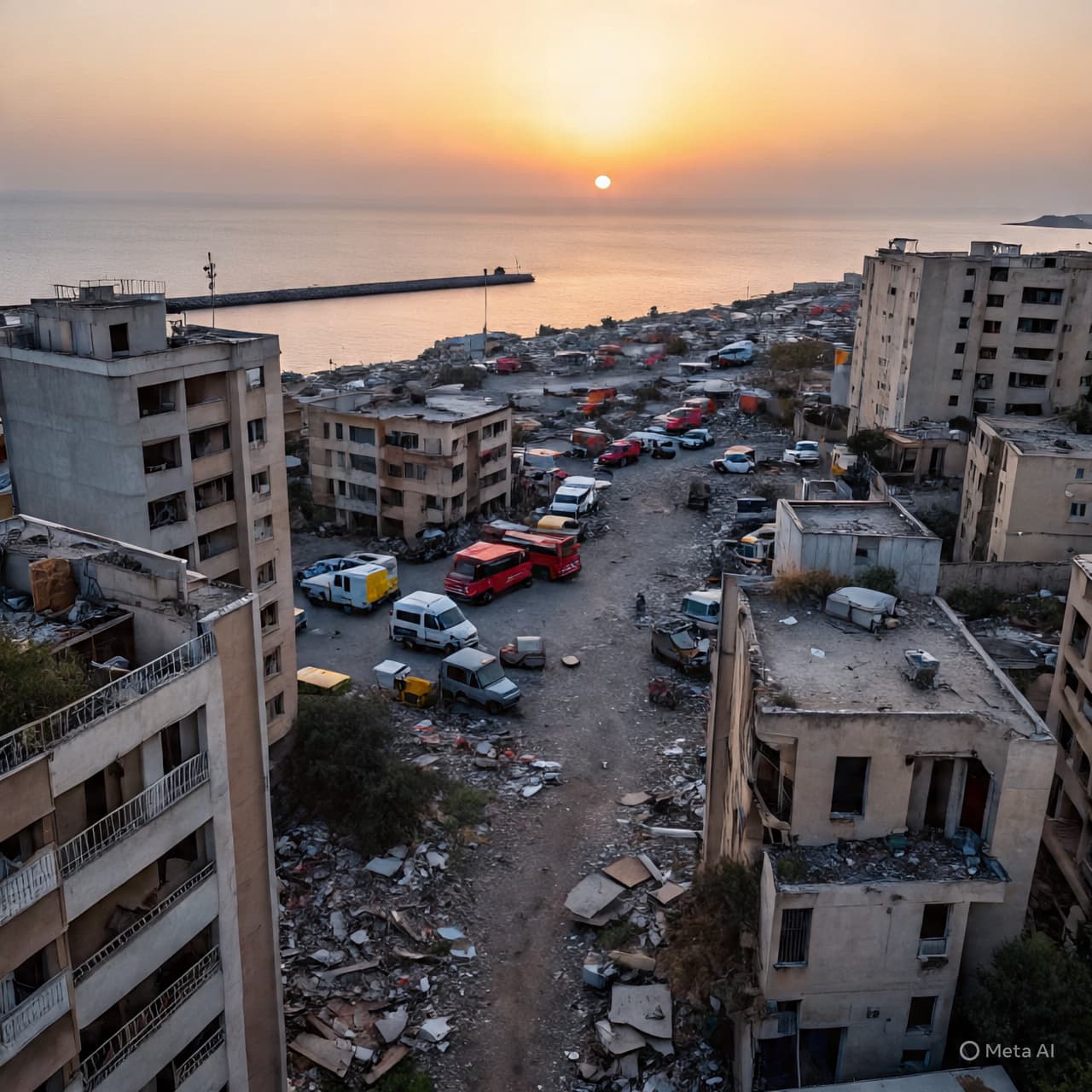
The evening light over Beirut arrives gently, as it often does, slipping between balconies and settling along the Corniche where the Mediterranean breathes in slow, silver rhythms. But in recent days, the air has felt altered—thicker somehow, interrupted by the distant percussion of airstrikes and the sharper, nearer sound of uncertainty. Windows tremble. Conversations pause mid-sentence. The city, long accustomed to carrying history in its bones, braces again.
As Israeli airstrikes struck neighborhoods in the southern suburbs of the capital—areas long associated with Hezbollah—thousands of residents gathered what they could and sought shelter in schools, churches, and the homes of relatives farther north. Mattresses appeared in corridors. Car trunks became temporary closets. Municipal buildings opened their doors under fluorescent lights that hummed through the night.
The strikes, described by the Israel Defense Forces as targeting infrastructure and command centers tied to Hezbollah, followed a series of cross-border exchanges that had already unsettled communities along Lebanon’s southern frontier. The pattern of escalation—rockets launched toward northern Israel, retaliatory bombardments across the border—has traced a familiar, uneasy arc since the war in Gaza deepened regional tensions last year.
Yet something else has shifted within Lebanon itself. Political leaders who have long navigated the delicate balance of power between the state and Hezbollah have begun to speak with sharper edges. Figures aligned with rival parties, including representatives of the Lebanese Forces and members of parliament from centrist blocs, have publicly questioned whether Hezbollah’s military actions serve Lebanon’s broader national interest. Some have urged the government to assert clearer authority over decisions of war and peace, invoking the language of sovereignty and state responsibility.
In Baabda and downtown Beirut, statements have been issued that carry a tone of fatigue as much as defiance. Officials stress the need to protect civilians and preserve what remains of a fragile economy already strained by years of financial collapse, currency devaluation, and infrastructural decay. Lebanon’s caretaker government, constrained by political stalemate, faces the familiar challenge of speaking firmly while governing with limited means.
The human toll unfolds quietly, often away from podiums and press conferences. Families displaced from the southern suburbs of Beirut and villages near the border have found temporary refuge in Mount Lebanon and farther north. Aid groups distribute blankets and bottled water. Public schools, themselves weathered by underfunding, transform into shelters overnight. The Lebanese Red Cross moves through streets that still smell faintly of dust and smoke.
Hezbollah, for its part, maintains that its cross-border operations are acts of solidarity with Palestinians in Gaza and a deterrent against further Israeli military expansion. Its leadership frames the confrontation as part of a broader regional struggle. But as airstrikes reach deeper into Beirut’s densely populated districts, the distance between regional strategy and daily survival narrows. The debate within Lebanon is no longer abstract; it reverberates in stairwells and supermarket lines.
International actors watch closely. The United Nations has reiterated calls for de-escalation along the Blue Line, while diplomats from Washington, Paris, and regional capitals shuttle messages behind closed doors. Lebanon’s position—geographically small, politically complex—has often placed it at the crossroads of wider conflicts. Now, once again, its streets carry the echoes of decisions shaped both within and beyond its borders.
As night settles, Beirut’s skyline glows unevenly. Some neighborhoods remain lit; others flicker under strained power grids. In shelters, children fall asleep to the murmured reassurances of adults who measure their words carefully. Outside, traffic thins. The sea continues its steady rhythm, indifferent yet constant.
For now, the facts remain stark: Israeli airstrikes have hit areas of Beirut associated with Hezbollah; thousands have sought temporary refuge; Lebanese political leaders are voicing rare, open criticism of Hezbollah’s autonomous military role. Whether this moment marks a lasting political recalibration or another chapter in Lebanon’s long cycle of tension is uncertain. What is clear is that, in the quiet between the sirens and the sea, Beirut is once again at a crossroads.
Published by Banx Network. This article is part of the Banx decentralized media programme, powered by the BXE token on the XRP Ledger.



