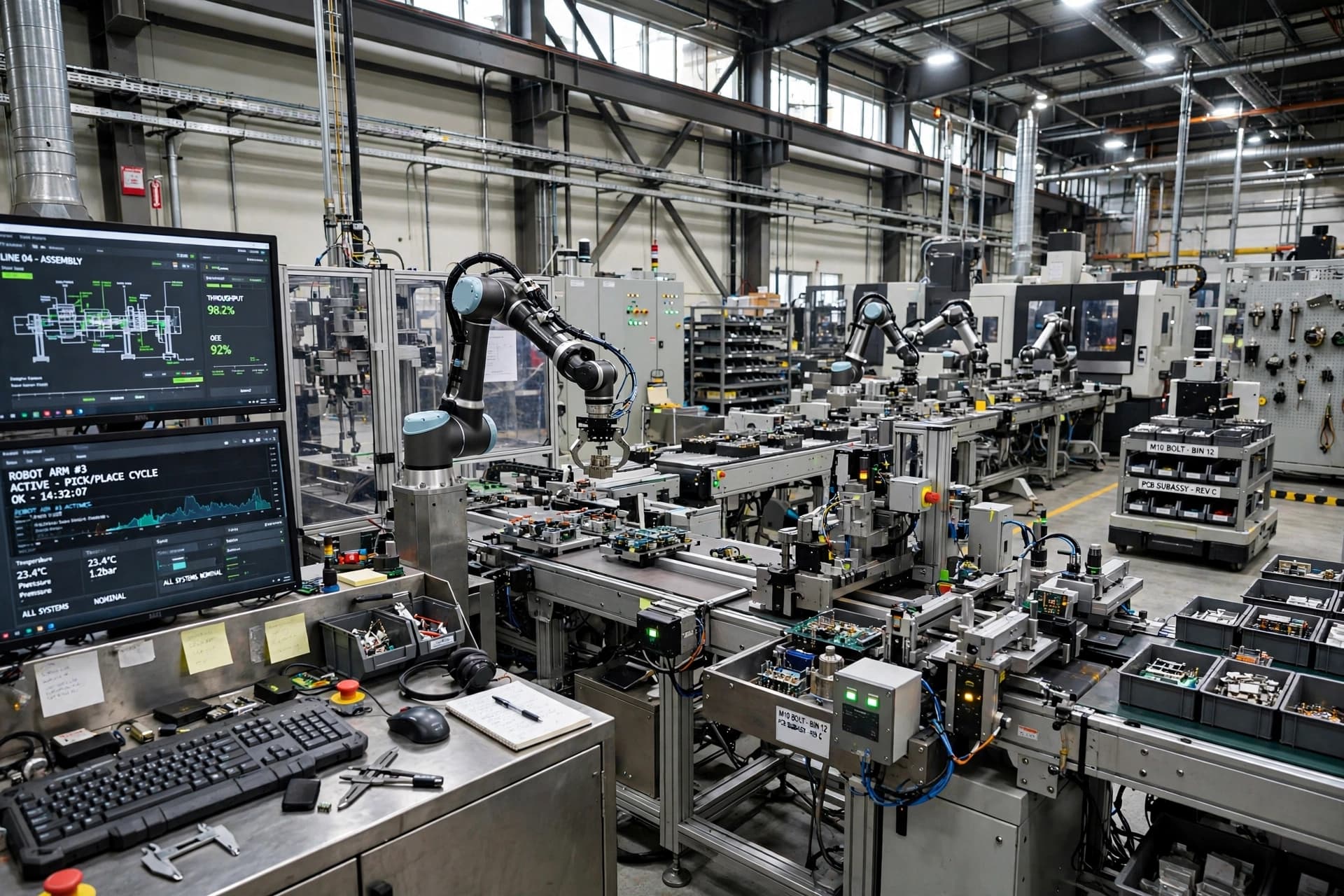
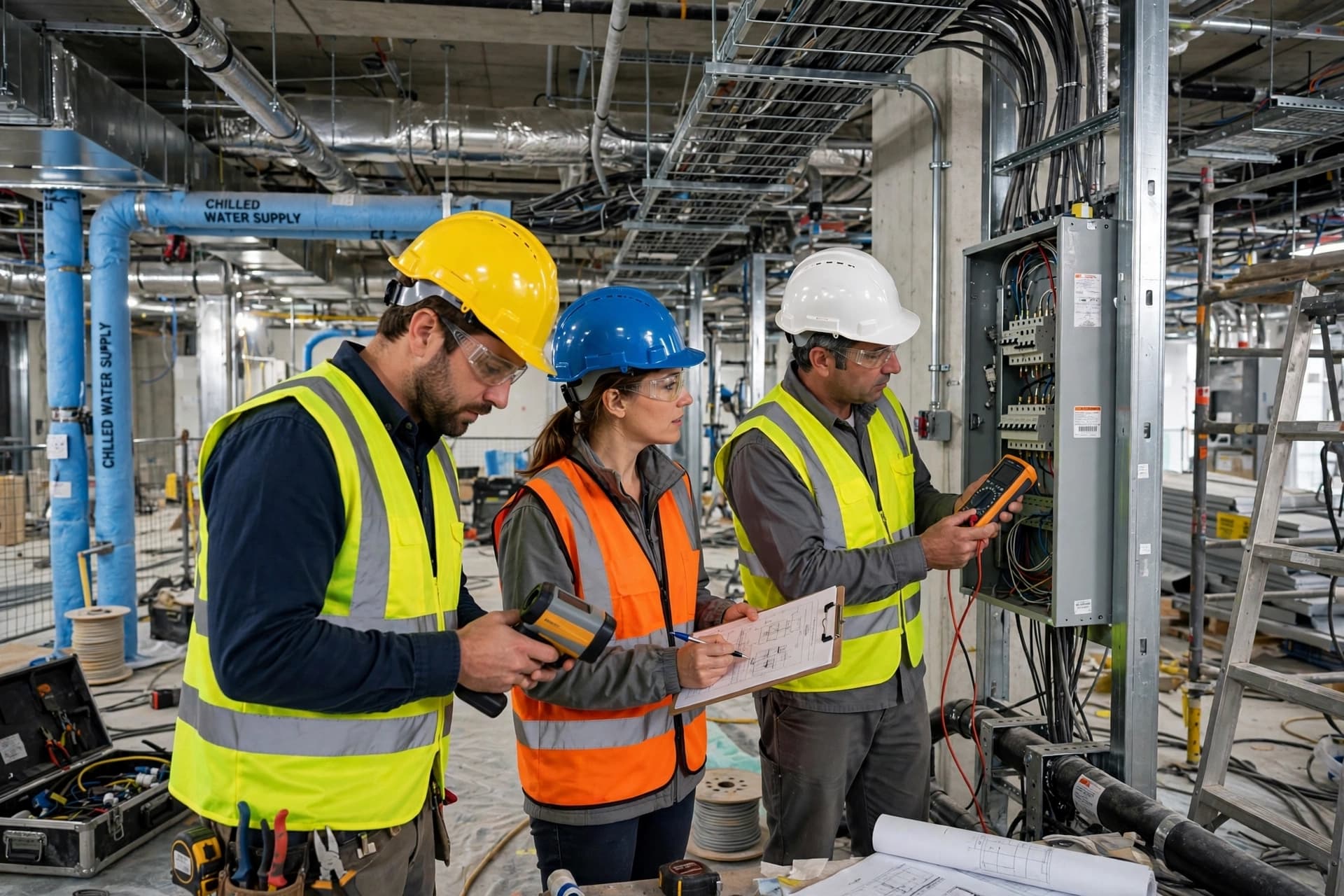
On the island where technology has long been measured in factories, data centers, and laboratories, Singapore is beginning to look farther toward the horizon. Artificial intelligence remains central to that picture, but the country's technology ambitions are increasingly reaching into fields where today's breakthroughs may become tomorrow's infrastructure: quantum systems, space technology, advanced semiconductors, and specialized manufacturing.
A recent economic strategy discussion identified quantum technologies and space technologies among promising areas for Singapore, building on existing strengths in semiconductors, advanced manufacturing, aerospace, and satellite systems. The broader objective is to strengthen the country's position as a trusted place where artificial intelligence can be developed, tested, and deployed.
That direction reflects the particular geography of Singapore's economy. With limited land and natural resources, the city-state has historically relied on capabilities that can travel beyond its physical borders: knowledge, manufacturing precision, finance, logistics, research, and digital infrastructure.
Semiconductors remain an important part of that foundation. Singapore has developed into a significant global manufacturing and equipment center, creating an industrial base that can support newer technology fields. Quantum computing and advanced AI require specialized components, engineering expertise, research facilities, and highly skilled workers, making the relationship between established industries and emerging technologies increasingly important.
Quantum technology occupies a particularly different space from conventional digital services. Its applications are still developing, but potential uses span computing, communications, sensing, and security. For Singapore, investment in the field is therefore less about immediate mass adoption and more about establishing research capabilities and talent before the technology matures.
Space technology follows a similar logic. Singapore does not need to become a traditional space-launching power to participate in the industry. Satellite systems, advanced electronics, data processing, communications, and aerospace engineering can all connect the country's existing industrial capabilities with the growing global space economy.
Artificial intelligence remains the thread connecting many of these ambitions. AI requires increasingly powerful computing infrastructure, sophisticated semiconductor components, secure data systems, and specialized engineering. At the same time, AI itself can be applied to manufacturing, scientific research, logistics, financial services, and other industries.
The country's approach also includes attention to governance. Singapore's Infocomm Media Development Authority has published a Model AI Governance Framework for agentic AI, reflecting an effort to build rules and practices around systems capable of more autonomous decision-making.
There is an economic calculation beneath this technological expansion. As countries compete for semiconductor investment, AI infrastructure, research talent, and advanced manufacturing projects, Singapore is seeking areas where its existing capabilities can provide an advantage. The aim is not simply to follow every emerging technology, but to connect new fields with industries already established on the island.
That strategy places Singapore within a wider regional transformation. Across Asia, economies are competing for data centers, chip manufacturing, AI research, and advanced technology investment. Singapore's response is taking shape through a combination of industrial capability, research, digital infrastructure, and technology governance.
The direction is therefore broader than the current AI boom. Singapore is building around technologies that may develop at different speeds, from artificial intelligence already reshaping businesses to quantum and space systems whose commercial possibilities are still emerging. The country's technology strategy continues to evolve around that longer horizon, with semiconductors, advanced manufacturing, quantum technologies, space systems, and AI forming interconnected parts of its future economic landscape.
AI Image Disclaimer
These visuals are AI-generated illustrations created to represent the described technological concepts and environments.
Sources
Reuters Infocomm Media Development Authority OpenGov Asia
Published by Banx Network. This article is part of the Banx decentralized media programme, powered by the BXE token on the XRP Ledger.