Across the wide landscapes of northern Europe, the sky often feels vast and open, stretching quietly above forests, villages, and distant coastlines. Yet in recent years, that sky has become a space of growing attention, where the hum of small machines can carry consequences far beyond their size.
Drones, once associated mainly with photography or recreation, have increasingly found a place in modern security discussions. On today’s battlefields, they can observe, disrupt, or strike with surprising speed. As nations reflect on these evolving realities, they have begun exploring new ways to watch the skies and respond when unfamiliar aircraft appear.
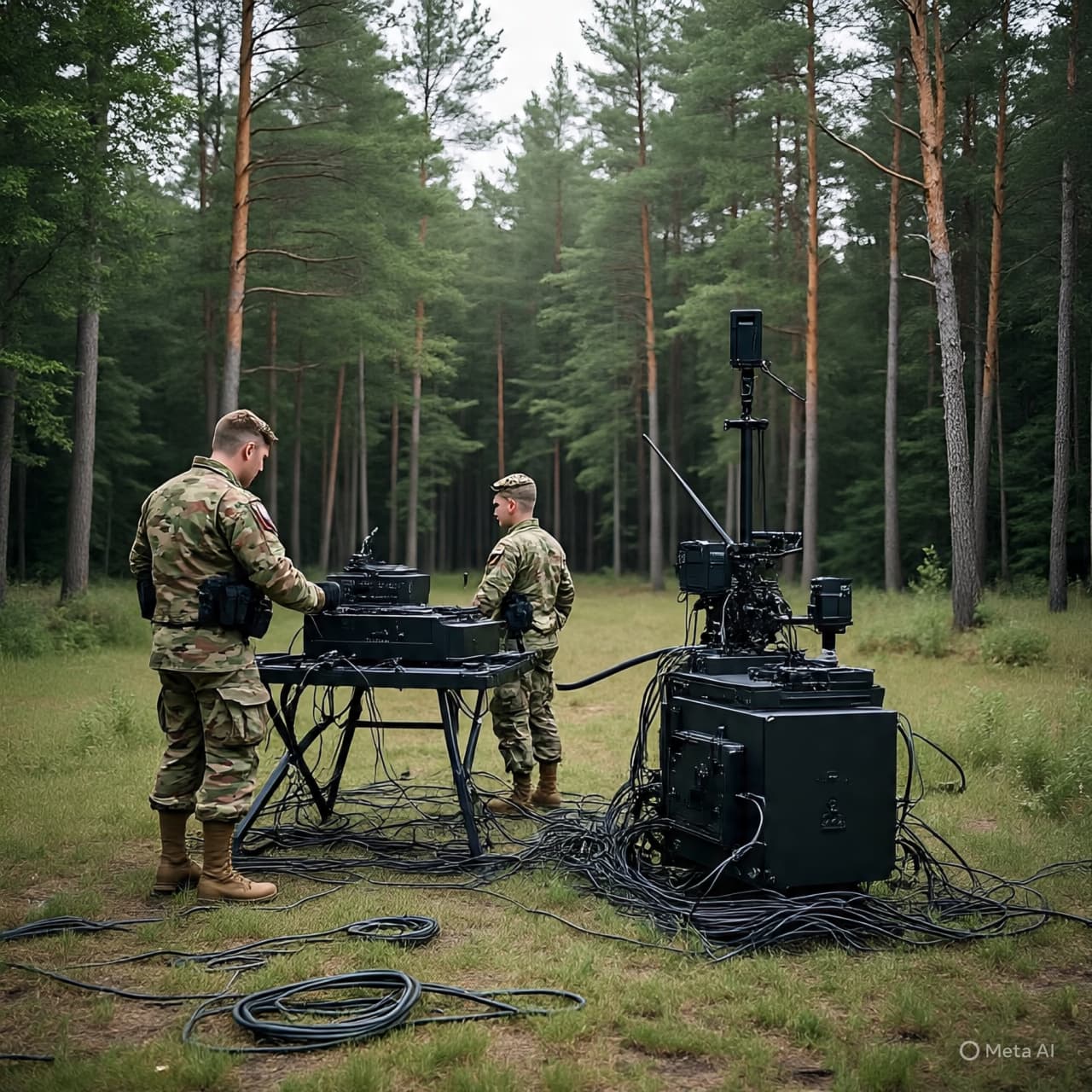
In Estonia, this reflection recently took shape through a military exercise known as Digital Shield, where U.S. and Estonian forces worked together to test emerging technologies designed to counter unmanned aerial threats. The event brought together soldiers, engineers, and defense specialists to examine how drones can be detected, tracked, and neutralized within a coordinated defense network.
The exercise focused on integrating sensors and response systems so that drone activity could be identified and addressed quickly from a centralized command environment. In practical terms, this means linking radar, acoustic sensors, and other detection tools with counter-drone systems capable of disabling or destroying hostile aircraft.
During the training, operators practiced identifying simulated drone incursions and activating defensive systems through a connected digital interface. According to officials involved in the exercise, the goal is to reduce the time between detection and response, allowing security forces to act within seconds when an unmanned aircraft enters restricted airspace.
One notable feature of the system being tested is the ability for operators to control defensive tools remotely. In some cases, the equipment designed to intercept drones can remain positioned on the ground while personnel operate it from a separate command center, potentially located miles away.
This approach reflects a broader shift in military thinking. Modern defense planning increasingly emphasizes networks rather than isolated weapons systems. Sensors, communications platforms, and intercept tools are connected digitally, forming a shared picture of the airspace where threats can be identified and addressed collectively.
The Digital Shield exercise also mirrors lessons emerging from recent conflicts, particularly the extensive use of drones in the war in Ukraine. Small unmanned aircraft have demonstrated how quickly inexpensive technology can reshape battlefield tactics, prompting many militaries to rethink traditional air defense strategies.
For NATO members on the alliance’s eastern flank—including Estonia, which lies near Russia’s border—the ability to counter drones has become an important element of regional security planning. Exercises such as Digital Shield provide an opportunity for allied forces to test equipment under realistic conditions while strengthening cooperation between participating countries.
Military planners designed the training environment to resemble operational scenarios as closely as possible, including simulated cyber disruptions and communication challenges. By operating under these constraints, participants can better understand how their systems perform during complex situations.
Beyond testing equipment, the exercise also serves as a platform for collaboration between government forces and defense technology developers. Civilian companies were invited to demonstrate experimental systems capable of detecting, tracking, or intercepting drones, allowing military personnel to evaluate new tools that may eventually become part of operational defense networks.
Such partnerships highlight how rapidly drone technology continues to evolve. As unmanned aircraft become smaller, faster, and more widely available, defense organizations around the world are exploring cost-effective methods to protect both military facilities and civilian infrastructure.
In Estonia’s training grounds, the exercise unfolded as both a practical demonstration and a learning process. Soldiers monitored screens, systems exchanged data across networks, and simulated drones moved through the airspace as part of carefully designed scenarios.
While the quiet fields of the Baltic region may seem far removed from global tensions, exercises like Digital Shield suggest that the future of security may increasingly depend on how well nations can see—and respond to—what moves through the sky above them.
Officials say the training will continue to inform future exercises and technological development, as allied forces refine methods for detecting and countering drone threats while strengthening cooperation along NATO’s eastern flank.
AI Image Disclaimer Graphics are AI-generated and intended for representation, not reality.
Source Check (Credible Media Scan) Strong mainstream / credible sources reporting the exercise:
ERR News Baltic News Network DVIDS (U.S. Department of Defense News) Defence Industry Europe Army Recognition
Published by Banx Network. This article is part of the Banx decentralized media programme, powered by the BXE token on the XRP Ledger.