
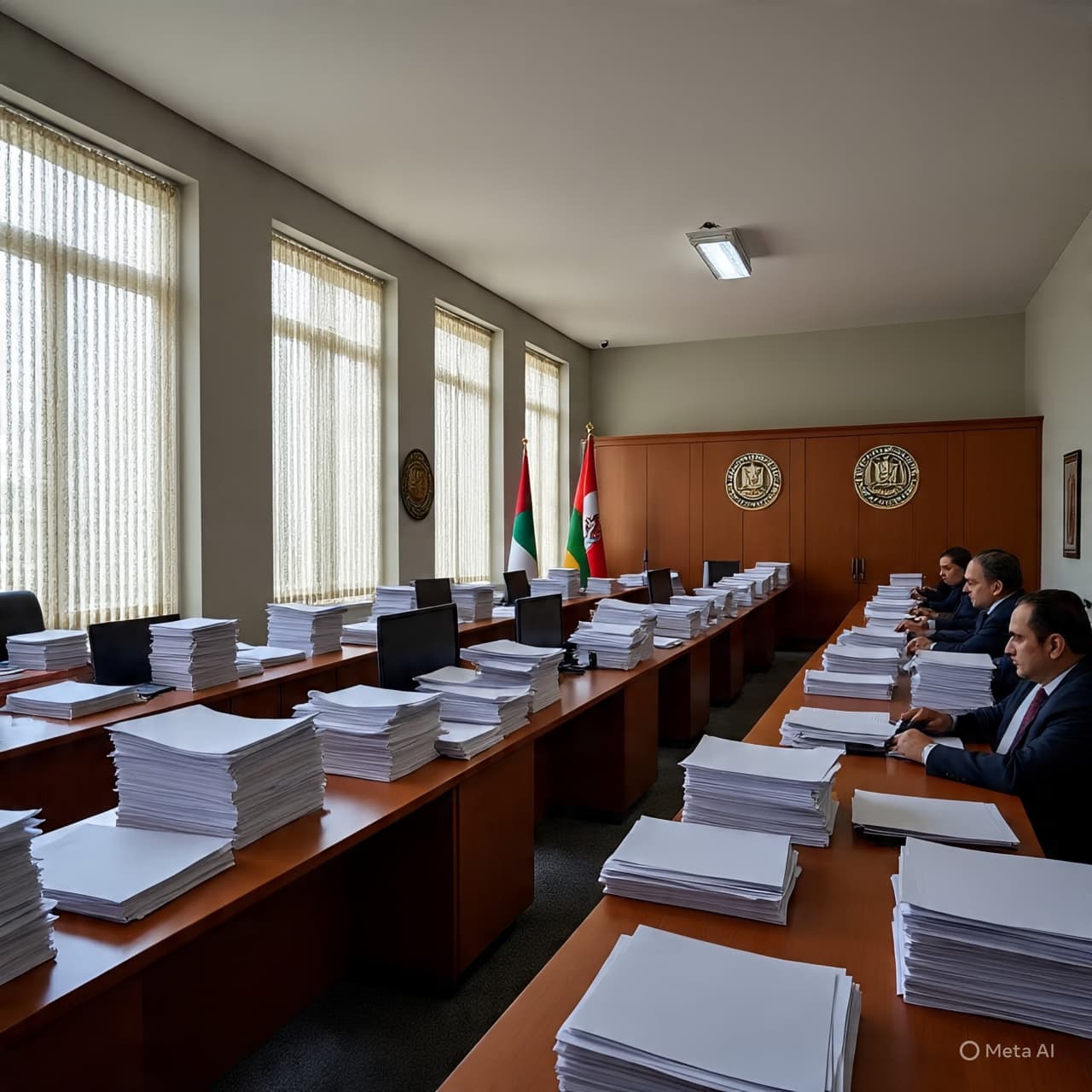
In the narrow corridors of Tehran’s sprawling administrative complexes, light falls in fractured patterns through latticed windows, brushing walls that have witnessed decades of quiet negotiation and sudden upheaval. The hum of air conditioning competes with distant traffic, a subtle rhythm that mirrors the pulses of power flowing through the city. Here, amidst offices stacked with files, whispers, and the occasional flash of cameras, moves one figure whose presence, though often unseen by the public, shapes the course of a nation’s decisions.
Mohammad Zolghadr, known among analysts as a central figure within the Islamic Revolutionary Guard Corps (IRGC), operates in spaces where authority and influence intertwine. His name has surfaced in reporting as a linchpin connecting military operations, economic oversight, and political strategy, a nexus where Tehran’s directives meet practical enforcement. Observers describe him as embodying the IRGC’s dual identity: disciplined yet adaptive, ideological yet pragmatic. It is within these overlapping roles that Zolghadr’s significance emerges, not in public appearances but in the orchestration of actions that ripple across Iran’s domestic and regional posture.
From controlling economic levers to monitoring internal security, the threads of power he touches extend far beyond the capital. His influence is felt in corridors of parliament, in the movement of strategic resources, and in dialogues with regional actors navigating alliances and rivalries. Each decision, whether administrative or operational, resonates quietly in the larger tapestry of Tehran’s governance, shaping how policies unfold and how Iran positions itself amid a complex geopolitical landscape. For international observers, tracing these connections offers insight into the mechanisms behind the IRGC’s enduring clout and Iran’s broader statecraft.
Even as the sun dips low over Tehran, casting long shadows across the city’s domes and avenues, the contours of power continue to shift. Zolghadr’s role, while largely invisible to the public eye, underscores a reality of modern governance: influence often moves in silence, and the levers of authority are not always where the eye can see. In these quiet operations, one finds the pulse of a state negotiating its ambitions, constraints, and the intricate balance between internal control and external signaling.
AI Image Disclaimer Visuals are AI-generated and serve as conceptual representations.
Sources Reuters BBC News Al Jazeera The Guardian The Washington Institute
Published by Banx Network. This article is part of the Banx decentralized media programme, powered by the BXE token on the XRP Ledger.


