
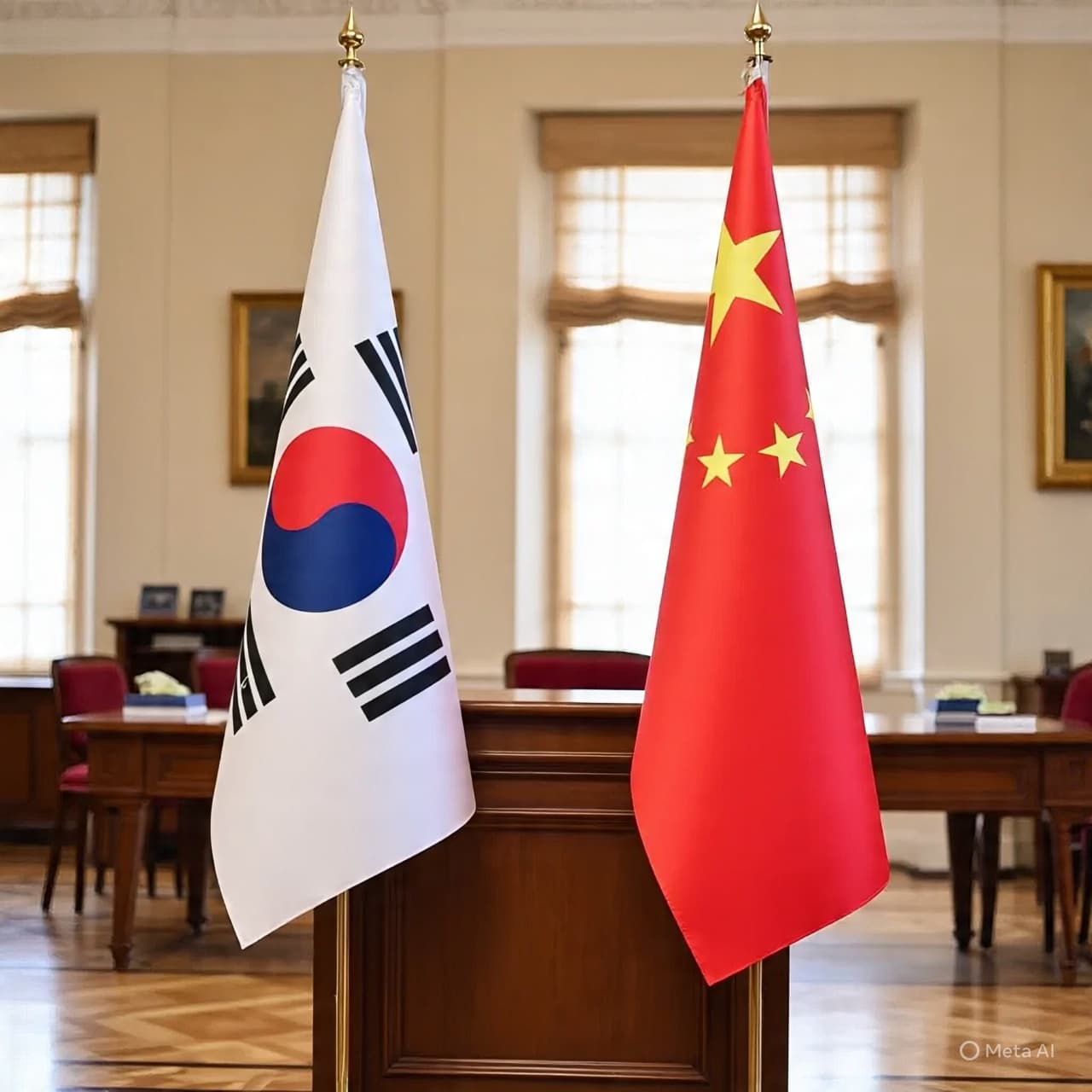
Diplomacy on the Korean Peninsula rarely advances in straight lines. It moves instead through pauses, gestures, and carefully chosen words, shaped as much by history as by immediate need. In this measured landscape, even a request can carry weight far beyond its phrasing.
South Korean opposition leader Lee Jae-myung said he has asked Chinese President Xi Jinping to consider playing a mediating role in efforts to address tensions with North Korea. The comment, delivered with restraint, reflects a familiar instinct in Seoul’s political tradition: when direct channels narrow, regional influence becomes part of the calculation.
China’s position in the peninsula’s long standoff is both constant and complicated. As North Korea’s most significant diplomatic and economic partner, Beijing occupies a role no other capital can replicate. At the same time, it has often been reluctant to step too visibly into mediation, preferring stability over confrontation and incremental influence over formal intervention. Lee’s appeal acknowledges that balance rather than challenging it.
The request comes at a moment of prolonged stalemate. North Korea has continued weapons development while diplomatic engagement has remained dormant. Sanctions persist, military exercises repeat, and communication lines open and close without lasting momentum. In this context, mediation is less a solution than a reopening — an attempt to reintroduce movement into a process frozen by repetition.
Lee framed his remarks around dialogue rather than pressure, emphasizing the need for regional cooperation to prevent further escalation. His comments do not signal a policy shift so much as a reminder of available pathways, particularly those that run through Beijing. For China, such a role would reinforce its image as a stabilizing regional actor, even as it navigates its own strategic tensions with Washington and its allies.
South Korea’s political landscape adds another layer of complexity. As an opposition figure, Lee does not set foreign policy, yet his words resonate within a broader national debate about how best to manage relations with both North Korea and China. They reflect an enduring question in Seoul: whether engagement, deterrence, or mediation offers the most sustainable path forward.
In official terms, no new diplomatic initiative has been announced, and China has not publicly responded to Lee’s remarks. What exists for now is an expression of intent rather than an agreed process. The peninsula remains where it has often been — attentive to signals, cautious about expectations.
As the region watches, the episode serves as a reminder that diplomacy sometimes begins not with negotiation, but with acknowledgment. In asking China to mediate, Lee has returned an old idea to the table, one shaped by geography, history, and the enduring hope that conversation, however indirect, remains preferable to silence.
AI Image Disclaimer Visuals are AI-generated and serve as conceptual representations.
Published by Banx Network. This article is part of the Banx decentralized media programme, powered by the BXE token on the XRP Ledger.


.jpg&w=3840&q=75 "Zelensky Warns China Is Helping Russia Develop a Starlink Rival")