
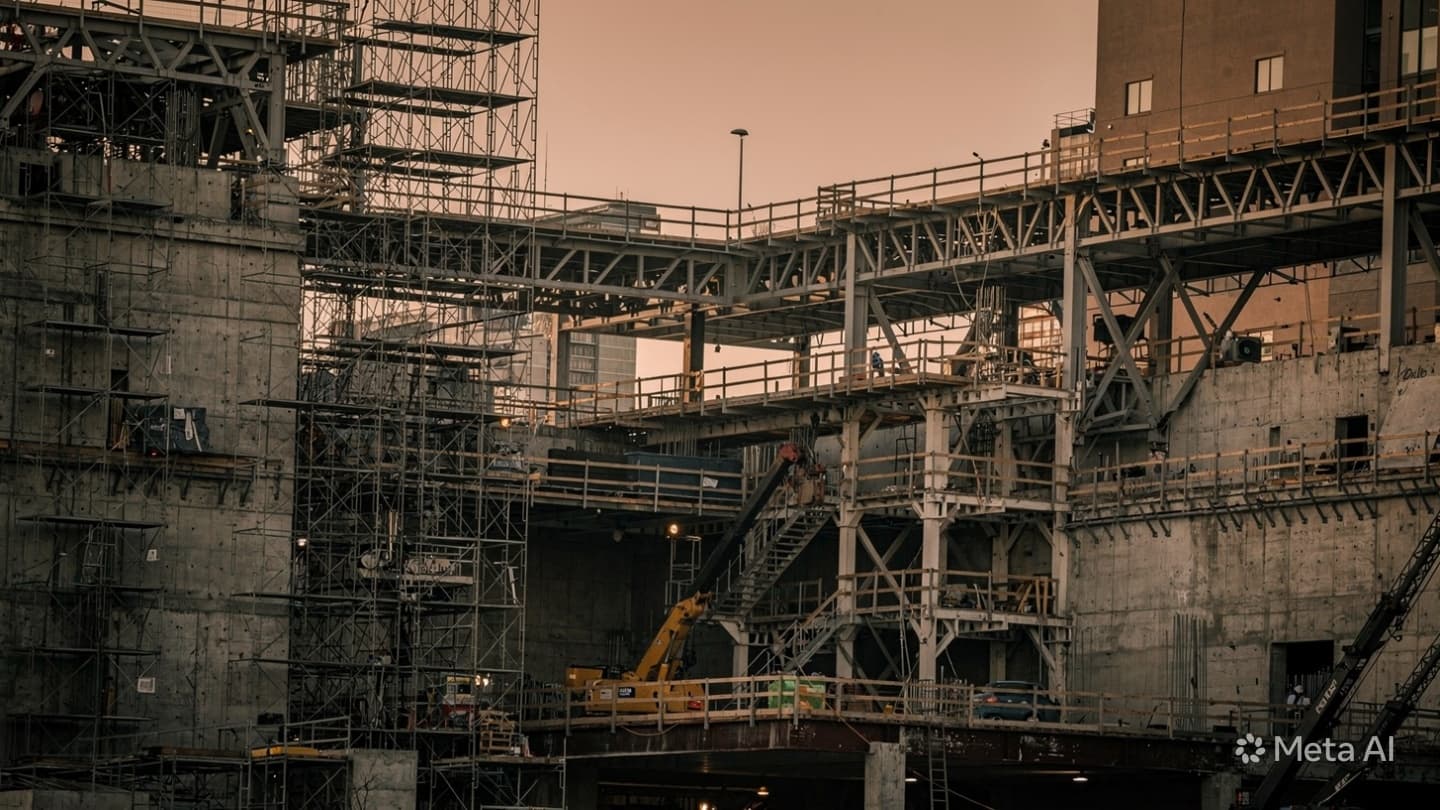
The city of Glasgow, a landscape of industrious spirit and enduring stone, recently paused beneath the heavy mantle of a quiet tragedy. In the heart of Cowcaddens, where the skyline is frequently reshaped by the ambition of new construction, a moment of mechanical failure rippled outward, changing the rhythm of the day entirely. It is in these moments, when the machinery of progress stutters, that the sheer vulnerability of those who build our world becomes starkly, hauntingly visible.
There is a distinct atmosphere to a construction site in the morning—a symphony of kinetic energy, the hum of heavy equipment, and the rhythmic percussion of metal against metal. It is a place where time is measured in cycles of labor and the steady advancement of structure. When that cadence is broken by the sudden, sharp silence of an accident, the air itself seems to thicken, holding the weight of what has been lost.
On a recent afternoon, the mechanical arm of a lift, poised high against the exterior of a refurbishment project, faltered. Such equipment is a marvel of our age, designed to reach where hands cannot, yet it remains tethered to the fundamental laws of gravity and the eventual wear of steel. The failure of such a mechanism is not merely an engineering concern; it is a profound intrusion of chaos into the ordered predictability of the workday.
Emergency responders arrived with the practiced urgency that defines their calling, navigating the tight geometry of the city streets to reach Buchanan House. Their presence, often seen as a reassurance of order, became a somber reminder of the fragility that exists behind the fences and hoardings. As the site was cleared and the investigations commenced, the towering structure stood as a mute observer to the life that had been abruptly stilled.
The human cost of such events is rarely captured in the technical reports that follow. We measure safety in regulations and margins of error, yet the reality remains centered on the individual who left home that morning, perhaps expecting nothing more than the routine challenges of a shift. The shock felt by colleagues on the ground and the quiet evacuation of the nearby office staff speak to a shared understanding that, in the face of such loss, the progress of the building is secondary.
For those left behind, the site becomes a locus of grief, a place where the ordinary business of trade and maintenance is replaced by a heavy, reflective stillness. It is a reminder that our modern environment—the offices we work in and the skylines we admire—is forged through a precarious partnership between man and machine. When that partnership fails, it leaves a void that no amount of reconstruction can fully fill.
As the authorities examine the remnants of the mechanical failure, the city moves on, yet the memory of that moment remains etched in the periphery of the neighborhood. The inquiries will eventually yield findings, pointing toward causal factors and systemic lapses, but the narrative of the person lost is one that remains personal and singular. The city continues to rise, but for those touched by this event, the height of the steel is matched only by the depth of the inquiry into what went wrong.
In the final days, the site will be quiet, the investigations will conclude, and the work will likely resume, as is the way of the city. But the reflection remains: that within the vast, concrete expanse of Glasgow, the smallest error can carry the weight of an entire world. It is a somber truth that the architecture of our lives is supported by those who, in their daily toil, accept the risks that the rest of us rarely acknowledge.
Authorities have confirmed that a construction worker died following a fall from a truck-mounted lift at the Buchanan House site in Glasgow. A second individual was transported to a local hospital with serious injuries. Emergency services, including police and fire crews, attended the scene on Port Dundas Road to manage the aftermath and initiate a safety investigation, while the building was evacuated as a precaution during the initial response.
Published by Banx Network. This article is part of the Banx decentralized media programme, powered by the BXE token on the XRP Ledger.


