There are questions that a law school is uniquely equipped to ask, and questions it is uniquely unequipped to answer. The case of Jeffrey George Ewert, a convicted murderer on day parole who began attending McGill University's law faculty in August, has placed the institution squarely between two principles it holds dear: the duty to keep students safe and the belief that education can transform even the most broken of lives.
Ewert, now in his sixties, was convicted of second-degree murder and attempted murder for two attacks in British Columbia in 1984. He sexually assaulted and killed one woman, and less than six weeks later, beat and choked a fifteen-year-old so severely that she was paralyzed and disabled for life, according to his parole board file . He served four decades in prison and was granted day parole in 2025. Clinical assessments ranked his risk of reoffending as moderate to high, though parole documents suggest that with close supervision and clinical follow-up, the risk "seems to fall more into the moderate risk category" .
Ewert attended classes from August until early October, when McGill removed him from campus following what provost Angela Campbell described as "measured, decisive action" . The university had not disclosed his history to students, and some expressed feeling unsafe upon learning of it . But the removal prompted a counter-response: a petition drafted by three law students and signed by more than one hundred students and alumni, arguing that excluding Ewert undermines his access to education and rehabilitation as an Indigenous man and a survivor of the Sixties Scoop .
The petition acknowledges student safety concerns but contends that a ban "with no conversation beforehand and no finding of misconduct" takes away his chance to learn . Annica Dickens, one of the authors, wrote in an email: "Public discomfort should not, on its own, be treated as proof that someone poses a threat" . Raymond Johnson-Brown, another student involved, told the Montreal Gazette that "discomfort is not the same as a lack of safety," while acknowledging that women's concerns about Ewert's history are reasonable .
The debate has divided the faculty. Some students argue for compassion toward those convicted of crimes; others insist the university must respect the trauma of students who feel unsafe . The McGill Law Students' Association issued a statement accusing the university of responding reactively and undermining the principle of rehabilitation . Ewert's lawyer, Nora Demnati, described the situation as having "put tremendous stress on someone who's like, honestly, an example of rehabilitation," noting his work heading the Canadian Prisoners' Labour Confederation .
McGill's administration has attempted to hold both truths. Campbell wrote that "a past conviction does not on its own bar anyone from studying here," while emphasizing the university's duty of care to the whole community . Law dean Tina Piper told students that the situation "is not unlike one you may encounter in your future legal career and now is a good time to practise how you want to be in the world" .
The petition is expected to be delivered to university leadership. A fair process is underway, the provost said, one that balances the rights and interests of everyone involved. What that balance will look like—and whether a law school can be both a sanctuary and a classroom—remains the open question.
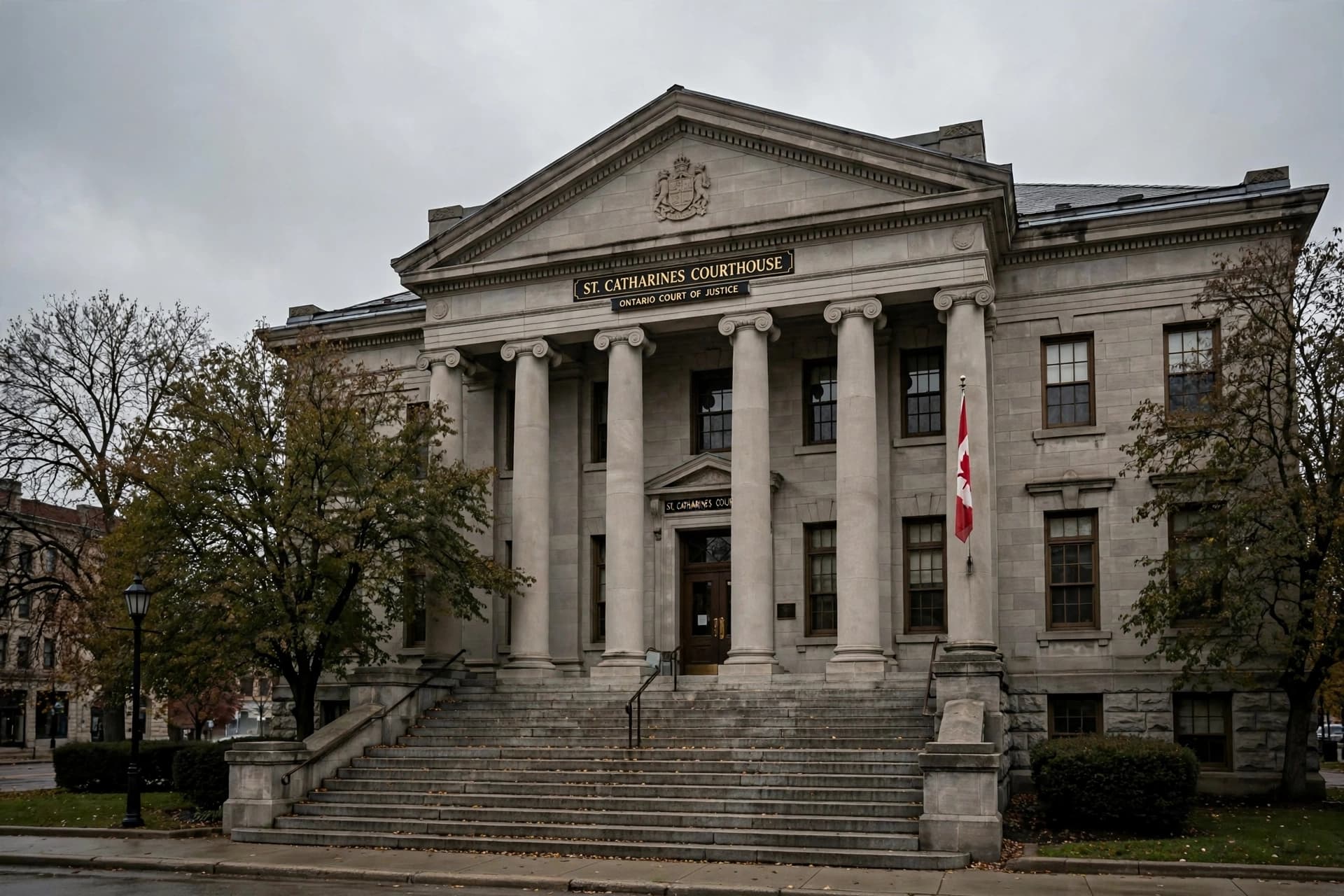
The visual content in this article was created with AI generation tools.
Sources: CBC News, Montreal Gazette, Daily Mail
Published by Banx Network. This article is part of the Banx decentralized media programme, powered by the BXE token on the XRP Ledger.