
Key Highlights
- Recent airstrikes at Mehrabad International Airport have caused significant damage.
- President Trump demands Iran's unconditional surrender amid escalating tensions.
- The conflict has led to widespread civilian displacement and military readiness in the region.
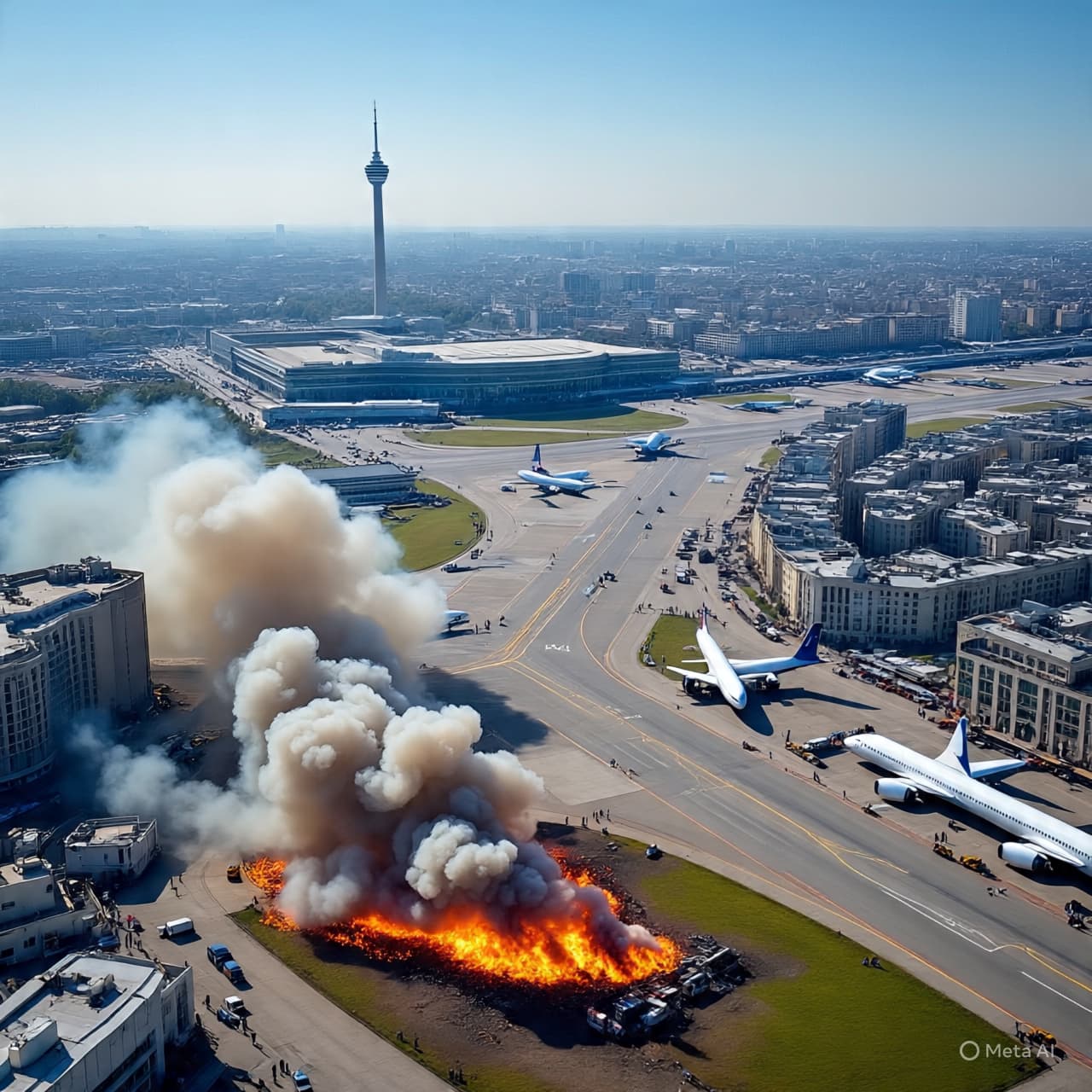
The last light of day on the wide expanse of Mehrabad International Airport in Tehran was once a quiet signal of journeys begun and ended — families greeting loved ones, business travelers hurrying toward departure gates, the subtle hum of air traffic and the promise of flight. However, recent hours have transformed that familiar rhythm into something far darker: plumes of smoke rising from the tarmac, black against the fading sky, while fire traced long, restless lines across charred metal and shattered glass. The airport, a symbol of connection, now bears silent witness to the echo of distant war.
In the midst of this imagery, a political narrative has unfolded, shifting from diplomatic negotiations to stark ultimatums. Washington is now deeply engaged in a broad military campaign alongside Israeli forces against targets in Iran. President Donald Trump has made his stance clear: there will be no deal with Iran unless it agrees to “unconditional surrender.” This demand casts a long shadow over hopes for a negotiated end to hostilities, raising questions about the future of U.S.-Iran relations.
Footage and reports emerging from Tehran’s airport depict fiery explosions, billowing smoke, and charred aircraft on the ground. These incidents are not isolated but part of a wider pattern of aerial strikes on the Iranian capital and surrounding areas. Described as among the most intense in the ongoing conflict, these assaults form the backdrop against which world leaders and military planners now debate the next steps.
Across the region, motions once mundane — the landing of a flight, the loading of cargo — have been overtaken by a far less ordinary sense of movement: the motion of missiles, the urgent displacements of civilians, and the slow pivot of governments reconsidering alliances and objectives. In the Gulf states, military preparedness has soared, while in Tehran and Beirut, streets once familiar to daily life have seen displacement and disruption.
The demand for Iran’s unconditional surrender represents a departure from conventional diplomatic phrasing. By pronouncing it, the U.S. administration has rejected interim negotiations and set its terms high, tying any future interaction or reconstruction aid to Tehran’s full capitulation and a reconfiguration of its leadership — a stance that Iranian authorities have rebuffed outright.
Under these conditions, the image of an airport ablaze becomes more than a scene of destruction; it becomes a metaphor for a world in motion yet at a standstill, where the normal rhythms of civilian life intersect with decisions made in distant capitals. As the smoke rises over Mehrabad’s runways, so too does the question of what political horizon lies beyond the conflagration: a negotiated peace, a long stalemate, or something none in those cities’ skies have yet witnessed.
In straight news language, Israeli airstrikes have hit Tehran’s Mehrabad International Airport, causing fires and damage to aircraft and infrastructure amid the broader conflict involving the United States and Iran. President Trump has stated that there will be no deal with Iran unless it agrees to an “unconditional surrender,” a hardline position as hostilities enter their second week. Iranian leaders have rejected this demand, and both sides continue military actions, including strikes and retaliatory launches across the region. The situation remains fluid, with significant impacts on civilian infrastructure and ongoing international concern.
Published by Banx Network. This article is part of the Banx decentralized media programme, powered by the BXE token on the XRP Ledger.



