
Key Highlights
- Diplomatic Talks:U.S. and China engage in discussions in Beijing.
- Focus Areas:Trade tensions, technology restrictions, and regional security.
- Market Reactions:Global markets respond to the diplomatic engagement.
Diplomacy often resembles a long corridor lined with closed doors, where progress is measured not only by agreements achieved but also by conversations that continue despite disagreement. When leaders from major powers meet face to face, the symbolism alone can shape expectations far beyond the conference room itself.
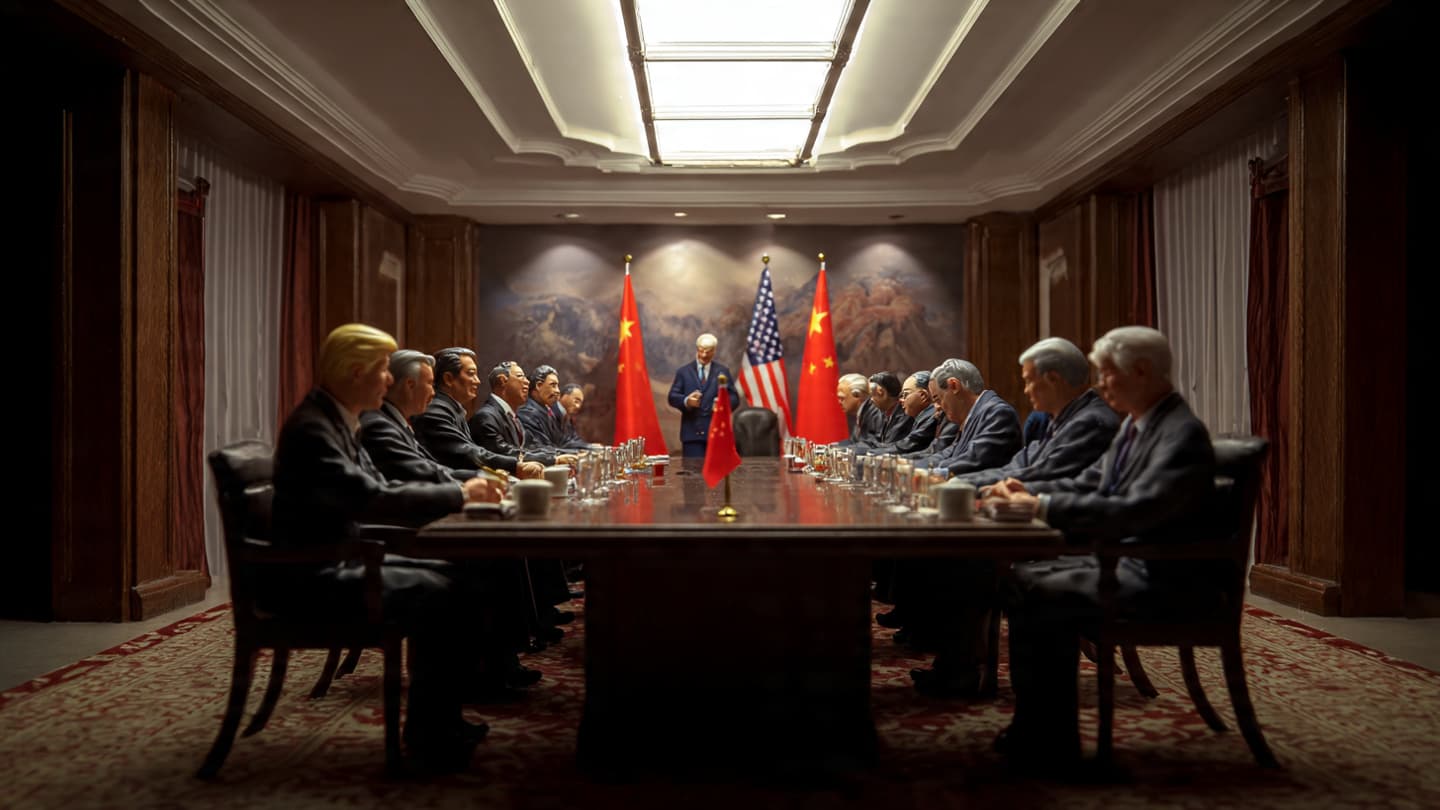
Recently, President Donald Trump’s visit to Beijing has drawn global attention as analysts debate whether the meeting represents a genuine diplomatic opening or merely another temporary pause in the increasingly complex relationship between the United States and China. The discussions reportedly focused on critical issues such as trade tensions, technology restrictions, regional security, and economic cooperation. Officials from both governments described the talks as constructive, though neither side announced major breakthrough agreements during the initial meetings.
Relations between Washington and Beijing have remained strained in recent years due to disputes involving tariffs, semiconductor exports, Taiwan, and geopolitical competition in the Indo-Pacific region. Despite these tensions, both countries remain deeply interconnected economically, creating pressure to maintain channels of communication. The importance of stability and mutual respect was emphasized by Chinese officials during the diplomatic meetings, with state media in Beijing portraying the visit as an opportunity to reduce confrontation and strengthen dialogue between the world’s two largest economies.
American analysts expressed mixed reactions to the visit. Some viewed it as a pragmatic effort to prevent further deterioration in bilateral relations, while others questioned whether substantial policy differences could realistically be resolved through symbolic diplomacy alone. This skepticism reflects a broader concern about the effectiveness of diplomatic engagements in the face of deep-seated disagreements.
Global markets closely followed the visit, as investors remain sensitive to developments affecting trade flows, manufacturing supply chains, and international technology cooperation. Even limited signs of improved communication between the two countries can influence economic sentiment worldwide. The interconnectedness of the U.S. and Chinese economies means that any diplomatic progress, however small, could have significant implications for global markets.
For now, the meetings in Beijing appear to reflect cautious diplomacy rather than dramatic transformation. Yet in an international climate increasingly shaped by rivalry and uncertainty, the willingness of both sides to continue talking may itself carry significant political value. The ongoing dialogue could pave the way for future negotiations and a more stable relationship, even if immediate results are not evident.
The visuals accompanying this article were created using AI-generated imagery for illustration purposes.
Published by Banx Network. This article is part of the Banx decentralized media programme, powered by the BXE token on the XRP Ledger.



