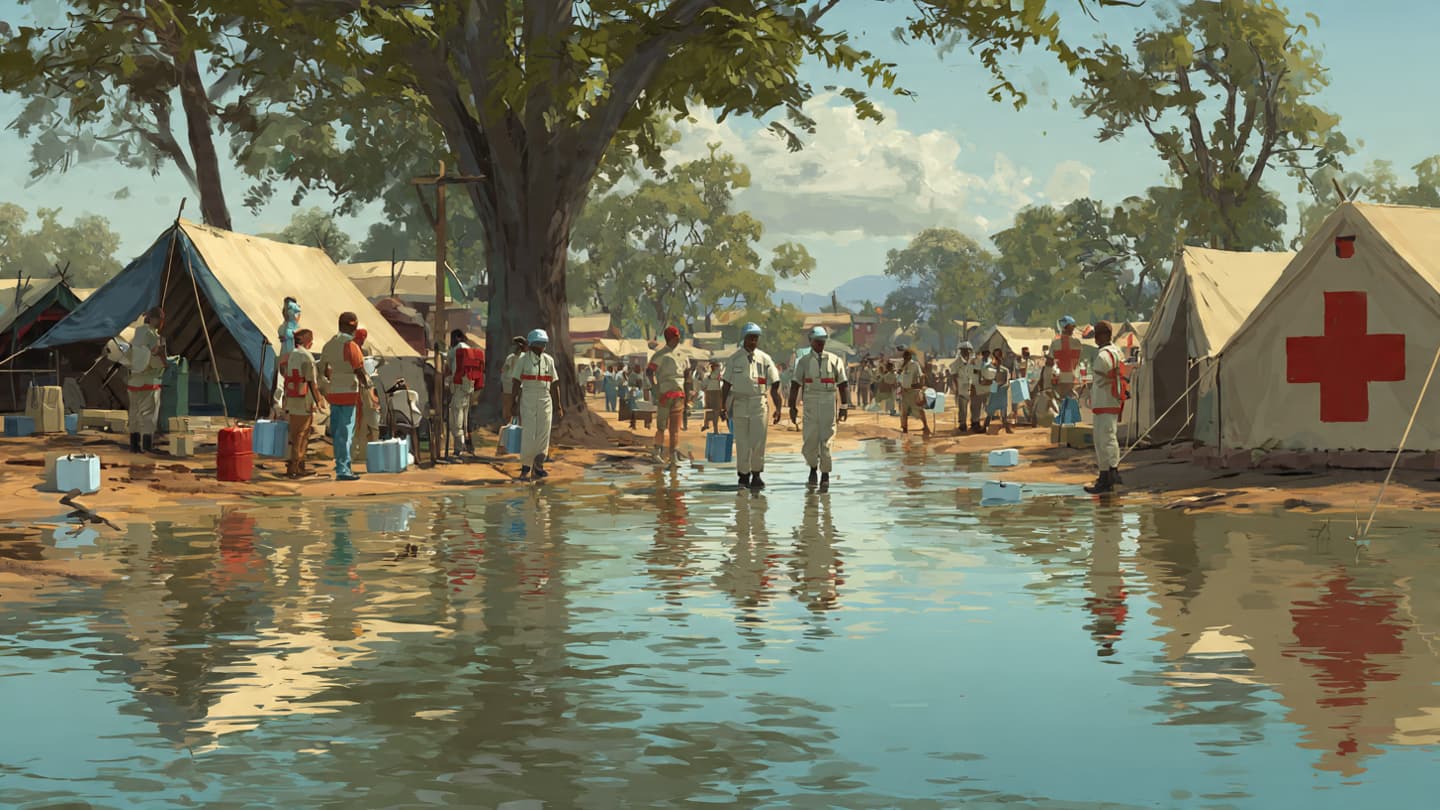
Floodwaters rarely carry only visible destruction. Beyond damaged homes and submerged roads, they often leave behind quieter dangers that move through contaminated water, overcrowded shelters, and weakened healthcare systems long after the rain begins to fade. Across Zimbabwe, severe flooding has now intensified fears surrounding cholera outbreaks in vulnerable communities.
Authorities confirmed emergency health responses in several flood-affected regions after worsening sanitation conditions increased concerns over cholera-related illness. Medical teams and humanitarian agencies were deployed to vulnerable districts where flooding disrupted clean water access and damaged sanitation infrastructure.
Officials stated that heavy rainfall and overflowing waterways contaminated water sources in some rural settlements, raising the risk of disease transmission among displaced families and isolated communities. Clinics reported growing pressure as residents sought treatment for suspected waterborne illnesses.
In temporary shelters, families waited beside crowded aid stations while healthcare workers distributed clean water supplies, sanitation materials, and public health guidance. Volunteers also assisted with hygiene campaigns aimed at reducing infection risks following the floods.
Cholera outbreaks remain a recurring public health challenge in parts of Zimbabwe, particularly during periods of severe rain and infrastructure disruption. Limited access to safe drinking water and strained medical services often complicate emergency response efforts in rural districts.
Authorities urged residents to boil drinking water, avoid contaminated flood zones, and seek medical treatment immediately if symptoms appeared. Emergency officials also expanded monitoring operations in areas experiencing rising floodwaters and damaged sanitation systems.
Despite the growing concern, healthcare workers and local volunteers continued moving steadily between villages delivering assistance beneath difficult conditions. Mobile clinics traveled through muddy roads while aid agencies coordinated food and medical support for displaced residents.
Outside the most severely affected regions, daily activity continued cautiously beneath cloudy skies and lingering rainfall. Yet conversations throughout nearby communities increasingly focused on health risks, clean water shortages, and uncertainty surrounding the spread of disease.
Authorities confirmed that flood relief and public health operations remain ongoing across Zimbabwe. Officials stated that cholera prevention measures and emergency sanitation support will continue throughout affected areas.
Published by Banx Network. This article is part of the Banx decentralized media programme, powered by the BXE token on the XRP Ledger.