Morning in Warsaw often arrives beneath a pale silver sky. Trams move through broad avenues lined with postwar buildings, church towers rise quietly above crowded intersections, and memories linger in the architecture itself — scars rebuilt carefully over generations. In Poland, history rarely feels distant. It lives in monuments, family stories, and in the persistent awareness that geography can shape destiny as much as politics does.
It is perhaps for this reason that shifts in American policy toward Eastern Europe are watched here with unusual attentiveness. This week, Donald Trump signaled a renewed commitment to supporting Poland and resisting Russian aggression, reversing what critics had viewed as a damaging earlier position that raised uncertainty among NATO allies about Washington’s long-term reliability.
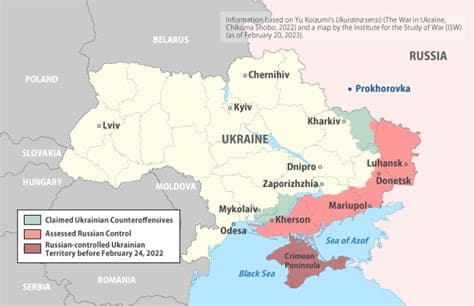
The remarks carried significance far beyond diplomatic phrasing. In Eastern Europe, security assurances are not abstract political gestures; they are deeply tied to historical memory. Poland, positioned between Germany and Russia and shaped repeatedly by invasion, occupation, and shifting alliances, has spent decades strengthening its military partnerships with the United States and NATO. Since Russia’s invasion of Ukraine, those concerns have intensified further, turning Poland into one of the alliance’s most strategically important front-line states.
The earlier hesitation surrounding American commitments had unsettled officials and analysts across the region. Questions over military support, alliance obligations, and the future direction of NATO reverberated through European capitals already adapting to a prolonged period of instability. In cities near the alliance’s eastern flank, military convoys, defense spending debates, and air defense systems have become part of the ordinary political landscape.
Now, the renewed rhetoric from Donald Trump appears aimed at reassuring allies that the United States remains committed to deterring Russian expansionism. The language reflects a broader recognition that the war in Ukraine has fundamentally altered Europe’s security environment, reviving fears once thought buried with the Cold War.
Poland itself has responded to these tensions with remarkable urgency. The country has expanded defense spending, modernized military equipment, and strengthened cooperation with NATO partners. Along highways in eastern regions, military vehicles are no longer unusual sights. American troops rotate through bases, while logistical corridors connecting aid and equipment to Ukraine continue operating quietly behind the scenes.
Yet beneath the visible military preparations lies a subtler emotional atmosphere. In Poland, conversations about security often carry the weight of inherited memory. The names of past uprisings, occupations, and border changes remain woven into national consciousness. The current war in neighboring Ukraine has therefore felt not like a distant geopolitical contest, but like an unsettling reminder of how quickly peace in Europe can become fragile.
Across the Atlantic, American political debates surrounding NATO and foreign commitments continue evolving alongside domestic divisions. Questions over defense spending, burden-sharing, and strategic priorities remain central topics in Washington. Still, moments of reaffirmation toward allies such as Poland carry symbolic importance, especially at a time when Europe’s eastern borderlands are once again defined by uncertainty.
Meanwhile, Russia’s presence continues shaping the wider atmosphere of the region. Military exercises, cyber concerns, and energy security debates have all become intertwined with the broader struggle over influence and deterrence. The geography of Eastern Europe — forests, plains, railways, and borders stretching across open land — has once again returned to the center of global strategic attention.
By the close of the latest statements, Donald Trump had reaffirmed support for Poland and resistance to Russian aggression, easing some concerns among allies about wavering American commitment. Yet across Warsaw and other capitals along NATO’s eastern edge, reassurance remains something measured carefully over time. In this part of Europe, history has taught nations to listen closely not only to promises, but to how long they endure after the speeches fade.
AI Image Disclaimer These images were created using AI tools to visually interpret the themes and events discussed in the article.
Sources
Reuters Associated Press BBC News NATO The Washington Post
Published by Banx Network. This article is part of the Banx decentralized media programme, powered by the BXE token on the XRP Ledger.