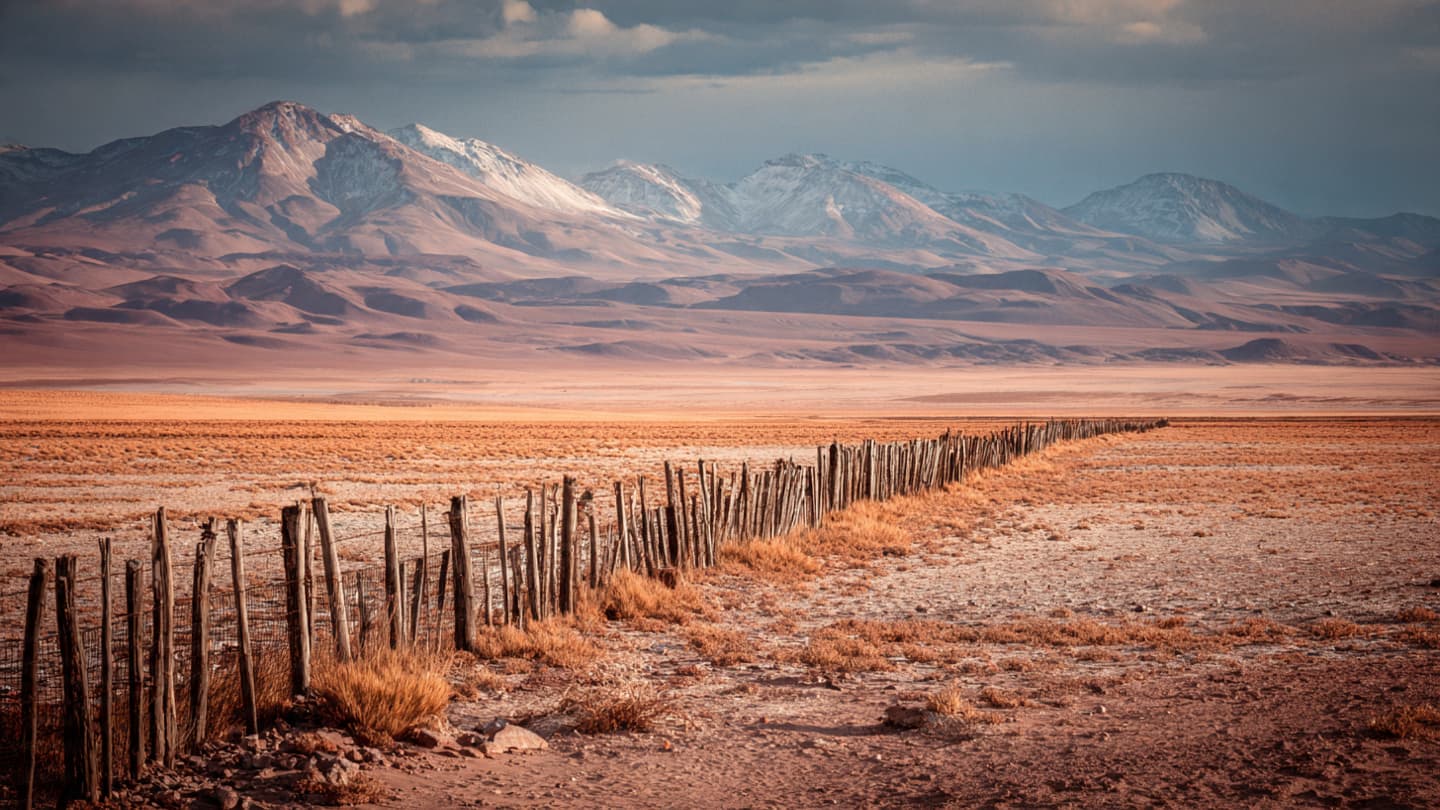
The northern edge of Chile carries a silence unlike most borders. There, the Atacama Desert stretches outward in pale browns and muted golds, its dry winds moving across roads that seem suspended between nations and emptiness. Small towns emerge suddenly from the dust, while distant mountains hold the horizon in stillness. Yet beneath that vast calm, political tension has begun to gather with increasing force, carried not by storms, but by language — slogans, promises, and fears traveling across continents.
In recent months, Chile’s immigration debate has taken on a sharper tone, with some politicians and commentators embracing rhetoric and border-control ideas reminiscent of the “Make America Great Again” movement associated with the United States. Calls for stricter enforcement, stronger deportation measures, expanded military presence near frontier crossings, and tougher migration policies have entered the center of national conversation as Chile confronts rising public concern over irregular migration and crime.
The shift reflects broader anxieties moving through South America, where migration flows have transformed political landscapes in ways few governments anticipated a decade ago. Chile, once viewed as one of the region’s most economically stable destinations, has seen significant arrivals from countries facing crisis, particularly Venezuela. In northern border regions, temporary camps, overcrowded shelters, and difficult desert crossings have become increasingly visible realities.
The desert itself has become part of the story. Migrants crossing through harsh terrain often travel long distances under cold nights and severe daytime heat, moving through isolated routes near Chile’s borders with Bolivia and Peru. Local residents in northern towns have described strained public services and changing social conditions, while authorities have responded with heightened security operations and stricter migration controls.
Into this atmosphere has entered a political vocabulary shaped partly by global influence. Some Chilean figures have openly referenced hardline immigration strategies associated with the American right, framing border enforcement as central to national identity, public order, and sovereignty. Campaign imagery, social media messaging, and public speeches increasingly echo themes familiar far beyond Latin America: walls, security, crime prevention, and the promise of reclaiming control.
Yet Chile’s political environment remains distinct, shaped by its own history of dictatorship, democratic transition, and social inequality. Public debate over migration often moves between humanitarian concern and fears tied to organized crime, housing pressure, and economic uncertainty. The conversation is not merely ideological; it is deeply connected to everyday life in neighborhoods, transit systems, and border communities adjusting to rapid demographic change.
For many migrants arriving in Chile, the journey northward is already marked by exhaustion and displacement long before politics enters the discussion. Families cross multiple countries carrying documents, backpacks, and uncertain expectations. In Santiago and other cities, new migrant communities have reshaped local economies and public spaces, adding layers of language, music, food, and cultural adaptation to urban life. At the same time, tensions over integration and security have become more pronounced in political campaigns and public discourse.
The influence of international political styles reveals how connected modern anxieties have become. Narratives once centered in Washington now echo through speeches in Santiago, Rome, Buenos Aires, and elsewhere, reshaped by local conditions but carrying similar emotional currents. Migration, perhaps more than any other issue, moves easily across borders not only physically, but rhetorically.
Meanwhile, Chilean authorities continue expanding enforcement operations in northern regions, including military deployments near border crossings and stricter checks on undocumented entry. Debates over deportation policy and immigration reform remain active in Congress, with upcoming elections likely to intensify the issue further.
As evening settles again over the Atacama, the desert remains what it has always been: immense, quiet, and indifferent to the lines drawn across it. Yet along those lines, politics continues to gather weight. In Chile, the discussion over borders has become more than a policy debate. It has become a reflection of how nations respond when movement, fear, identity, and uncertainty begin arriving together on the same road.
AI Image Disclaimer AI-generated visuals accompany this article as interpretive illustrations and do not depict actual scenes.
Sources
Reuters Associated Press BBC News Al Jazeera The Guardian
Published by Banx Network. This article is part of the Banx decentralized media programme, powered by the BXE token on the XRP Ledger.