
Key Highlights
- Residents in coastal Philippines prepare for an approaching storm.
- Authorities warn of strong winds and potential storm surges.
- Evacuations and emergency supplies are being organized in vulnerable areas.
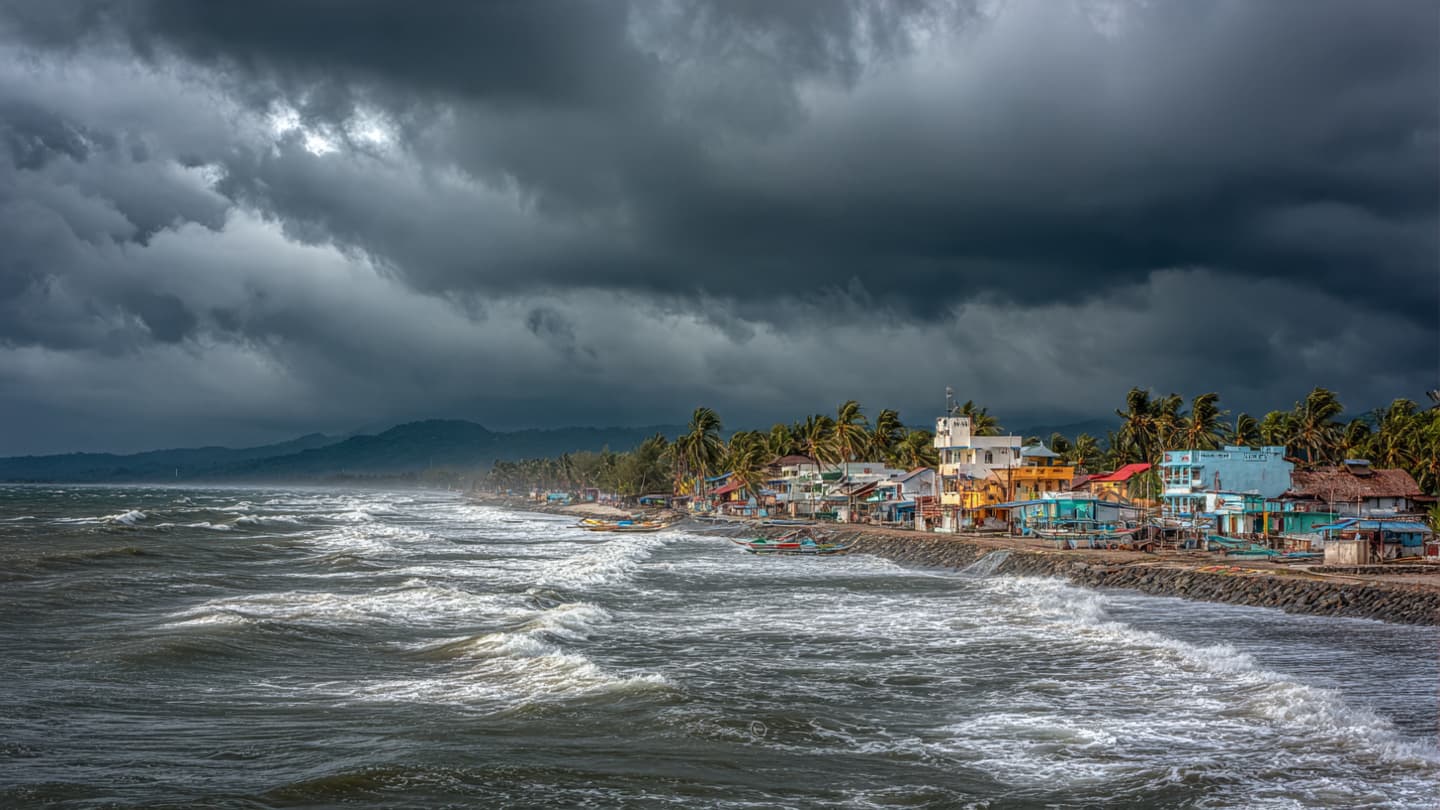
As dark clouds loom over the eastern shoreline of the Philippines, fishing boats rest unusually still against the docks, signaling the approach of a developing storm. The sea, often central to the daily rhythm of life in these coastal towns, appears unsettled beneath the thickening skies. Residents are moving through preparations quietly, carrying plywood sheets, securing rooftops, and watching the horizon with practiced caution as they brace for the impending weather.
Authorities have issued warnings about strong winds and possible storm surges threatening several coastal communities. Disaster response agencies are urging residents living in vulnerable shoreline areas to evacuate or prepare emergency supplies ahead of the worsening conditions expected overnight. Local officials have suspended some maritime activities, while emergency teams are positioning rescue equipment and relief supplies across high-risk provinces.
In anticipation of the storm, schools and public buildings have been converted into temporary evacuation centers. Families from low-lying coastal zones are arriving with bags, blankets, and food supplies, seeking safety from the rising waters. Residents have reported unusually strong waves striking seawalls throughout the afternoon, as rain bands steadily move inland. In fishing villages, many are rushing to secure boats and nets before conditions deteriorate further.
Coastal regions develop a certain familiarity with storms, but this familiarity rarely alleviates fear. People memorize evacuation routes as others memorize landmarks, and children grow up recognizing the sound of emergency sirens before landfall. Homes are repaired repeatedly beside waters that return each season, bringing different names and winds. The emotional toll of living in such precarious conditions is palpable, as families prepare for the worst while hoping for the best.
Meteorological agencies forecast continued intensification of the weather system, with heavy rainfall expected to trigger localized flooding and landslides in nearby mountainous areas. Emergency officials are advising residents to remain indoors where possible and to avoid traveling through flood-prone roads or coastal highways. The urgency of the situation is underscored by the need for residents to stay informed and heed warnings from local authorities.
Local governments are coordinating continuous weather advisories as evacuation efforts expand in some districts. Medical teams and relief personnel remain on standby, monitoring shoreline conditions through the evening hours. By nightfall, coastal communities across eastern provinces are under heightened alert as the storm system moves closer to land. Officials are urging residents to follow emergency instructions and prepare for rapidly changing weather conditions overnight.
The resilience of these coastal communities is tested time and again, as they navigate the challenges posed by nature. With each storm, they adapt and prepare, hoping to safeguard their families and homes against the relentless forces of the sea.
Published by Banx Network. This article is part of the Banx decentralized media programme, powered by the BXE token on the XRP Ledger.



