
Key Highlights
- Severe flooding in the Philippines has disrupted transportation across multiple provinces.
- Emergency responders are assisting stranded motorists and delivering relief supplies.
- Meteorological agencies warn of continued rainfall and potential landslides.
The Philippines is currently grappling with severe flooding as heavy rains sweep across central provinces, transforming roads into rivers and creating hazardous conditions for travelers. Commuters are facing significant delays as they navigate crowded terminals, with many waiting beside dangerous roads while listening to weather advisories broadcasted through radios and smartphones.
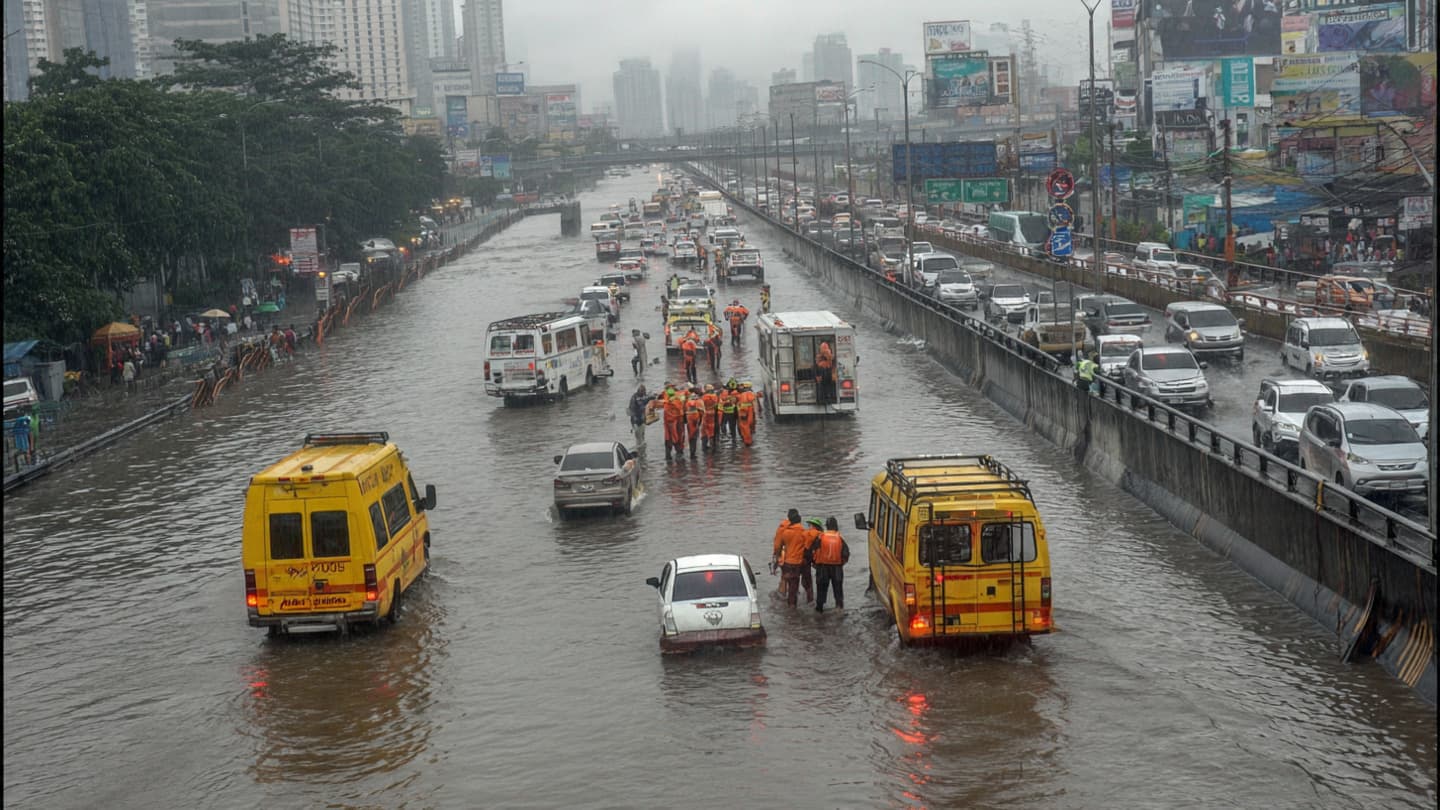
Authorities have confirmed that the relentless downpour has overwhelmed drainage systems, leading to flash floods that have disrupted transportation networks. Major highways and urban roads have become impassable, stranding vehicles and delaying public transportation services throughout the day. The situation has prompted local governments to suspend classes and halt transportation operations along vulnerable routes, where strong currents and debris pose serious risks.
Emergency responders have been deployed to assist motorists trapped in flooded areas, while rescue boats are navigating through communities where water levels have risen rapidly. Residents have reported traffic congestion stretching for miles as vehicles struggle to navigate submerged highways under worsening weather conditions. In rural districts, smaller communities have been isolated as bridges and connecting roads disappear beneath the rising waters.
Transportation in the Philippines relies heavily on fragile connections between islands, provinces, and crowded urban centers. When floods disrupt these routes, the impact is felt across markets, schools, hospitals, and neighborhoods, which are already challenged by distance and adverse weather. The disruption of these vital lifelines can have cascading effects on daily life, making it difficult for workers to reach their jobs and families to reunite.
In response to the crisis, authorities have deployed additional emergency personnel to high-risk flood zones and are closely monitoring river systems that are expected to remain elevated overnight. Relief supplies are being delivered to evacuation shelters housing residents displaced by flooding in low-lying areas across several provinces. The government is working to ensure that those affected receive the necessary support during this challenging time.
Meteorological agencies have issued warnings that additional rainfall could exacerbate flooding conditions and trigger landslides in mountainous regions. Officials are advising residents to avoid crossing flooded streets and waterways as emergency teams continue their rescue operations into the evening hours. By nightfall, transportation disruptions remain widespread, and cleanup and rescue efforts are ongoing under unstable weather conditions.
Authorities are urging the public to remain cautious as flood risks persist into the following day, emphasizing the importance of safety during this ongoing crisis. As the situation develops, updates will be provided to keep the public informed about the status of transportation and weather conditions.
Published by Banx Network. This article is part of the Banx decentralized media programme, powered by the BXE token on the XRP Ledger.



