
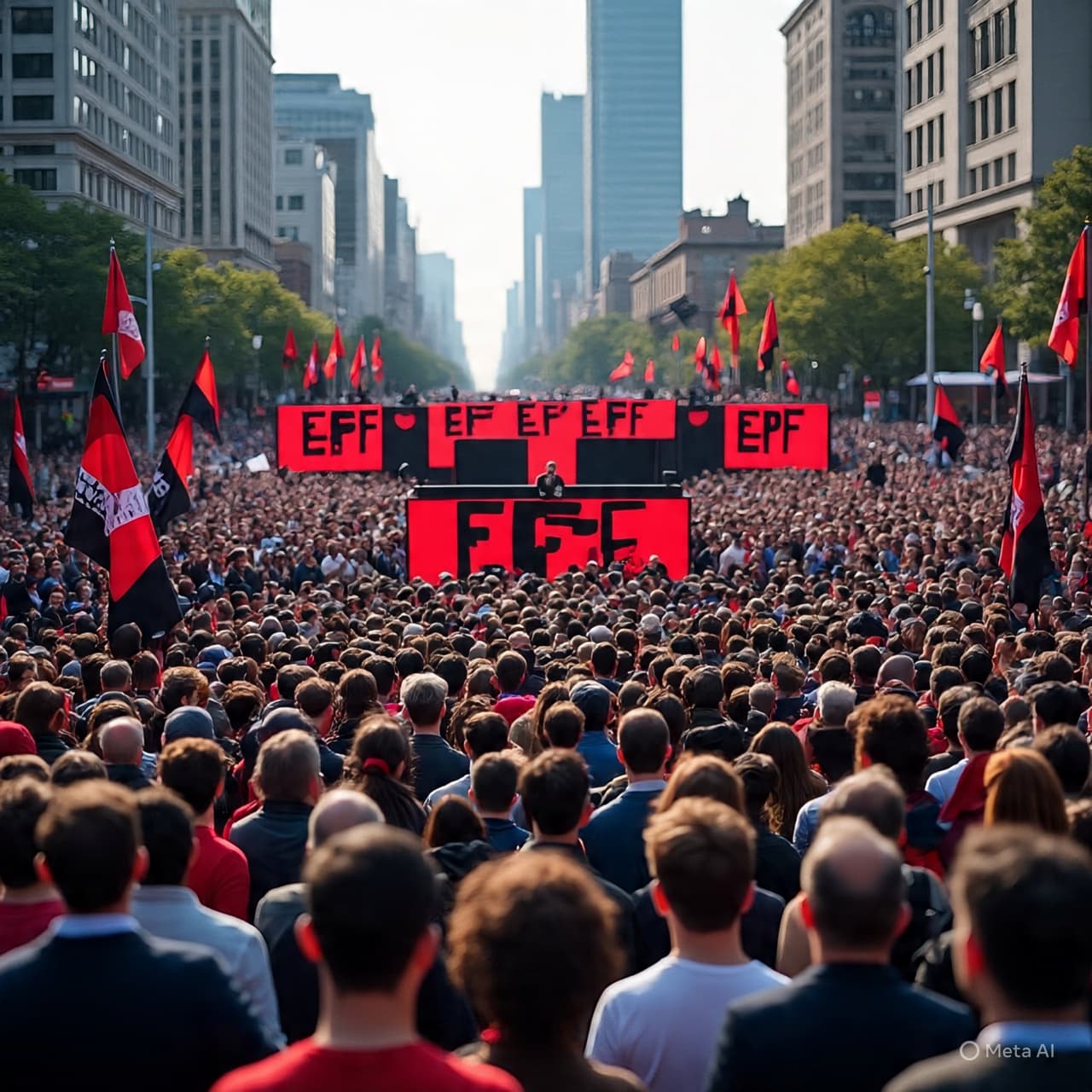
Key Highlights
- Julius Malema denies any formal alliance with the MK Party.
- The statement comes amid rising speculation about political collaborations.
- The EFF leader emphasizes the party's independence in strategy and operations.
In recent weeks, the political landscape in South Africa has been abuzz with speculation regarding potential alliances between various parties. At the center of this discourse is Julius Malema, the leader of the Economic Freedom Fighters (EFF), who recently addressed the public to clarify the party's position concerning the MK Party. His statement, delivered with clarity and conviction, aimed to dispel rumors and assert the EFF's independence.
During his address, Malema firmly stated that there is no formal alliance between the EFF and the MK Party. This declaration is significant, as it comes at a time when political dynamics are increasingly fluid, and the electorate is keenly observing the relationships between different political entities. By making this statement, Malema not only sought to quell speculation but also to reinforce the EFF's commitment to its own strategic direction.
The context of Malema's comments is crucial. In a political environment where collaboration and competition often intertwine, the clarity of such statements can have far-reaching implications. Political analysts suggest that the EFF's independence is a strategic choice, allowing the party to navigate the complexities of South African politics without being tethered to the agendas of other organizations. This independence is vital for maintaining the party's identity and principles, especially as it seeks to appeal to a diverse electorate.
Supporters of the EFF and observers of the political scene have noted that Malema's remarks serve as a reminder that political alliances are not merely a matter of convenience but are deeply rooted in ideological alignment and strategic interests. The EFF's stance emphasizes that while collaboration may be beneficial in certain contexts, it is not an automatic outcome of political discourse. This perspective is essential for understanding the evolving nature of political allegiances in South Africa.
Moreover, Malema's statement highlights the importance of communication in politics. In an era where information spreads rapidly through social media and news outlets, the words of political leaders carry significant weight. They are not just statements; they are signals that shape public perception and influence future political engagements. By clearly articulating the EFF's position, Malema is actively participating in the narrative construction of South African politics.
As the political landscape continues to shift, the implications of Malema's denial of an alliance with the MK Party will likely resonate beyond the immediate context. It underscores the necessity for political parties to maintain their distinct identities while navigating the complexities of collaboration and competition. The EFF's commitment to independence may serve as a model for other parties seeking to define their paths in a rapidly changing political environment.
In conclusion, Julius Malema's recent comments regarding the lack of a formal alliance with the MK Party reflect broader themes in South African politics. They illustrate the delicate balance between collaboration and independence, emphasizing the importance of clear communication in shaping political narratives. As the political currents continue to evolve, the EFF's stance will be closely monitored by both supporters and critics alike.
Published by Banx Network. This article is part of the Banx decentralized media programme, powered by the BXE token on the XRP Ledger.



