
Key Highlights
- U.S. envoys met with President Zelensky to discuss Ukraine's future security.
- The talks focused on balancing security guarantees with ongoing conflict realities.
- Zelensky showed willingness to explore compromises for national security.
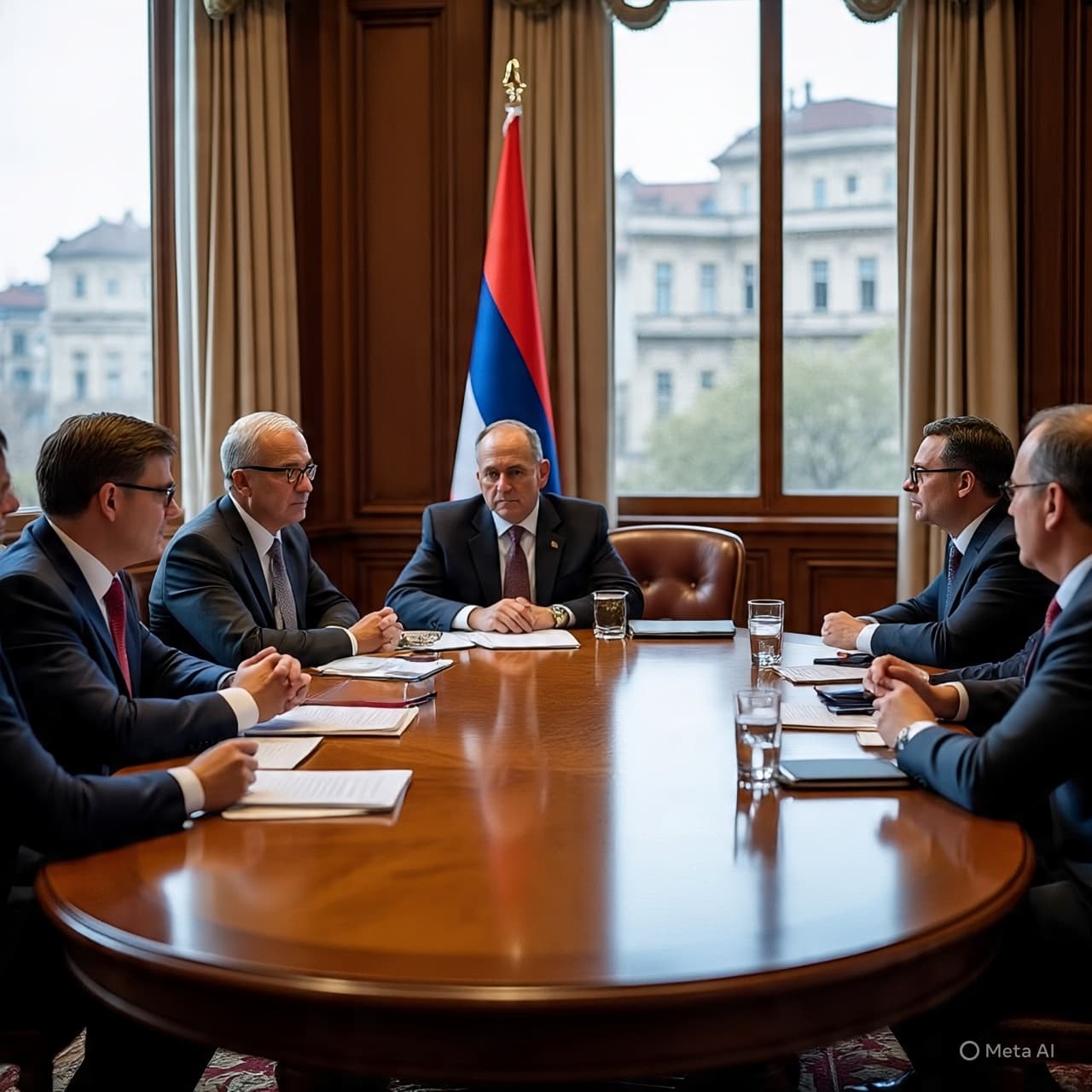
In a world where diplomacy often feels uncertain, recent discussions in Kyiv have highlighted the delicate balance between resolve and realism. U.S. envoys engaged with President Volodymyr Zelensky to explore the future of Ukraine's security amidst the ongoing conflict with Russia. This meeting marks a significant moment in the ongoing dialogue about how Ukraine can secure its sovereignty while navigating the complexities of international relations.
The discussions centered on how Ukraine can effectively balance its urgent demand for firm security guarantees with the harsh realities of a protracted conflict. According to officials familiar with the talks, President Zelensky expressed a readiness to consider compromises—not on Ukraine's sovereignty, but on the structure of its security arrangements moving forward. This willingness to engage in dialogue reflects a strategic approach to national defense, recognizing the need for practical solutions in a challenging geopolitical landscape.
For Ukraine, the question of security has become existential. The ongoing war has not only solidified public resolve but has also exposed the inadequacies of informal assurances from allies. Zelensky has consistently urged Western partners for binding security guarantees, often referencing past agreements that failed to prevent invasion. The current discussions appear to shift the focus from symbolic commitments to more practical frameworks that could provide tangible support.
Reportedly, options discussed during the meetings included phased security arrangements, enhanced military cooperation, and long-term defense support that would not immediately lead to alliance membership. This nuanced approach reflects the U.S. officials' careful navigation of the situation, as they seek to reassure Ukraine while being mindful of the risks of escalation and the dynamics within NATO.
Zelensky's openness to compromise should not be misconstrued as a retreat from Ukraine's core demands. Ukrainian officials emphasize that any flexibility in negotiations is aimed at bolstering national security rather than undermining it. The overarching message remains clear: Ukraine's future security cannot be negotiated without its active participation in the discussions.
These talks come at a critical juncture when battlefield realities, domestic political considerations in allied nations, and a growing war fatigue are converging. As military strategies continue to evolve, diplomacy is gradually reclaiming its place as a vital component of the overall strategy. The conclusion of the meetings did not yield a formal agreement, but rather a quieter acknowledgment that security may not be delivered as a single promise. Instead, it may emerge as a structure built incrementally, reflecting the complexities of the current geopolitical landscape.
In a conflict characterized by military force, these discussions indicate a parallel effort where compromise is not seen as a sign of weakness but as a necessary tool for endurance and resilience in the face of ongoing challenges.
Published by Banx Network. This article is part of the Banx decentralized media programme, powered by the BXE token on the XRP Ledger.



