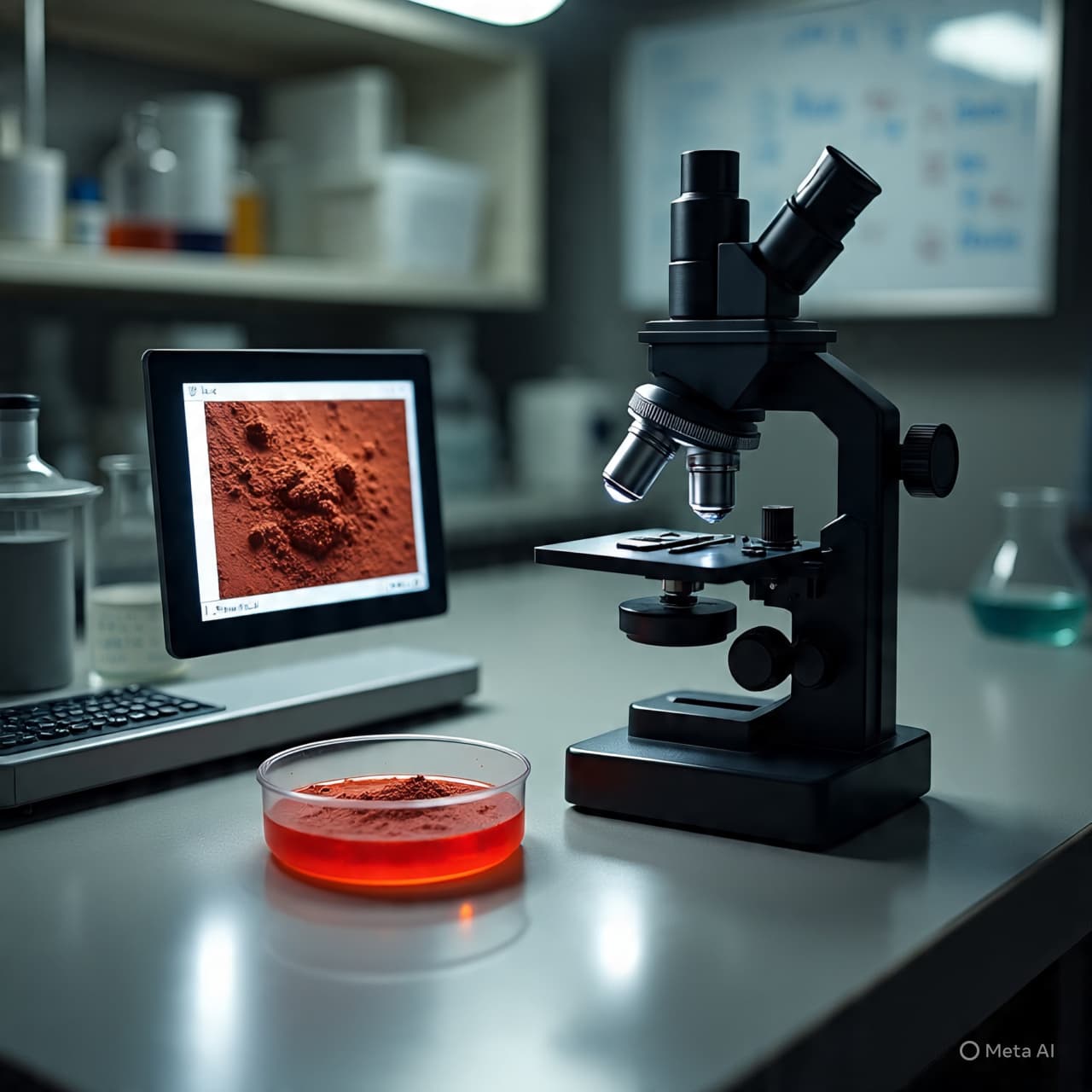
In laboratories far from any red horizon, trays of rust-colored dust sit beneath bright lights, holding within them a quiet question about life and its limits. Mars, so often imagined as a frontier of possibility, arrives here not as a distant planet but as a careful simulation—a measured blend of minerals meant to resemble its ancient soil.
At Penn State University, scientists turned to some of Earth’s smallest survivors to probe that question. Tardigrades—microscopic creatures more affectionately known as water bears—have long occupied a peculiar place in biology. They can endure extremes that would undo most life: freezing temperatures, intense radiation, even the vacuum of space. Their resilience has made them a kind of mascot for survival.
In this recent study, researchers exposed the hardy organisms to a batch of simulated Martian soil, crafted to mirror the chemical and physical properties measured on the Red Planet. The dust itself contained compounds believed to be present on Mars, including perchlorates—salts known for their reactivity and potential toxicity to living cells.
At first, the experiment unfolded quietly. The tardigrades were introduced to the reddish material, their movements observed under magnification. But over time, the creatures slowed. Their characteristic, deliberate motions diminished. Eventually, they stopped moving altogether.
The outcome was striking not because tardigrades are fragile—they are not—but because they are famously robust. If even these organisms faltered, the implications for more complex life were sobering.
Yet the story did not end there.
When the researchers washed the simulated Martian soil with ordinary water and reintroduced the tardigrades, something shifted. Even after several days of prior exposure, the water bears began moving more normally. The recovery suggested that whatever property in the base material had inhibited them might be soluble or alterable—perhaps tied to chemical compounds that could be diluted or neutralized.
The findings point to the possibility that Martian soil, at least in its current known composition, may possess characteristics resistant to biological life. Perchlorates, identified by missions such as NASA’s Phoenix lander and later rovers, are one likely factor. These salts can disrupt cellular processes, especially when activated under certain environmental conditions.
At the same time, the experiment underscores the complexity of assessing habitability. Mars is not uniform. Its surface chemistry varies by region, depth, and environmental history. Subsurface ice, briny solutions, or microenvironments shielded from radiation could differ markedly from the simulated samples studied in terrestrial labs.
The research also speaks to a broader theme in planetary science: that resilience on Earth does not guarantee viability elsewhere. Tardigrades have survived orbital experiments conducted by agencies including NASA and the European Space Agency, enduring exposure to vacuum and radiation. But planetary soil introduces a different kind of challenge—chemical, persistent, woven into the very ground.
For astrobiologists, such results refine the search for life beyond Earth. Habitability is not a single threshold crossed by temperature or the presence of water alone. It is an interplay of chemistry, energy, and time. Even a planet that once held rivers and lakes may now present barriers invisible from orbit.
In the quiet of the lab, the revived water bears resume their slow, deliberate steps beneath the microscope. Their temporary stillness becomes part of a larger inquiry—one that extends from Petri dishes to distant plains streaked with iron oxide.
Mars remains a landscape of possibility and caution. The soil, red and fine, may conceal more than it reveals. And in the measured movements of a microscopic creature, scientists glimpse both the promise and the limits of life carried across worlds
Published by Banx Network. This article is part of the Banx decentralized media programme, powered by the BXE token on the XRP Ledger.