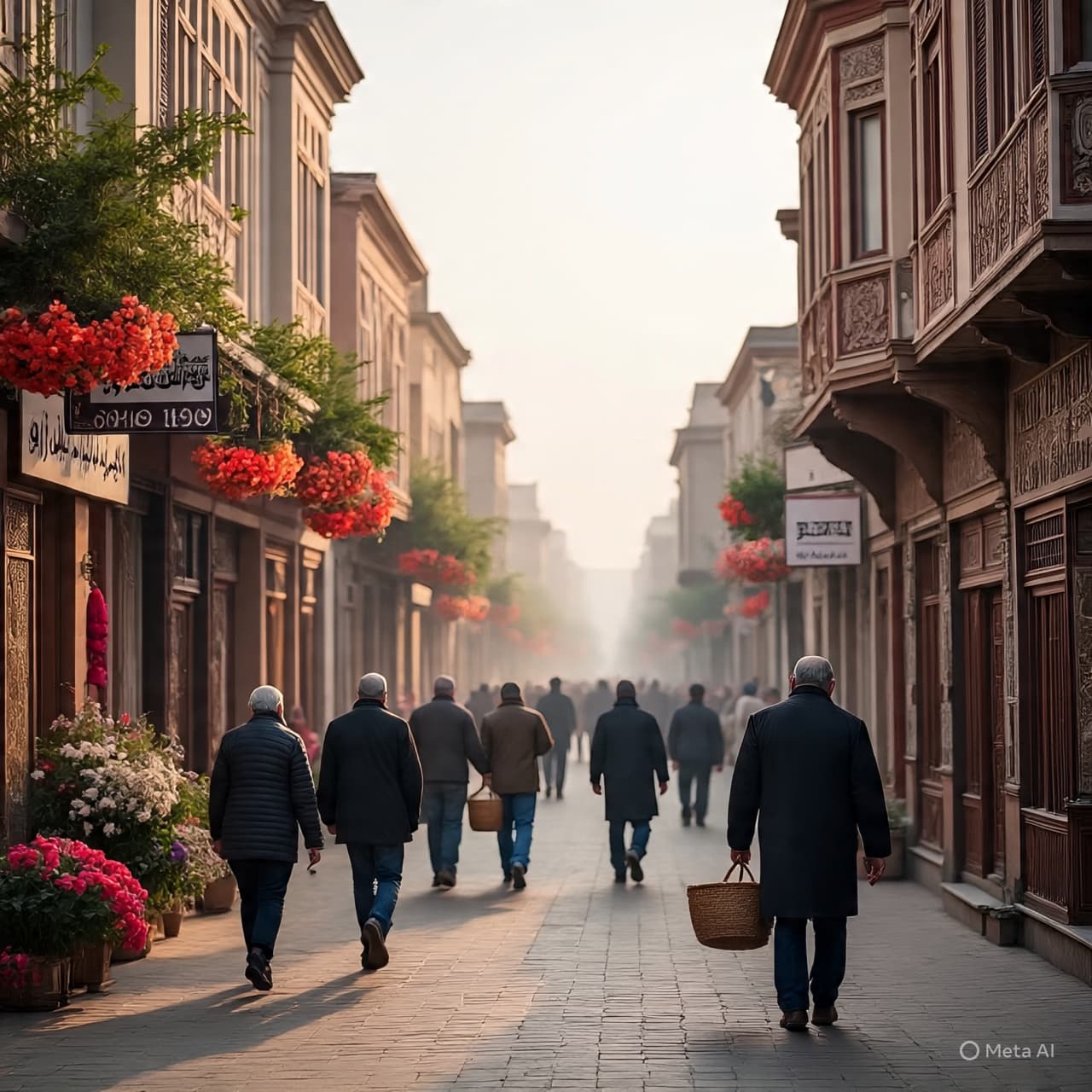
The Iranian New Year, Nowruz, has long arrived with symbols of renewal—water, greenery, light returning after winter. Streets fill with movement, homes open to visitors, and time itself feels briefly reset. Yet this year, as the calendar turned, the atmosphere carried another undercurrent, one less visible but widely sensed: the quiet presence of dissent moving alongside celebration.
In several cities, small demonstrations emerged during the holiday period. They were not uniform in size or message, nor did they gather into a single, defining moment. Instead, they appeared as brief assemblies, chants exchanged quickly, gestures made and then withdrawn. The rhythm was familiar, shaped by years of protest and response, each side aware of the other’s thresholds.
Authorities responded with a mix of vigilance and containment, aiming to prevent escalation rather than invite it. Security forces were present but measured, reflecting a strategy refined over time. The state’s priority appeared less about confrontation than control—allowing the holiday to proceed while keeping the boundaries of expression tightly drawn.
For observers, the demonstrations revived an enduring question about regime survival. Iran’s political system has shown an ability to absorb pressure without visibly cracking, relying on institutional depth, security capacity, and the fragmentation of opposition movements. Protests flare, recede, and leave behind traces of discontent that rarely coalesce into sustained challenge.
Yet survival is not a static condition. It is maintained through constant adjustment, a recalibration of force, concession, and narrative. The New Year protests, modest as they were, highlighted that public frustration has not vanished. Economic strain, social restrictions, and generational divides continue to shape the backdrop against which each demonstration unfolds.
At the same time, there was no sense of imminent rupture. The demonstrations did not approach the scale or coordination that would signal a turning point. Instead, they underscored a more ambiguous reality: a state that remains firmly in place, and a society that continues to test its margins without breaching them.
As Nowruz celebrations concluded, daily life resumed its familiar cadence. Markets reopened, travel slowed, and official messaging emphasized stability and continuity. The question of regime survival lingered, not as an urgent countdown, but as a long-term inquiry—one shaped less by single events than by accumulation.
In Iran, the New Year often carries hope layered with realism. This year was no different. The demonstrations passed, the system endured, and the space between them remains where the future quietly negotiates itself.
AI Image Disclaimer Visuals are AI-generated and serve as conceptual representations.
Published by Banx Network. This article is part of the Banx decentralized media programme, powered by the BXE token on the XRP Ledger.