In times of conflict, words often travel behind the thunder of events. They follow the noise of sirens, the glow of distant explosions, and the quiet uncertainty that settles over cities when the night sky becomes a place of vigilance. Diplomacy, in such moments, does not always arrive before the storm. Sometimes it walks slowly in its aftermath, trying to gather meaning from what has already unfolded.
Across the Middle East this week, that delicate tension between words and actions has become impossible to ignore. The region’s skies have been marked by missile alerts and military flights, while political leaders speak carefully into microphones, attempting to explain, justify, or soften what the world is witnessing.
Iranian President Masoud Pezeshkian recently offered an apology to several Gulf nations after Iranian missiles and drones crossed into their airspace during ongoing hostilities. His message acknowledged the disruption and fear caused to neighboring countries whose cities found themselves uncomfortably close to the widening arc of conflict.
The apology arrived during a moment of extraordinary pressure for Iran’s leadership. The country has been navigating a rapidly escalating confrontation involving Israel and the United States, following a series of major airstrikes targeting Iranian military and strategic facilities. The attacks triggered retaliatory operations from Tehran, which included missile and drone launches across the region.
For Gulf states, the geography of the crisis has been particularly sensitive. Many host key American military installations that form part of the United States’ regional defense network. These bases—located in countries such as Bahrain, Qatar, and the United Arab Emirates—have long served as logistical and strategic hubs for operations in the Middle East.
Iranian officials have warned that such facilities could become legitimate targets if they are used to launch attacks against Iranian territory. The statement reflects Tehran’s argument that the conflict extends beyond national borders when foreign bases are involved in military action.
Meanwhile, the rhetoric from Washington has moved in a different direction. U.S. President Donald Trump signaled that further strikes against Iran could be on the horizon, warning that Tehran would be “hit very hard” if attacks against American interests or regional allies continued.
The exchange of statements has created a complex atmosphere across the Gulf. On one hand, there are attempts to reassure neighboring countries through diplomatic language. On the other, the continuing movement of missiles and aircraft reminds observers that the conflict remains active and unpredictable.
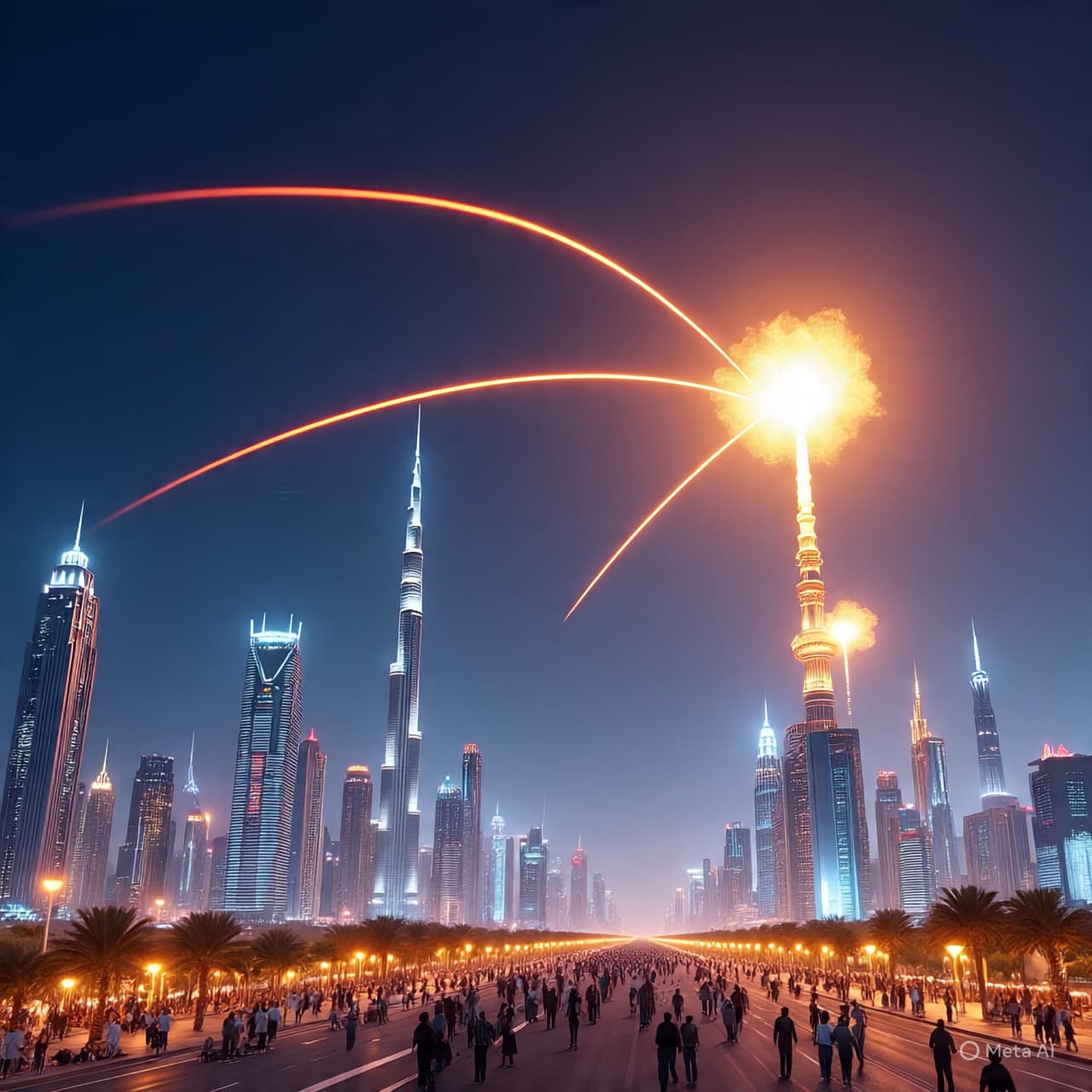
Recent days have seen heightened air defense activity across several Gulf capitals. Military systems have intercepted drones and missiles, while aviation authorities have issued alerts affecting regional air traffic. In some cases, fragments from intercepted projectiles have fallen near populated areas, reinforcing the sense that the conflict is unfolding uncomfortably close to civilian life.
Energy markets and maritime routes have also drawn attention as analysts consider the potential implications for global trade. The Gulf region remains a crucial corridor for oil shipments, and even the possibility of disruption has been enough to raise concerns in financial and diplomatic circles.
Yet beyond the strategic calculations lies a quieter human dimension. For residents in Gulf cities, the experience of hearing warning sirens or watching interception flashes in the night sky has become a reminder of how quickly distant political decisions can reshape daily life.
The statements from Tehran and Washington illustrate how modern conflicts are fought not only with weapons but also with narratives. Each side speaks to its own citizens, its allies, and the broader international community, shaping perceptions about responsibility, restraint, and resolve.
In the coming days, attention will likely remain focused on whether the language of warning continues to intensify or begins to soften. Diplomatic channels, though often invisible to the public, may still play a role in preventing further escalation.
For now, the region listens to both the echoes of military activity and the carefully chosen words of leaders.
As the situation develops, governments across the Middle East continue to monitor the conflict closely while urging stability and caution.
AI Image Disclaimer Images in this article are AI-generated illustrations, meant for concept only.
Source Check Credible mainstream / niche media covering this development:
Reuters The Guardian Associated Press (AP) Al Jazeera BBC News
Published by Banx Network. This article is part of the Banx decentralized media programme, powered by the BXE token on the XRP Ledger.