Morning light spreads slowly along the coastline of Los Angeles, where highways begin to fill with the quiet rhythm of commuters. Cars move steadily beneath palm-lined streets, their engines humming in the cool coastal air. In a state where distance is measured as much in miles of freeway as in landscapes of desert and ocean, fuel has long been part of everyday life’s quiet machinery.
But in recent weeks, the price of that fuel has begun to shift.
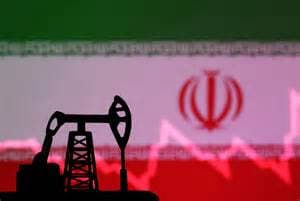
Across California, drivers have been watching gas station signs climb higher as global tensions ripple through energy markets. The ongoing war involving Iran has stirred uncertainty across oil supply routes and refining networks, pushing fuel prices upward in ways that are being felt particularly strongly along the U.S. West Coast.
California’s relationship with fuel is distinctive within the United States. The state operates under a specialized gasoline blend designed to meet strict environmental standards, a formula that helps reduce pollution but also limits the number of refineries capable of producing it. When supply tightens or refineries experience disruptions, prices in California often rise more sharply than in other regions.
Now, the pressures of global conflict are colliding with those local dynamics.
The war involving Iran has unsettled international oil markets, in part because of the strategic significance of shipping lanes in the Middle East. Traders watch closely for any disruption near the Strait of Hormuz, the narrow passage through which a significant portion of the world’s oil supply travels each day.
Even when physical supply remains steady, the possibility of disruption can influence prices quickly. Markets respond to uncertainty, and the mere prospect of instability in a key oil corridor often drives traders to bid prices higher.
For California, the consequences can be amplified by its geographic and industrial realities.
The state is relatively isolated from major refining hubs in other parts of the United States, and its fuel system relies heavily on a limited number of in-state refineries. When global crude prices climb or when refining capacity tightens, gasoline costs in California can rise faster than the national average.
Energy analysts note that these pressures have become visible at the pump. Gasoline prices in parts of the state have surged well above levels seen elsewhere in the country, reflecting both global oil market anxiety and the structural challenges of California’s fuel infrastructure.
Behind the numbers lies a complex chain of movement: crude oil traveling across oceans, tankers docking at ports, refineries transforming raw petroleum into usable fuel, and tanker trucks distributing gasoline across thousands of service stations.
Each link in that chain carries its own vulnerability.
A shift in global supply, a refinery slowdown, or transportation delays can ripple outward until they appear on the digital price boards that greet drivers at neighborhood stations.
For residents of cities like San Diego, San Francisco, and Los Angeles, those numbers have become a quiet reminder of how distant events can reach into daily routines. A conflict unfolding thousands of miles away can influence the cost of a commute, a delivery route, or a family trip across the state’s wide highways.
Energy markets remain fluid, and analysts caution that prices may continue to fluctuate as the situation surrounding Iran evolves.
Still, the roads of California remain as busy as ever. Traffic flows through coastal cities and across mountain passes, the endless motion of vehicles tracing the familiar lines of the state’s highways.
And at each fuel station along the way, the rising digits on the pump offer a small but tangible echo of a conflict unfolding far beyond the horizon.
AI Image Disclaimer Visuals are AI-generated and serve as conceptual representations.
Sources Reuters Associated Press Bloomberg The New York Times U.S. Energy Information Administration
Published by Banx Network. This article is part of the Banx decentralized media programme, powered by the BXE token on the XRP Ledger.