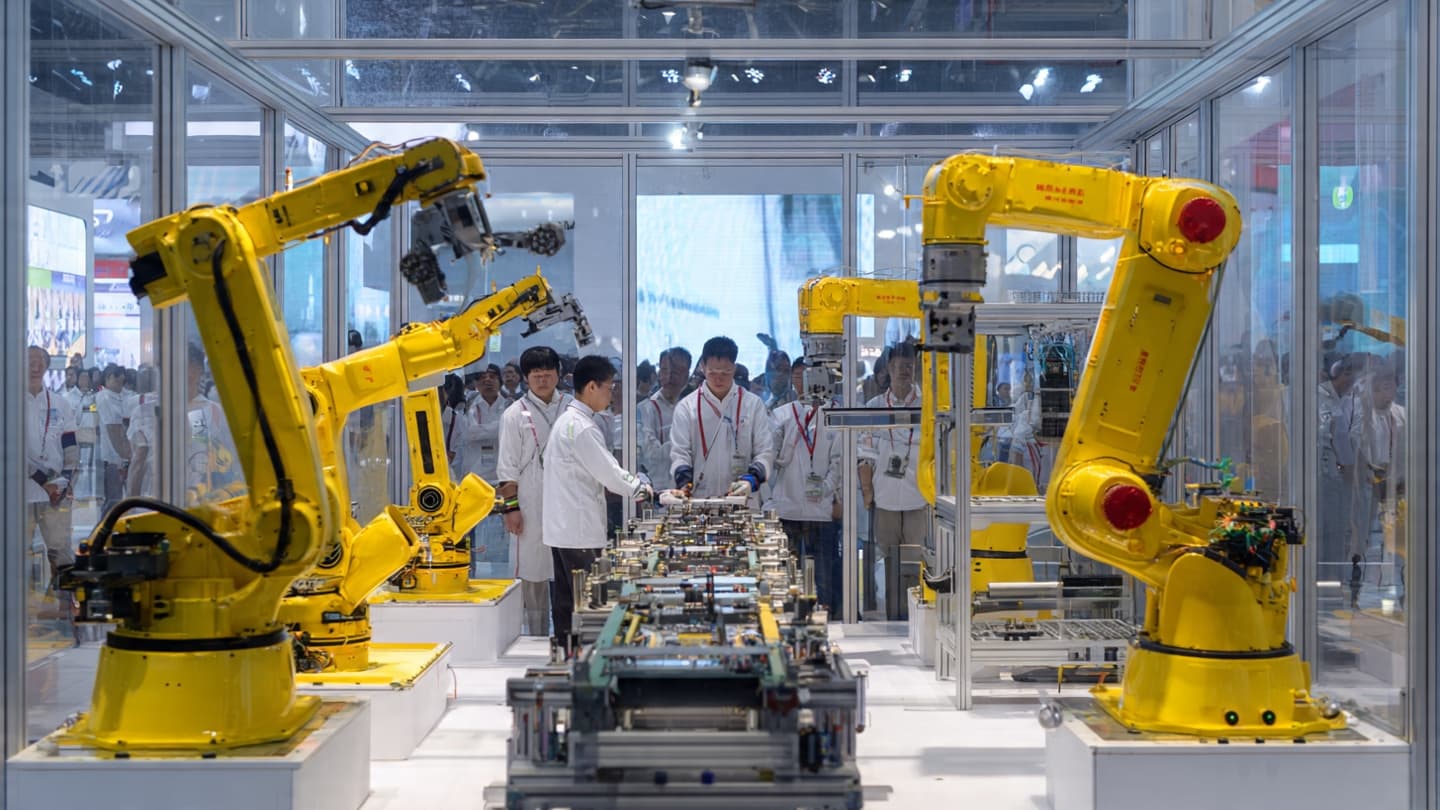
The crowd watches when a robot runs. It watches when one dances, kicks a ball or performs a difficult physical maneuver. But after the applause fades, a different question remains in the room: what can the machine actually do every day?
China’s rapidly expanding humanoid robotics industry is now facing that question. At the World Robot Conference in Beijing, more than 300 companies are expected to showcase more than 2,000 exhibits, with more than 150 new products being launched, according to Reuters.
The industry's center of gravity is beginning to shift. For several years, companies gained attention through spectacular demonstrations, including dancing robots, athletic performances and autonomous running. Such displays showed what the hardware could achieve, but they did not necessarily demonstrate commercial usefulness.
That distinction has become increasingly important as investment grows. Unitree, one of the world's largest humanoid robot manufacturers by sales volume, recently made its debut on Shanghai's STAR Market after an initial public offering that Reuters reported was more than 8,000 times oversubscribed by retail investors.
Now the industry is being asked to connect technical ability with economic value. A robot may be able to perform an impressive movement, but companies buying machines for factories or warehouses need reliability, productivity and a cost that makes financial sense.
One estimate cited by Reuters suggests that an industrial humanoid would need to cost around 160,000 yuan, including maintenance, to pay for itself within two years compared with a worker earning 80,000 yuan annually. Current robots can cost considerably more, with typical prices estimated at 300,000 to 500,000 yuan.
That gap helps explain why some robots are currently being used more for data collection and training than for productive commercial work. Machines need to learn how to interact with the physical world, and the process requires large quantities of real-world data.
The World Humanoid Robot Games are becoming another testing ground. This year's competitions include factory, hotel and household scenarios, with some events requiring robots to perform longer tasks in more complicated environments.
The evolution can also be seen in the history of China's robot competitions. What began as relatively modest university events has developed into major technology showcases. Reuters noted that the competitions have increasingly moved from demonstrations toward practical tasks requiring more sophisticated robotic hands and precision.
That progression matters because the hardest part of creating a useful humanoid may not be teaching it to walk. Human hands can grip, adjust pressure, manipulate small objects and respond almost instinctively to changes in texture and weight. Reproducing those abilities mechanically remains a formidable engineering challenge.
The next chapter of China's humanoid robotics story will therefore be written less dramatically than the previous one. The machines may still run beneath exhibition lights, but their real test is likely to happen in factories, hotels and warehouses, where success will be measured not by applause but by whether a robot can perform useful work repeatedly, safely and economically.
SEO-friendly Slug china-humanoid-robots-commercial-test-productivity-cost-2026
Hashtags #China #HumanoidRobots #Robotics #AI #Technology #Business #Manufacturing
Sources Reuters
Published by Banx Network. This article is part of the Banx decentralized media programme, powered by the BXE token on the XRP Ledger.