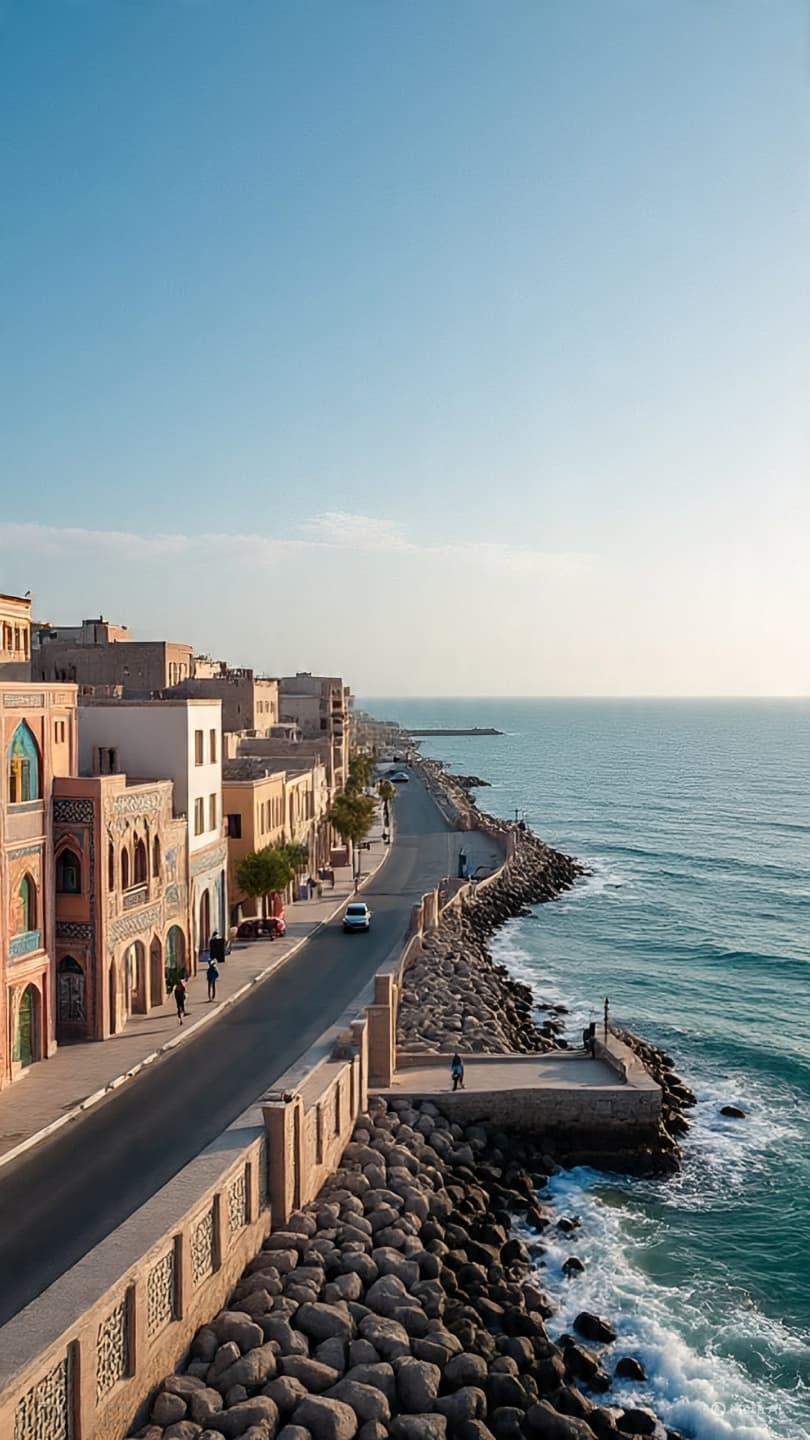
At dawn along the eastern edge of the Mediterranean, the air carries a fragile stillness, as though the sea itself is pausing between breaths. In the borderlands where Israel meets Lebanon, the quiet feels unfamiliar—an interruption to weeks of distant thunder and restless skies. Roads that once echoed with urgency now hold a tentative calm, while homes, long alert to the rhythm of sirens, begin to relearn the shape of silence.
The ceasefire, now in effect, arrives not as a grand resolution but as a careful unfastening of tension. Mediated through indirect channels and shaped by regional urgency, it halts a period of cross-border exchanges that had steadily drawn wider concern. The agreement, while limited in scope, reflects a shared recognition of the cost of escalation—measured not only in infrastructure and security, but in the quieter erosion of ordinary life along the frontier.
Yet even as the northern horizon softens, another tension gathers farther south, where the narrow waters of the Strait of Hormuz remain constrained. There, under the watch of Iran, shipping lanes have slowed into uncertainty, creating a bottleneck through which much of the world’s energy supply must pass. Tankers linger or reroute, their journeys interrupted by a geopolitical gravity that extends far beyond the visible shoreline.
The connection between these two moments—one of pause, the other of pressure—feels less coincidental than it appears. The ceasefire offers a local easing, a contained quieting of conflict, while the situation in Hormuz unfolds on a broader stage, where economic currents and strategic calculations intersect. Together, they form a kind of uneven balance: calm on land, constraint at sea.
For those watching from a distance, the implications ripple outward. Energy markets respond to the tightening passage in Hormuz, where even minor disruptions can alter global supply patterns. Governments, attuned to the fragility of both agreements and waterways, adjust their language carefully, aware that stability in one corridor does not necessarily extend to another. The region, long accustomed to overlapping tensions, once again reveals how peace and pressure can coexist within the same moment.
Back along the Israel-Lebanon border, daily life resumes in cautious increments. Shops reopen, conversations stretch a little longer, and the ordinary rituals of morning—coffee poured, windows opened—carry a renewed weight. The ceasefire holds, at least for now, sustained by a mutual interest in restraint and the quiet work of intermediaries who remain largely unseen.
Still, the broader horizon resists full calm. The continued gridlock in the Strait of Hormuz serves as a reminder that the region’s tensions are rarely isolated. They move, like currents beneath the surface, linking distant shores in ways that are not always immediately visible.
In the end, the facts settle with a measured clarity: a ceasefire between Israel and Lebanon has begun, pausing recent hostilities, while Iran’s actions continue to constrain movement through one of the world’s most critical maritime passages. Between these two realities lies a landscape defined not by resolution, but by balance—fragile, shifting, and always in motion.
AI Image Disclaimer Visuals are AI-generated and serve as conceptual representations.
Sources Reuters BBC News Al Jazeera The New York Times Financial Times
Published by Banx Network. This article is part of the Banx decentralized media programme, powered by the BXE token on the XRP Ledger.