
Key Highlights
- Iran's supreme leader delivered his first public address since recent protests.
- The speech included a critique of former U.S. President Donald Trump.
- Analysts noted the address reaffirmed existing political narratives rather than indicating policy changes.
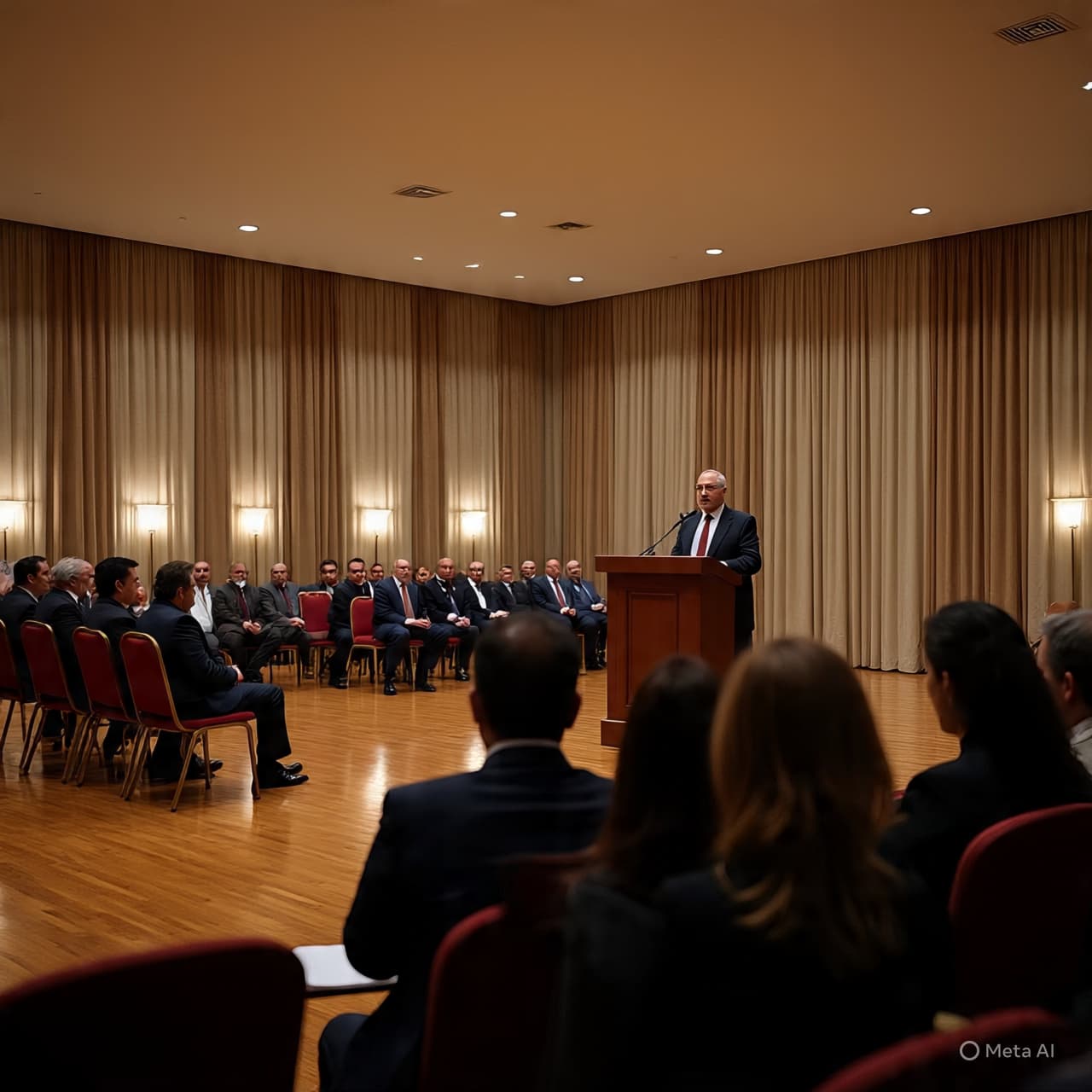
Iran's supreme leader, Ayatollah Ali Khamenei, recently addressed the nation for the first time since widespread protests erupted across the country. This speech, which garnered significant attention both domestically and internationally, was marked by a blend of defiance and critique, particularly aimed at the United States and its former president, Donald Trump.
In his remarks, Khamenei framed the protests as a temporary challenge, suggesting that they would not alter the long-term trajectory of the Iranian state. Instead, he emphasized the inevitability of political shifts in the U.S., using Trump as a symbol of declining American influence. This rhetoric is not new in Iranian political discourse, where external adversaries are often invoked to bolster internal unity during times of unrest.
The timing of Khamenei's speech was particularly strategic. By choosing to speak after the peak of the protests, he was able to adopt a tone of confidence and distance, portraying the demonstrations as fleeting moments in a broader historical context. This approach allowed him to redirect focus from the internal dissent towards a narrative of resilience against external pressures, reinforcing the idea that Iran would endure despite challenges.
International analysts observed that Khamenei's comments fit within established patterns of Iranian political rhetoric. They noted that while the speech did not signal any significant policy shifts, it served to reaffirm the regime's narrative of strength and stability. The leader's focus on U.S. political dynamics was seen as an attempt to project confidence and distract from domestic issues.
As the address concluded, it left many questions unanswered. Supporters of the regime may view it as a reaffirmation of continuity and strength, while critics might see it as a deflection from the real issues at hand. For observers outside Iran, Khamenei's speech serves as a reminder of how political language often seeks to find meaning in the fortunes of distant rivals, even amidst internal turmoil.
In summary, Khamenei's address reflects a complex interplay between domestic unrest and international perceptions, illustrating how leaders navigate their narratives in times of crisis. The speech underscores the ongoing challenges faced by the Iranian government as it seeks to maintain control while addressing the aspirations and frustrations of its populace.
Published by Banx Network. This article is part of the Banx decentralized media programme, powered by the BXE token on the XRP Ledger.



