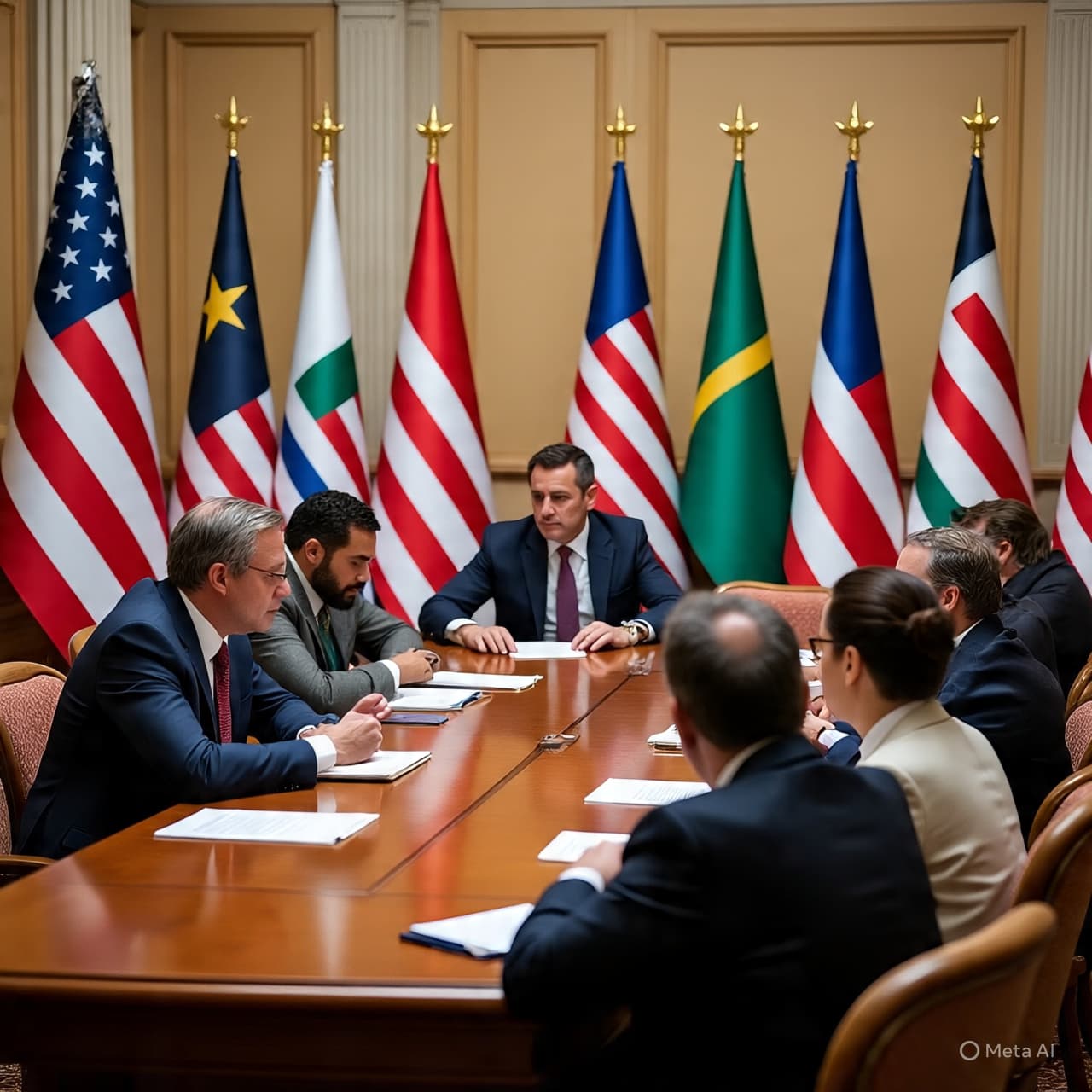
There are gatherings that feel ceremonial, and there are gatherings that feel like hinges of history. In Washington this week, beneath the bright chandeliers and formal seating arrangements, something more tentative than triumph took shape. President convened the inaugural meeting of his newly formed Board of Peace — a name that carries both aspiration and burden.
The phrase itself suggests calm waters. Yet the world that delegates walked in from was anything but calm. Gaza remains scarred by conflict, diplomacy across the Middle East remains fragile, and alliances are shifting in subtle, sometimes unpredictable ways. Against that backdrop, the meeting unfolded not as a conclusion, but as a beginning — cautious, ambitious, and closely watched.
Inside the room, representatives from more than twenty nations gathered with a shared agenda: reconstruction, stabilization, and the possibility of a coordinated international role in Gaza’s future. Financial pledges reportedly exceeding $5 billion were highlighted as a tangible first step. Figures, however, are only one measure of commitment. The greater test lies in how promises are translated into policy, and policy into lived reality.
The administration framed the Board of Peace as an instrument of practical action — a platform designed to move beyond debate and toward implementation. In tone, officials emphasized partnership. In substance, discussions centered on rebuilding infrastructure, restoring governance frameworks, and potentially deploying an international stabilization presence.
Yet even in its inaugural form, the initiative carries complexity. Participation among traditional Western allies has been mixed, with some choosing to observe from a distance rather than take a seat at the table. That hesitation reflects broader questions about structure, mandate, and long-term viability. Peace, after all, is rarely constructed through architecture alone; it depends on trust, legitimacy, and sustained cooperation.
Observers note that the timing of the meeting is significant. Regional tensions persist, and U.S. strategic positioning in the Middle East remains under scrutiny. Convening a peace initiative while military readiness elsewhere occupies headlines creates a layered narrative — one in which diplomacy and deterrence unfold simultaneously. It is a reminder that global leadership often operates in more than one register at a time.
Still, for those present, the day carried symbolic weight. Flags stood in quiet rows. Delegations exchanged formal greetings. Cameras documented statements intended not only for participants but for audiences far beyond Washington. The inaugural session may not have resolved longstanding disputes, but it signaled an attempt to shape the post-conflict environment rather than react to it.
Skeptics caution that new institutions must prove their durability. Supporters argue that moments of reconstruction require fresh frameworks. Both perspectives acknowledge the same truth: the path from pledge to progress is rarely linear.
As the meeting adjourned, no dramatic breakthrough was declared. Instead, there were commitments to continued dialogue, technical working groups, and follow-up sessions in the months ahead. In that sense, the Board of Peace begins less as a finished structure and more as scaffolding — a framework awaiting the steady labor of diplomacy.
Whether it becomes a cornerstone of regional recovery or another chapter in an ongoing search for stability will depend on what follows. For now, the inaugural meeting closes not with certainty, but with cautious intent.
AI Image Disclaimer Graphics are AI-generated and intended for representation, not reality.
Sources Reuters Associated Press Al Jazeera Euronews MSN / Major U.S. Live Coverage Platforms
Published by Banx Network. This article is part of the Banx decentralized media programme, powered by the BXE token on the XRP Ledger.