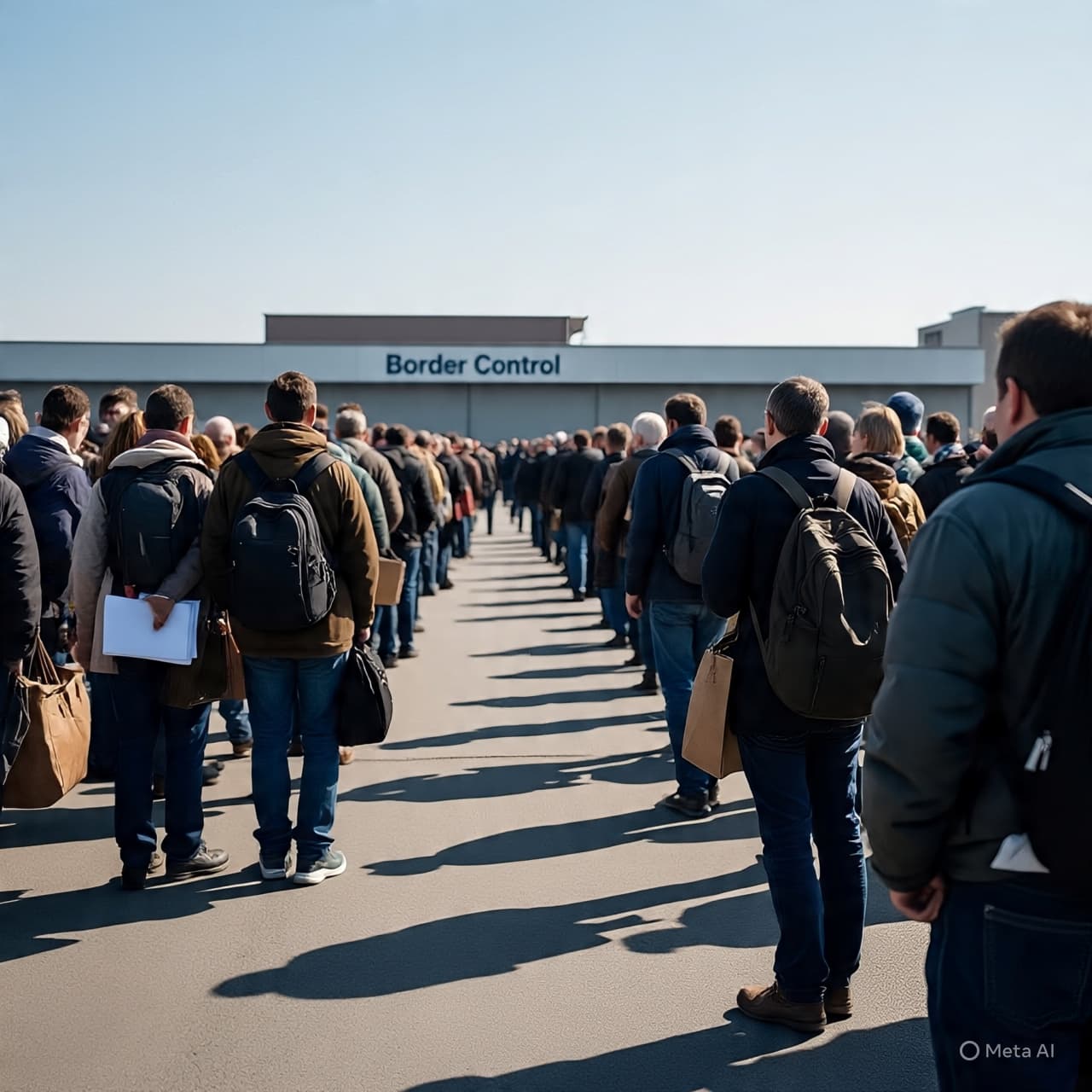
There are journeys that begin long before they are recorded—carried in memory, in necessity, in the quiet hope that movement might lead to something steadier. By the time they arrive at a border, they are already shaped by distance and decision, by the many unseen turns that brought them there.
In Canada, some of those journeys now find themselves paused in a different way.
The federal government has introduced legislation that would allow for the cancellation of thousands of refugee claims, applying the change retroactively to individuals who have already entered the system. The proposal centers on a provision that would render certain claims ineligible if they were made more than one year after an individual first arrived in the country.
It is a shift not only in policy, but in time. Retroactive law reaches backward, altering the conditions under which past actions are judged. For those who have been waiting—sometimes for months, sometimes longer—the ground beneath their applications may change without movement on their part.
Officials have framed the measure as part of a broader effort to manage backlogs and maintain the integrity of the asylum system. In recent years, the number of claims has grown significantly, placing pressure on processing capacity and extending wait times. The proposed change, they argue, would help streamline the system by narrowing eligibility and focusing resources on more immediate cases.
Yet within that administrative logic, there are individual timelines that do not easily align with fixed thresholds. People arrive for different reasons, at different moments, and with varying degrees of readiness to navigate the complexities of the asylum process. Delays can arise from language barriers, access to legal advice, or the simple uncertainty of what comes next.
To apply a one-year limit after the fact is to reshape those timelines in retrospect—placing a boundary where none previously existed. For some, it may mean that a claim once considered valid is no longer recognized within the system at all.
Advocates and legal observers have raised concerns about the implications of such a move, particularly in relation to fairness and due process. Retroactive changes, they note, can alter expectations that individuals relied upon when making decisions, creating a tension between administrative efficiency and procedural stability.
At the same time, the broader context remains complex. Governments must balance competing demands—humanitarian commitments, public resources, and the practical realities of processing large volumes of applications. The result is often policy that moves in increments, adjusting to pressures that are both immediate and long-term.
For those affected, however, the experience is less abstract. It is measured not in policy language, but in outcomes—whether a claim proceeds or is set aside, whether a hearing takes place or is no longer available. The waiting, which once pointed toward resolution, may instead lead to closure of a different kind.
And so the story unfolds across two scales at once. At the level of governance, it is a question of systems and capacity, of how a country manages the flow of requests made at its borders. At the level of the individual, it is something quieter, more uncertain—an adjustment to a process that has shifted while still in motion.
In the end, the facts remain clear. Canada has introduced legislation that would retroactively cancel certain refugee claims, particularly those filed more than one year after arrival. The proposal is part of efforts to address a growing backlog, and remains subject to legislative approval and further debate.
AI Image Disclaimer
These visuals are AI-generated representations and do not depict real individuals or events.
Sources CBC News Reuters The Globe and Mail BBC News Al Jazeera
Published by Banx Network. This article is part of the Banx decentralized media programme, powered by the BXE token on the XRP Ledger.