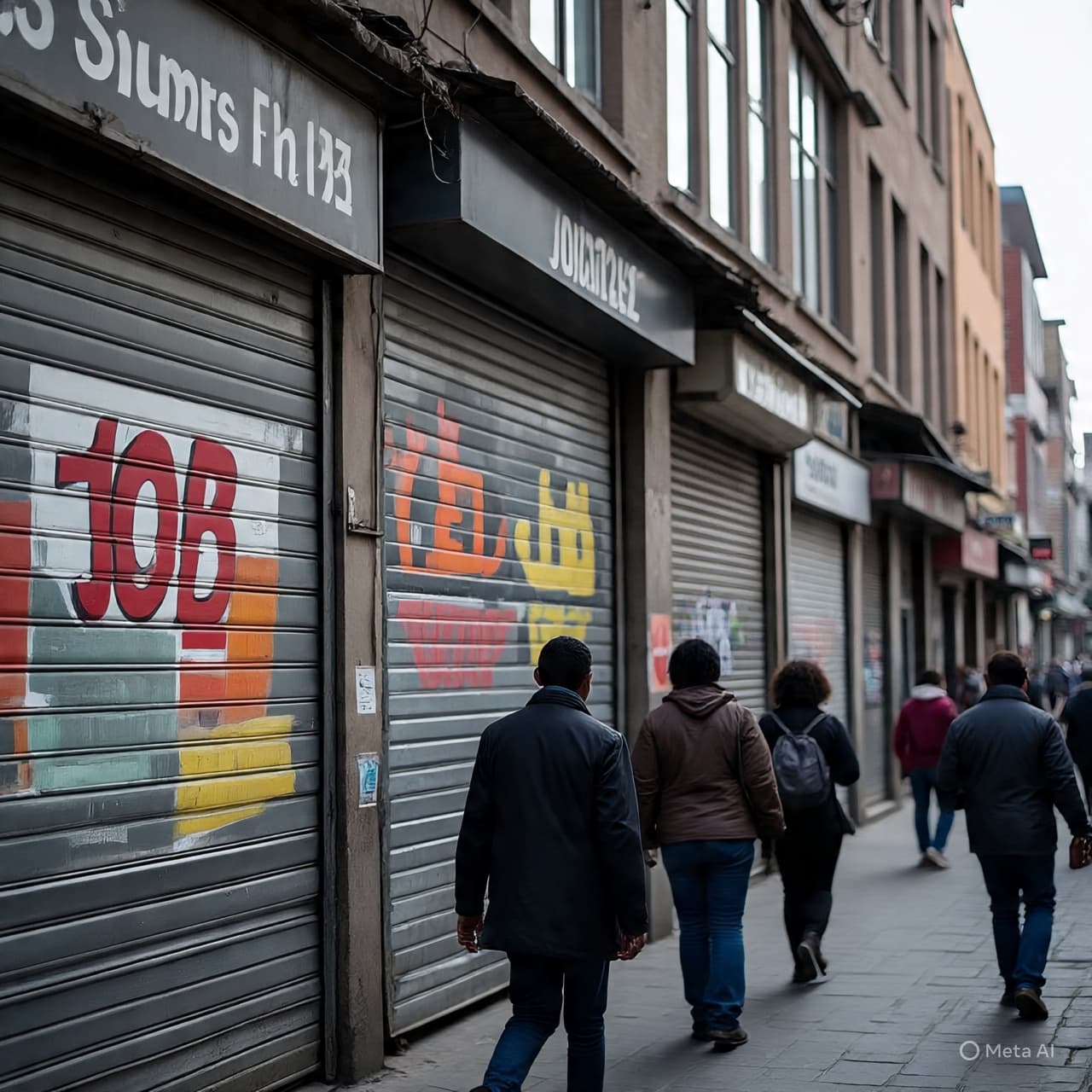
There is a particular kind of waiting that settles over a nation when work becomes uncertain. It is not loud, nor easily measured, but it is present in the small adjustments of daily life—in plans deferred, in choices narrowed, in the quiet arithmetic of what is possible and what must be set aside.
In South Africa, that waiting has become familiar.
Writing in Business Day, Carol Paton reflects on a question that has lingered across years and administrations: why, despite intention and effort, the country struggles to create enough jobs for its people. The answer, she suggests, does not lie solely in economics or external pressures, but in something more deeply embedded—in the nature of politics itself.
Her argument moves carefully through the terrain of policy and power, observing how political considerations often shape, and sometimes constrain, the decisions that might otherwise enable growth. Economic reform, in this view, is not absent, but entangled—caught in a web of competing interests, internal negotiations, and the persistent need to balance short-term stability with long-term change.
In such a landscape, policy does not move in a straight line. It bends, pauses, and occasionally retreats, influenced by alliances that must be maintained and constituencies that must be reassured. The result is a kind of incrementalism—progress that is real, but often too slow to meet the scale of need.
Paton points to the structural challenges that have long defined South Africa’s economy: high unemployment, uneven access to opportunity, and sectors that struggle to absorb a growing workforce. These are not new realities, yet their persistence suggests that the obstacles are not merely technical, but systemic.
Within government, efforts to address these challenges have taken various forms—plans announced, strategies outlined, commitments made. Yet the translation of these into tangible outcomes has often been uneven. Political dynamics, including factional divisions and differing policy priorities, can shape how, and how quickly, such efforts take hold.
There is also the question of confidence—of how investors, both local and international, perceive the environment in which they are asked to commit. Stability, clarity, and consistency are often cited as essential conditions for growth. Where these are uncertain, hesitation can follow, and with it, a slowing of the very activity that generates employment.
Paton’s reflection does not assign blame in a singular direction. Instead, it suggests a broader interplay between governance and outcome, where politics is not separate from economics, but deeply intertwined with it. The choices made in one sphere inevitably echo in the other.
For those seeking work, however, these dynamics can feel distant, even abstract. What remains immediate is the absence itself—the gap between effort and opportunity, between readiness and availability. It is here that the broader conversation returns to its starting point, grounded not in theory, but in lived experience.
South Africa continues to face high unemployment rates, with job creation remaining a central challenge. Analysts, including Carol Paton, point to political dynamics as a significant factor influencing the pace and effectiveness of economic reform. No single solution has yet resolved the issue, and the situation remains ongoing.
AI Image Disclaimer
These visuals are AI-generated and serve as conceptual illustrations, not real images.
Sources
Business Day News24 Daily Maverick Mail & Guardian SABC News
Published by Banx Network. This article is part of the Banx decentralized media programme, powered by the BXE token on the XRP Ledger.
.jpg&w=3840&q=75 "Blake Lively Awarded $400,000 in Legal Fees After Justin Baldoni Lawsuit Dismissed")