
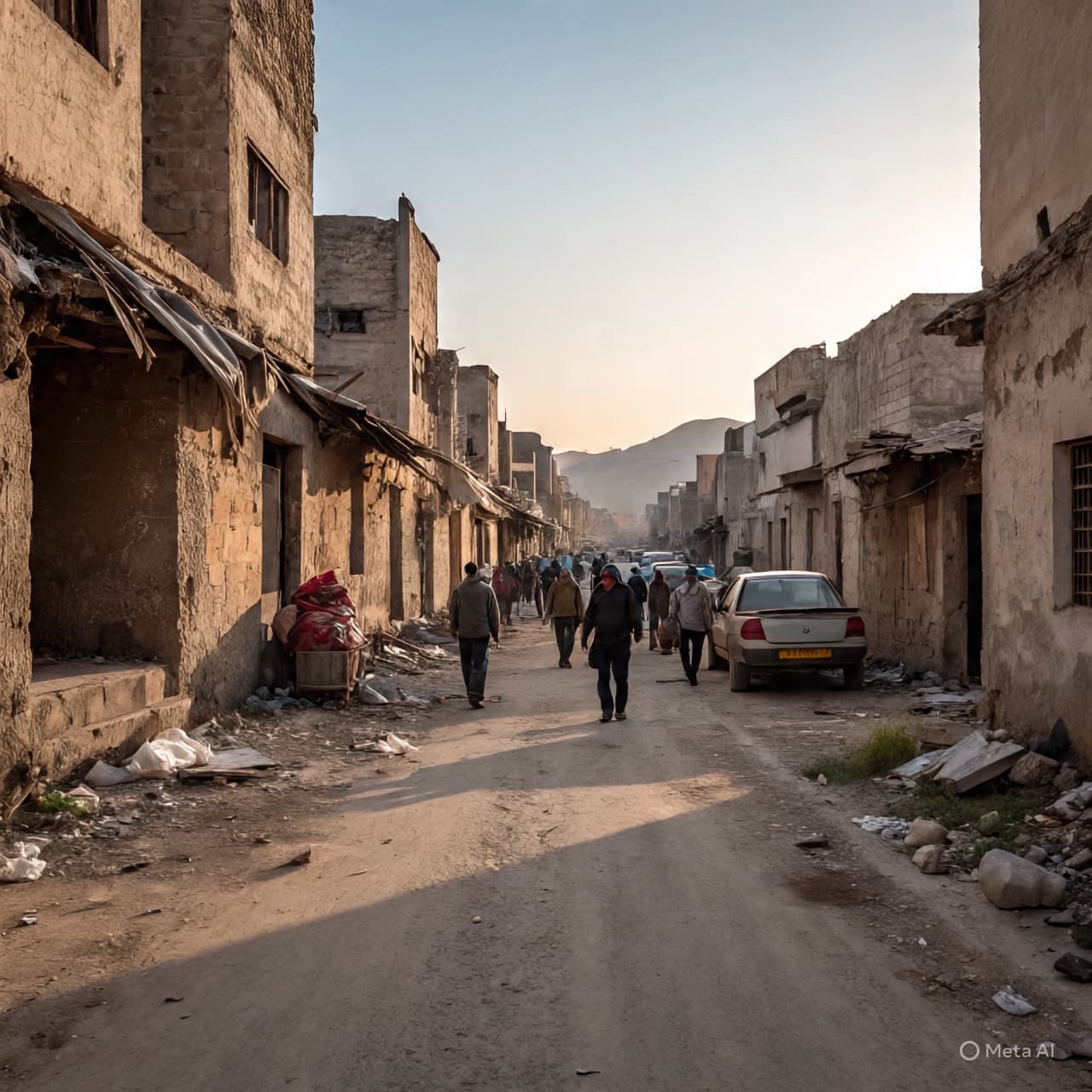
There are mornings meant to begin with laughter, with the soft rustle of new clothes and the familiar rhythm of greetings exchanged between neighbors. Eid, in its essence, is one of those moments—a pause in the year where joy is shared, forgiveness offered, and togetherness quietly reaffirmed. Yet across parts of the Middle East this year, that morning arrives differently, touched by absence, shaped by distance, and softened by the weight of ongoing conflict.
In places where celebration would once spill into streets and homes alike, many now find themselves marking the occasion in temporary shelters or unfamiliar surroundings. Displacement, driven by months of conflict, has altered not only where people live, but how they gather. Families separated by borders or circumstance navigate Eid with a sense of incompleteness, holding onto traditions in smaller, quieter ways.
In Gaza, in parts of southern Lebanon, and in communities affected by broader regional tensions, the signs of Eid are present—but subdued. Children still wear what new clothes they can, prayers are still observed, and meals are shared when possible. Yet the scale is different, the atmosphere more restrained. The background of uncertainty lingers, shaping each moment in ways that are both visible and unspoken.
The experience of displacement often transforms celebration into reflection. For many, Eid becomes less about festivity and more about resilience—a reminder of continuity even when circumstances have shifted dramatically. Conversations turn gently toward hopes for return, for stability, for a future where gatherings might once again feel complete.
Humanitarian organizations have noted the challenges faced by displaced populations during this period. Access to basic needs, from food to safe shelter, continues to define daily life for many families. In such contexts, even small gestures—shared meals, communal prayers—carry heightened significance. They become markers of endurance, quiet affirmations that tradition can persist, even in altered forms.
At the same time, the broader region reflects a spectrum of experiences. In cities less directly affected by conflict, Eid continues with a degree of normalcy, though often accompanied by awareness of events unfolding nearby. The interconnected nature of the region means that even distant celebrations can feel touched by the same underlying tension.
There is also a growing role for digital connection. For families separated across countries, video calls and messages become substitutes for physical presence. While they cannot fully replace the warmth of shared space, they offer a thread of connection—a way to maintain bonds despite distance.
The contrast between what Eid is meant to be and what it becomes in times of conflict is not always stark, but it is deeply felt. It exists in small details: an empty chair at a meal, a quieter gathering, a prayer spoken with added urgency. These moments, though subtle, carry the emotional weight of a broader reality.
And yet, even within this landscape, there remains a quiet persistence of hope. The rituals continue, adapted but intact. The greetings are exchanged, even if through screens or across temporary divides. In this way, Eid retains its essence—not unchanged, but enduring.
As the region continues to navigate complex and evolving challenges, this year’s Eid stands as a reflection of both hardship and resilience. Celebrations may be dimmed in some places, but they have not disappeared. Instead, they have taken on new forms, shaped by circumstance yet anchored in tradition.
AI Image Disclaimer (Rotated) Images in this article are AI-generated illustrations, meant for concept only.
Source Check (Credible Media Identified): Reuters Associated Press Al Jazeera BBC News The New York Times
Published by Banx Network. This article is part of the Banx decentralized media programme, powered by the BXE token on the XRP Ledger.


