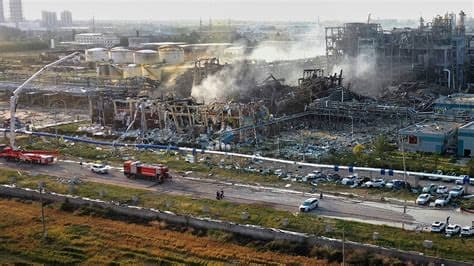
The dawn over the Persian Gulf is pale and hesitant, as if aware of the weight that the day carries. Light stretches across the waters, catching the wake of ships that move deliberately, their paths measured against currents older than any human claim. In this expanse, the rhythms of life—commerce, travel, and routine—intersect with forces that have grown both visible and invisible in the twenty-six days since the first strikes began.
The conflict between United States and Israel on Iran has entered a phase defined by intensity rather than declaration. Air strikes, missile launches, and targeted operations continue across key strategic sites, including energy facilities, military installations, and supply networks. Each day brings new reports of infrastructure damage, alongside a meticulous effort by Tehran to assess impact, repair critical nodes, and maintain essential functions for civilians who navigate life amid uncertainty.
For communities within and near the strike zones, daily existence is a careful choreography. Schools, markets, and neighborhoods adjust to intermittent alerts, sometimes brief, sometimes extended, creating a tension that threads through routines. Electricity and water supply fluctuations become reminders of both vulnerability and resilience. Meanwhile, the broader region watches closely, aware that each tactical engagement ripples beyond borders, shaping perceptions, alliances, and calculations across the Middle East.
From Washington and Tel Aviv, officials emphasize strategic objectives: curtailing capabilities perceived as threats, disrupting supply chains, and signaling resolve. Tehran, in turn, frames its responses as defensive, aimed at preserving sovereignty and ensuring continuity despite the escalating aerial and naval pressures. Analysts note that the interplay of offense and countermeasure has grown more complex, with drones, missiles, and cyber operations increasingly woven into the daily narrative of the conflict.
International observers highlight the broader consequences: disruption of global energy markets, shifts in shipping and logistics across the Gulf, and heightened diplomatic tension among regional neighbors. The persistence of these dynamics underscores the fragility of equilibrium in areas where political, military, and economic systems intersect in delicate patterns.
As the twenty-sixth day unfolds, the immediate facts are clear: the US and Israel continue coordinated attacks on Iranian targets, focusing on strategic and military sites, while Iran implements defensive measures and repairs. Beyond these facts, the human and spatial landscapes—communities, waterways, skies—absorb the imprint of a conflict that continues to stretch across geography, technology, and daily life. In the quiet intervals between strikes, the world observes, measures, and reflects, aware that each day carries consequences both seen and unseen.
AI Image Disclaimer Visuals are AI-generated and serve as conceptual representations.
Sources Reuters BBC News Al Jazeera The New York Times CNN
Published by Banx Network. This article is part of the Banx decentralized media programme, powered by the BXE token on the XRP Ledger.