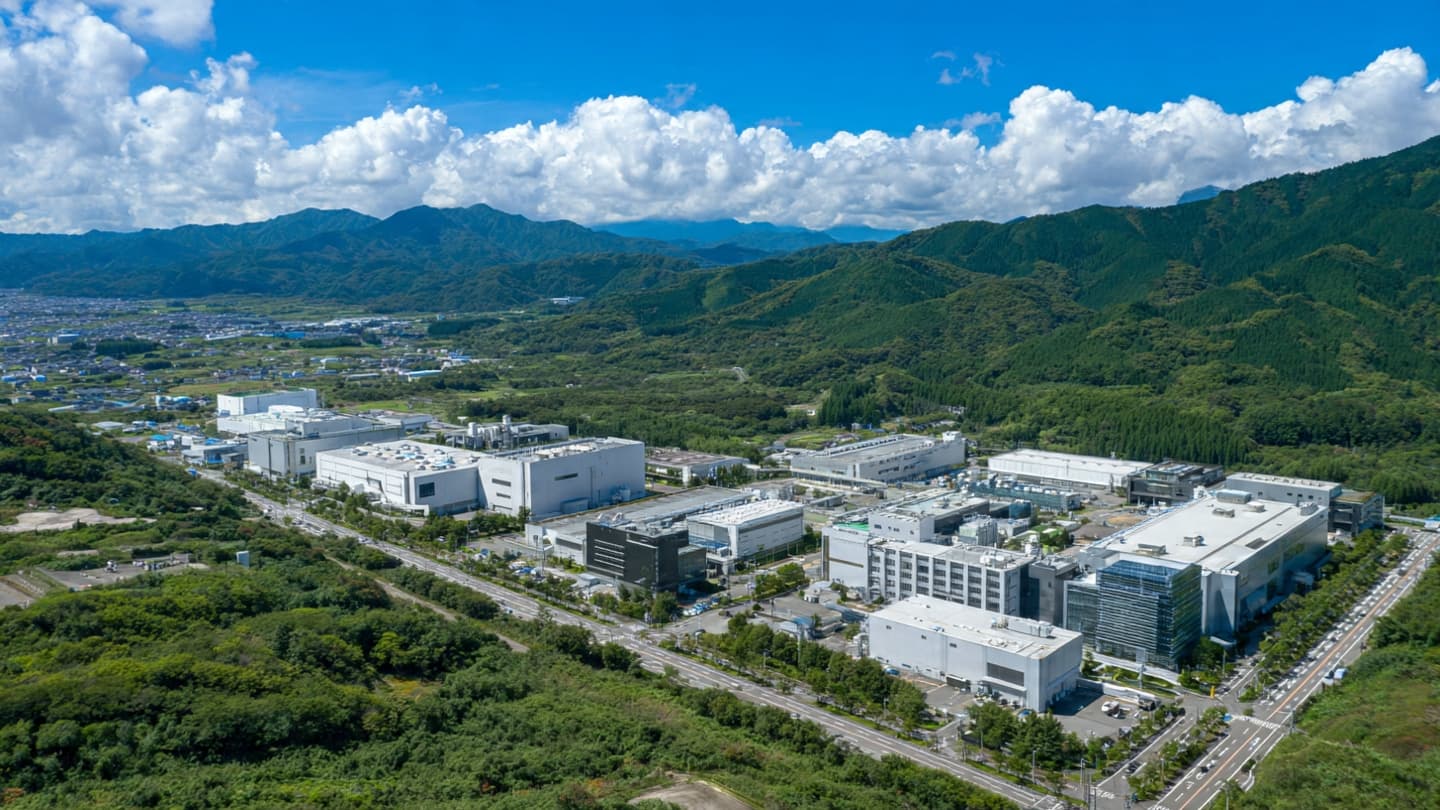
Far from the dense industrial centers usually associated with semiconductors, northeastern Japan may soon become part of a new chapter in the global chip story. In Miyagi prefecture, landscapes shaped by agriculture and mountains could eventually stand alongside a much more modern image: a large-scale memory semiconductor facility.
South Korea's SK Hynix is considering building a memory-chip plant in Miyagi, according to a report cited by Reuters. The proposed investment could reach tens of trillions of won as the company seeks to expand production capacity amid growing global demand for memory chips.
The semiconductor industry has become increasingly important to economies across Asia. Chips sit inside everything from smartphones and computers to vehicles, industrial equipment and artificial-intelligence infrastructure. As computing demand rises, manufacturers are looking for additional production capacity.
Memory chips have gained particular attention because modern AI systems require enormous quantities of high-performance memory. Data centers increasingly depend on advanced memory products to move and process information efficiently.
Japan already has a deep history in semiconductor manufacturing and materials. Its companies supply specialized chemicals, equipment and components used throughout the global chip industry, even though much of the world's large-scale chip fabrication now takes place elsewhere.
A new plant in Miyagi could therefore fit into an existing technological ecosystem. Semiconductor manufacturing requires reliable power, water, transportation and highly trained workers, along with suppliers capable of maintaining sophisticated equipment.
The possible investment also illustrates how semiconductor production is becoming geographically more diverse. Companies and governments have increasingly sought to expand manufacturing capacity across multiple locations, reducing dependence on a limited number of production centers.
For northeastern Japan, the economic implications could extend beyond the factory itself. Large semiconductor facilities can generate demand for construction, logistics, utilities, engineering services and specialized suppliers. They can also create opportunities for local universities and technical institutions.
Yet building a semiconductor plant is a long and complicated process. Construction requires substantial capital, highly controlled environments and infrastructure capable of operating continuously. The availability of skilled workers can also become a limiting factor.
The proposal remains under consideration rather than representing a completed investment. SK Hynix has not confirmed that the Miyagi project will definitely proceed, meaning its eventual scale and timing remain uncertain.
Still, the possibility is significant. As the world builds more computing capacity, the geography of semiconductor production continues to shift. In northern Japan, the prospect of a major memory-chip facility suggests that the next phase of the technology economy may be built not only in traditional industrial centers, but also in places preparing themselves for a new generation of manufacturing.
SEO-friendly Slug sk-hynix-miyagi-japan-memory-chip-plant-investment-2026
Hashtags #Japan #Semiconductors #SKHynix #Technology #Business #AI #Manufacturing #Science
Image Disclaimer These visuals were created using AI as conceptual illustrations and do not depict an actual SK Hynix facility or confirmed construction site in Miyagi.
Sources Reuters SK Hynix Japan External Trade Organization
Published by Banx Network. This article is part of the Banx decentralized media programme, powered by the BXE token on the XRP Ledger.