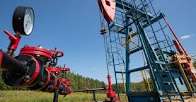
There are places where motion is so constant it becomes invisible—where the flow of oil from earth to sea carries on with such regularity that it feels almost beyond interruption. In southern Iraq, that motion has long defined the landscape, a steady passage from well to port, from field to horizon.
But even the most enduring rhythms can falter.
In Basra, where much of Iraq’s oil production gathers before moving outward into the world, the flow has slowed sharply. Iraq’s oil minister has indicated that output from the Basra Oil Company has fallen from approximately 3.3 million barrels per day to around 900,000 barrels per day. The shift is not gradual, but abrupt, tied directly to the halt of exports from southern ports—points that serve as the final link between inland production and global markets.
When those ports fall silent, the effect travels backward. Pipelines that once carried a steady volume must adjust, storage begins to fill, and the pace of extraction is forced to slow. Production, in this sense, is not only about what lies beneath the ground, but about the ability to move it once it is brought to the surface.
The southern export terminals, long considered among the most vital in the region, connect Iraq’s energy system to the wider world. Their disruption introduces a break not only in trade, but in continuity—a pause that reshapes the entire chain of activity. What once flowed outward now gathers, waiting for a path that is no longer clear.
The reduction in output reflects this constraint. Fields that have operated at near-full capacity must now recalibrate, adjusting to conditions that limit how much can be sustained. The difference—more than two million barrels per day—represents not only a numerical change, but a significant contraction in one of the world’s key sources of supply.
Beyond Iraq, the implications begin to ripple outward. Global oil markets, already sensitive to shifts in production and transport, respond to such developments with heightened attention. A reduction of this scale contributes to a tightening of supply expectations, reinforcing the upward pressure on prices seen in recent sessions.
Yet within the fields themselves, the change is quieter. Machinery continues to operate, though at a different pace. The infrastructure remains in place, the reserves unchanged, but the rhythm—once steady—has been interrupted. Workers adjust, schedules shift, and the sense of continuity gives way to something more tentative.
There is also an uncertainty that accompanies such a moment. The duration of the disruption remains unclear, shaped by factors that extend beyond the fields—security conditions, logistical challenges, and the broader regional environment. The path back to previous levels of output depends not only on capacity, but on the restoration of flow.
And so the landscape holds in a kind of suspension. The wells remain, the ports wait, and the connection between them—so essential, so often taken for granted—has been briefly, but significantly, broken.
Iraq’s oil minister said production at the Basra Oil Company has been reduced from about 3.3 million barrels per day to 900,000 barrels per day after exports from southern ports stopped. The disruption has significantly curtailed output from one of Iraq’s main producing regions, with potential implications for global oil supply.
AI Image Disclaimer
This imagery is AI-generated and intended to visually represent the topic rather than depict actual scenes.
Source Check Reuters Bloomberg CNBC Financial Times Associated Press
Published by Banx Network. This article is part of the Banx decentralized media programme, powered by the BXE token on the XRP Ledger.