There are patterns in the universe that reveal themselves only through repetition—light that rises and falls, warmth that shifts in quiet cycles, signals that seem steady until they are watched closely enough. In the study of distant planets, much of what is known arrives not from direct sight, but from these subtle variations, measured across time and translated into meaning.
Among these patterns are thermal phase curves, the gradual changes in a planet’s emitted heat as it orbits its star. From afar, these curves appear as gentle undulations, reflecting how different parts of a planet warm and cool as they turn through light and shadow. They offer a way of sensing atmospheres, circulation, and surface properties without ever approaching the world itself.
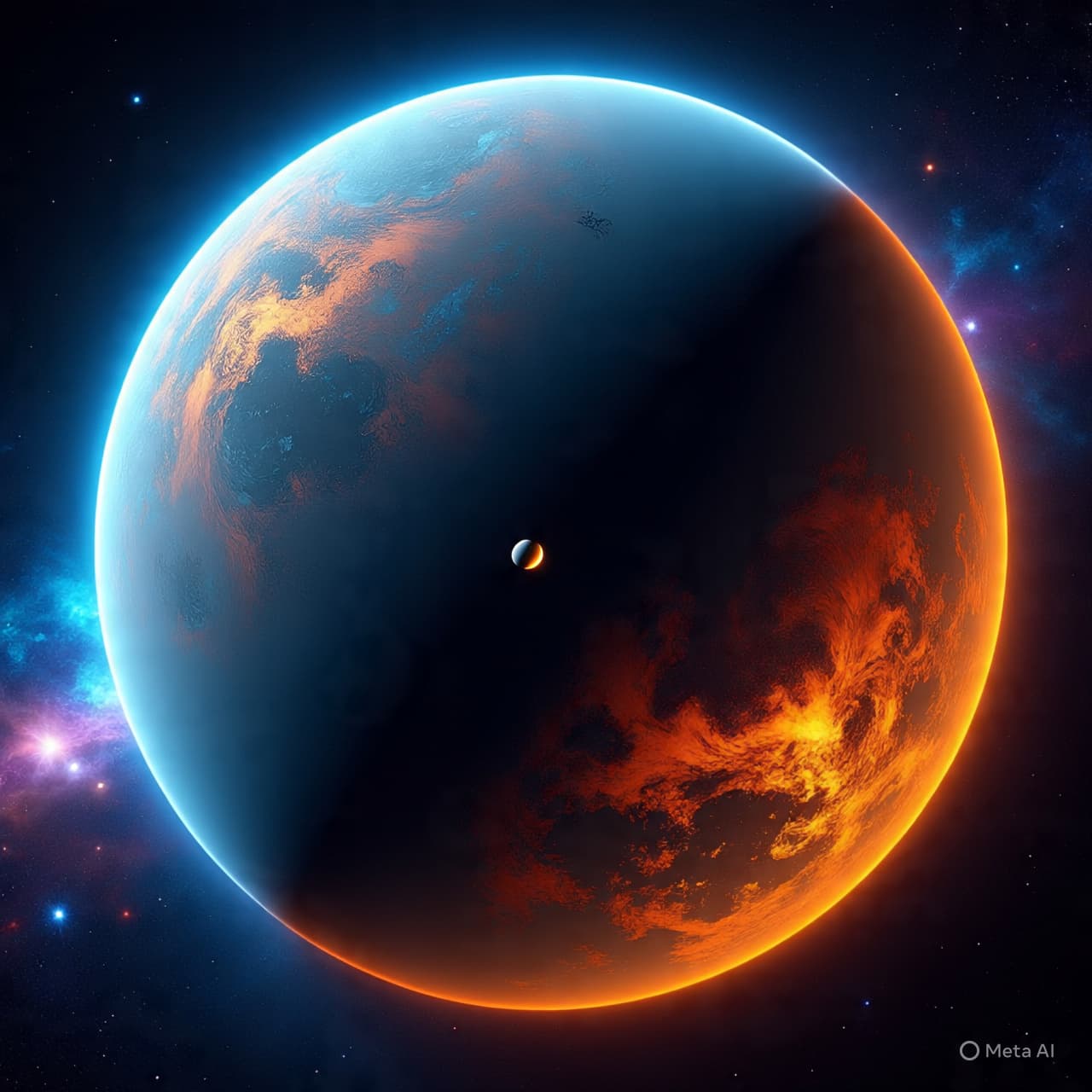
Yet recent research suggests that these curves may carry more than the imprint of the planet alone. They may also hold the influence of companions too small or too distant to be directly detected—hypothetical exomoons, orbiting alongside their planets, contributing their own presence to the shared signal.
An exomoon, though often much smaller than its host planet, can still alter the combined light that reaches observers. As it moves through its orbit, it reflects starlight and emits heat of its own, adding a faint but measurable variation to the overall pattern. In certain configurations, this contribution may shift the shape of the thermal phase curve, creating subtle asymmetries or fluctuations that would not be expected from a solitary planet.
The effect depends on many factors. The size of the moon, its distance from the planet, its temperature, and even its surface or atmospheric properties all influence how strongly it contributes. In some cases, the moon’s signal may blend almost seamlessly with that of the planet, making it difficult to distinguish. In others, it may introduce small irregularities—slight offsets in timing, unexpected changes in amplitude—that suggest the presence of something more.
This possibility adds a layer of complexity to the interpretation of distant worlds. Observations that might once have been attributed solely to atmospheric dynamics or surface variation may need to be reconsidered in light of potential companions. The task becomes not only to read the signal, but to disentangle it—to understand which parts belong to the planet and which might arise from a moon moving quietly alongside it.
At the same time, this complexity offers an opportunity. If such influences can be identified with confidence, thermal phase curves may become a tool not only for studying planets, but for detecting exomoons themselves. In the absence of direct imaging, these indirect signatures could provide one of the few ways to infer their existence.
There is, in this, a sense of layered presence. A planet, already distant and unresolved, carries within its signal the possibility of another body—smaller, fainter, yet still part of the system’s rhythm. The light that reaches us becomes a composite, shaped by multiple motions unfolding together.
The study of these interactions reflects a broader movement in astronomy, where precision increases and interpretation deepens. As instruments become more sensitive, the signals they collect grow richer, but also more intricate. What once seemed simple begins to reveal hidden structure, inviting new questions alongside new answers.
Recent studies indicate that hypothetical exomoons could influence planetary thermal phase curves, introducing subtle variations that may affect how astronomers interpret observational data. These effects may also offer a potential method for detecting exomoons in distant planetary systems.
AI Image Disclaimer
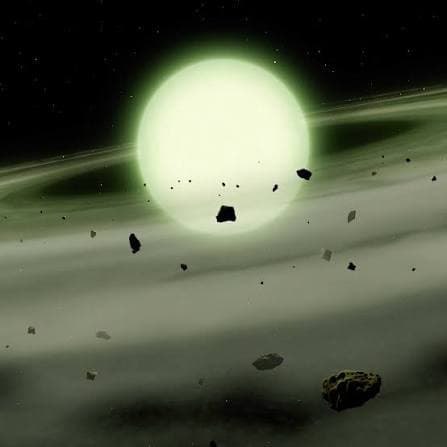
The visuals are AI-generated representations created to illustrate the concept and are not actual observational images.
Source Check The Astrophysical Journal Astronomy & Astrophysics NASA Nature Astronomy Scientific American
Published by Banx Network. This article is part of the Banx decentralized media programme, powered by the BXE token on the XRP Ledger.