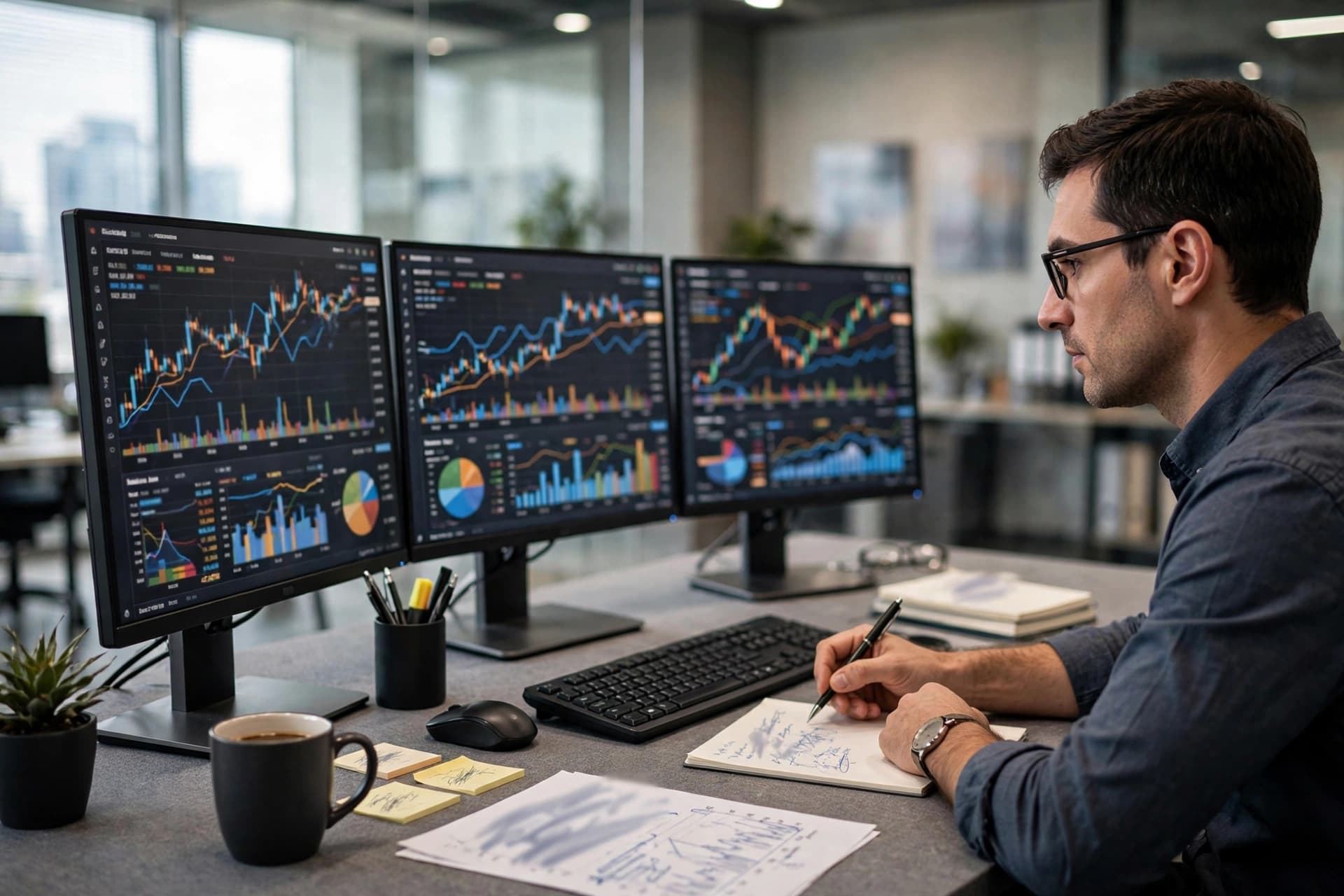
In financial markets, a single moment of uncertainty can ripple outward in unexpected ways — touching investor confidence, corporate valuation and even conversations in boardrooms thousands of miles from the original spark. That dynamic was evident this week after a brief public display by the U.S. Department of Defense showed Alibaba on a list of companies of concern. The result: Alibaba’s shares led a broader slide across technology stocks, illustrating how sensitive markets have become to geopolitical context and regulatory signals.
The Pentagon’s document — shown only for a short period before being corrected — listed a group of firms connected, in various ways, to national security concerns. Although the list was not an official blacklist and the Defense Department quickly clarified that it was preliminary and subject to review, the brief moment of public exposure was enough to stir unease among global investors. Alibaba, one of Asia’s largest technology conglomerates, saw its stock weaken more sharply than many of its peers as traders reacted to the uncertainty.
For analysts watching the markets, the episode highlights how perceptions of risk can move faster than the facts themselves. In the absence of clear, immediate guidance, traders often price in the possibility of future restrictions or scrutiny, especially when it comes to technology companies operating across borders and in sectors seen as strategically important. Alibaba’s business spans e-commerce, cloud computing, digital entertainment and logistics — sectors that carry both opportunity and regulatory complexity in a landscape shaped by competition between major powers.
Importantly, the Pentagon’s publication was not intended as a final policy pronouncement, and officials emphasized that the list was part of internal preparations and should not be taken as immediate action against any company. Yet even a brief spotlight on regulatory concern can be enough to shift sentiment in markets where geopolitical risk is already a persistent factor.
Investors are accustomed to weighing a broad range of influences — earnings reports, macroeconomic data, interest rate expectations and more — but episodes like this underscore how geopolitical signals and regulatory perception now play a central role in tech valuations. Asia-based firms that operate globally may be especially sensitive, as they navigate varying expectations from governments, partners and customers around the world.
The impact on other technology stocks also reflects this environment. In the same session, shares of firms with exposure to global markets or supply chains that intersect with government contracts also softened, even if they were not directly mentioned in the Pentagon’s brief display. Traders and portfolio managers often adjust positions broadly when uncertainty rises in one segment of the market, especially in a sector as interconnected as technology.
For long-term investors and corporate leaders, the event serves as a reminder of how closely policy, perception and price can intersect in an increasingly complex global economy. Companies that operate at the nexus of innovation and scale are often subject to scrutiny not only for their business models but also for how they fit into broader conversations about national interest, data security and technological independence.
Of course, markets are resilient and can rebound as clarity emerges. In the hours after the Pentagon clarified the temporary nature of the list and its context as part of an ongoing review, some stocks regained ground, reflecting relief that the moment did not, at least immediately, signal sweeping restrictions. Traders are quick to digest new information and adjust valuations based on evolving interpretation rather than a single early impression.
For observers beyond the trading floors, the episode invites reflection on how narratives and signals shape the financial world just as much as earnings and fundamentals. In a connected global economy, perception can be as powerful as reality — at least in the short term — and technology firms straddling complex regulatory environments find themselves especially sensitive to shifts in sentiment.
In the end, the market response to the brief Pentagon disclosure was a reminder that the story of business today is about more than products and profits. It is also about trust, clarity and the interplay between global policy and economic confidence — forces that shape not only share prices but how companies plan for the future.
AI Image Disclaimer Visuals are created with AI tools and are intended for representation, not actual photographs.
Sources
• Reporting from major financial news outlets on Alibaba’s stock slide after a temporary Pentagon disclosure that included the company on a list of concern.
• Market analysis commentary on how geopolitical and regulatory perception influences technology sector valuations
Published by Banx Network. This article is part of the Banx decentralized media programme, powered by the BXE token on the XRP Ledger.