There is a quiet distinction in how we describe beginnings. Sometimes, what feels like the first step is, in truth, part of a longer path—one that has been unfolding in subtle ways for decades. In space exploration, where time stretches across generations, the idea of “first” often carries layers of meaning, shaped as much by perspective as by fact.
Recently, attention has turned to NASA and its development of what is being described as the first nuclear-powered interplanetary spacecraft. The phrase itself invites curiosity, but also a careful reconsideration of history. After all, spacecraft such as Voyager 1 and Voyager 2 have long traveled through the Solar System using nuclear energy. Their journeys, now extending into interstellar space, are sustained by radioisotope thermoelectric generators—devices that convert heat from decaying radioactive material into electricity.
So what, then, distinguishes this new development?
The answer lies in the type and purpose of the power system. The Voyager probes, launched in 1977, rely on nuclear energy primarily to generate electricity for instruments and communication. They do not use that energy for propulsion. Their movement through space is determined by their initial launch velocity and gravitational assists from planets, rather than continuous thrust.
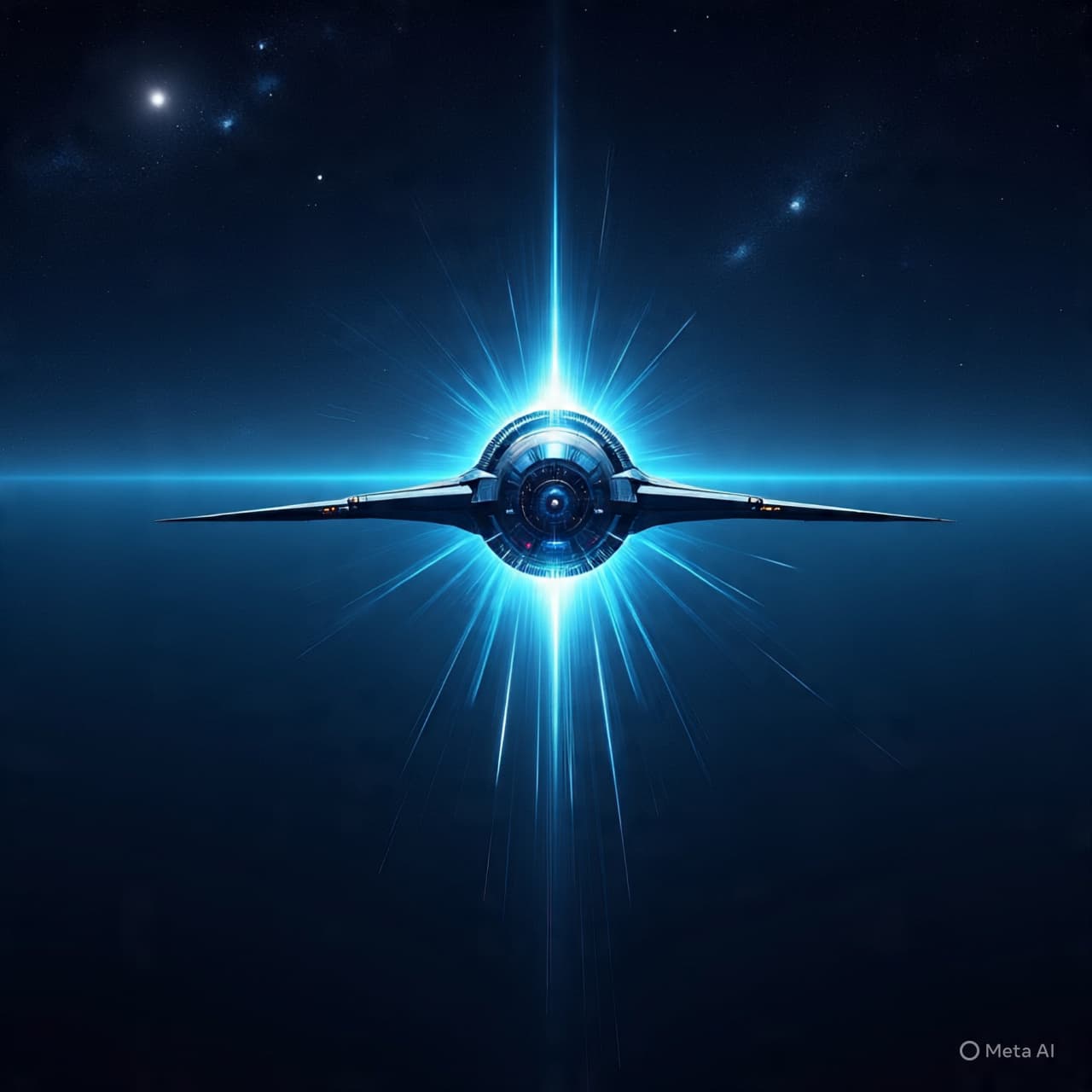
The spacecraft now under development represents a different approach—one that seeks to use nuclear power not only as a source of electricity, but as a means of propulsion. Concepts such as nuclear thermal propulsion and nuclear electric propulsion aim to harness the energy of nuclear reactions to generate thrust, allowing spacecraft to travel more efficiently and potentially reach destinations more quickly. In this context, “nuclear-powered” refers not just to onboard systems, but to the very motion of the spacecraft itself.
This distinction marks a subtle but meaningful shift. It suggests a future where spacecraft are not limited to the momentum they begin with, but can actively shape their trajectories over long distances. For missions to Mars, the outer planets, or even beyond, such capabilities could reduce travel time and expand the range of possible exploration.
There is, however, a measured pace to this progress. Developing nuclear propulsion systems involves complex engineering, rigorous safety considerations, and extensive testing. The goal is not immediate deployment, but careful advancement—ensuring that each step aligns with both technical requirements and broader regulatory frameworks.
The legacy of the Voyager missions remains central to this conversation. These probes, still transmitting data after decades in space, demonstrate the enduring value of nuclear power in exploration. Their success provides both a foundation and a point of comparison, illustrating what has already been achieved while highlighting what remains to be explored.
There is also a broader narrative at play. Space exploration often evolves through continuity rather than abrupt change, with new technologies building upon earlier innovations. The idea of a “first” nuclear-powered interplanetary spacecraft becomes less about replacing what came before, and more about extending it—moving from power generation to propulsion, from endurance to greater flexibility.
As research continues, agencies and partners are working to refine these propulsion systems, exploring their potential applications and limitations. While timelines remain subject to development and testing, the direction is clear: toward spacecraft that can travel farther, faster, and with greater control than before.
In recent updates, NASA has indicated ongoing work on nuclear propulsion technologies, with future missions expected to incorporate these systems once they reach operational readiness. The Voyager probes, meanwhile, continue their journey, offering a quiet reminder that even earlier steps can remain part of the present.
AI Image Disclaimer Illustrations were produced with AI and serve as conceptual depictions.
Source Check (Credible Media & Journals): NASA Space.com Scientific American Nature Ars Technica
Published by Banx Network. This article is part of the Banx decentralized media programme, powered by the BXE token on the XRP Ledger.