Every return from space carries a subtle sense of closure, as if the vast silence of orbit gradually folds back into the familiar atmosphere of Earth. The Shenzhou program continues this rhythm of departure and return as part of long-term orbital operations.
Recent space agency updates indicate that a Chinese crewed spacecraft mission associated with the Shenzhou program has completed its orbital phase and returned astronauts safely to Earth. These missions are part of ongoing efforts to maintain and operate a permanent presence in low Earth orbit.
Crew rotations in space stations are carefully coordinated, often involving overlapping teams to ensure continuity of scientific experiments and station maintenance. These transitions are critical for sustaining long-duration missions.
Astronauts on board typically conduct experiments related to biology, materials science, and space environment observation. These studies help scientists understand how microgravity affects both physical systems and human physiology.
Re-entry procedures are among the most carefully controlled phases of any space mission. The spacecraft must withstand extreme heat and pressure changes as it passes through Earth’s atmosphere.
Space agencies invest heavily in training and simulation to ensure mission safety, reflecting decades of accumulated experience in human spaceflight. Each mission contributes to refining these systems further.
The continued cadence of Shenzhou missions reflects a broader expansion of human activity in space, where orbital platforms are increasingly used as laboratories for scientific discovery.
As the spacecraft completes its return, it marks not an end, but a continuation of humanity’s evolving relationship with space exploration.
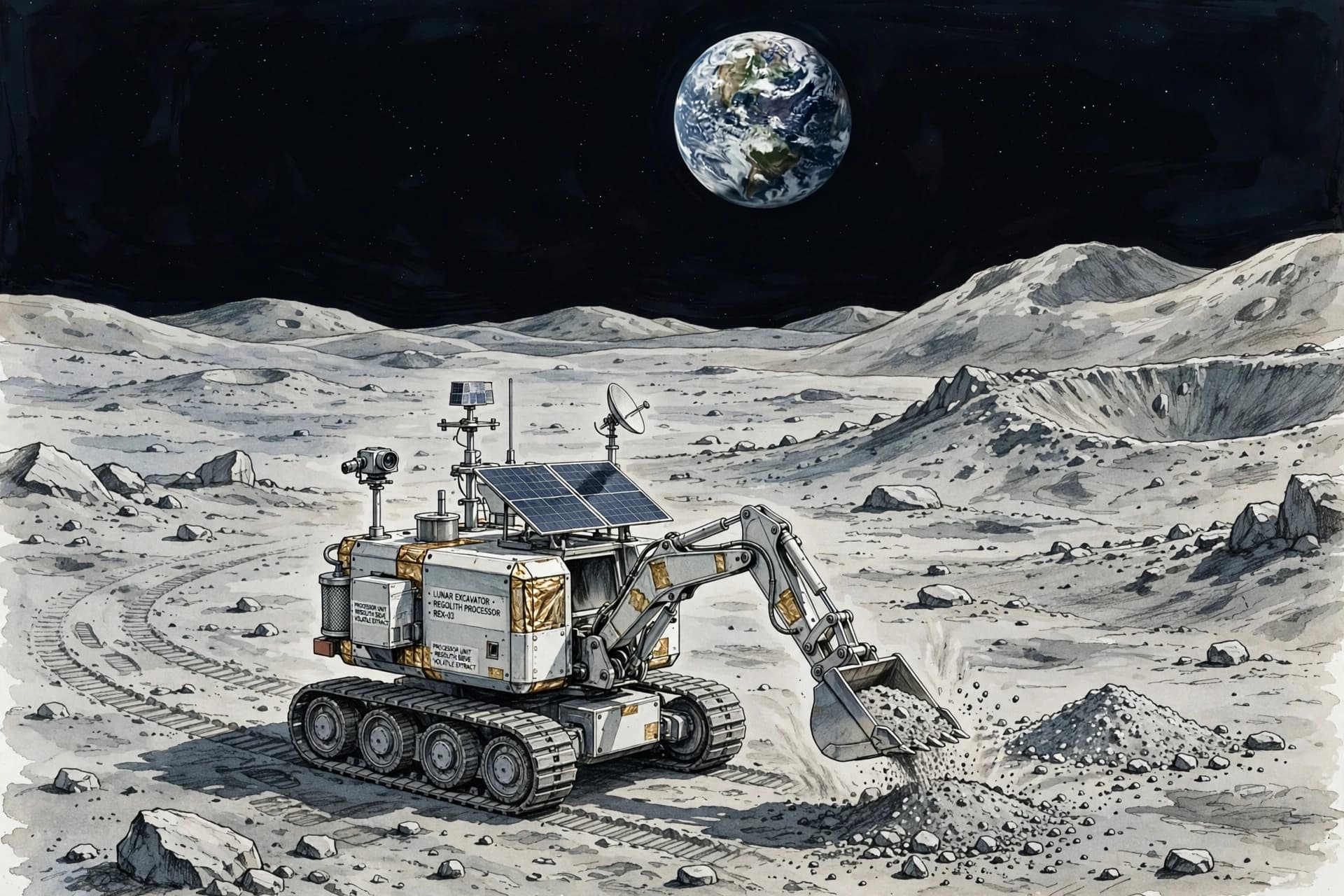
AI Image Disclaimer: This article includes AI-generated imagery intended solely for illustrative visualization.
Sources: China National Space Administration (CNSA), Reuters, Nature Astronomy, Space.com, BBC Science
Published by Banx Network. This article is part of the Banx decentralized media programme, powered by the BXE token on the XRP Ledger.