Across Lebanon’s southern hills, the sound of winter wind has become intertwined with another, sharper current — the faint, rhythmic pulse of distant explosions carried through the cold air. It is a sound that the region knows too well, a reminder of the uneasy quiet that so often precedes larger storms. The olive groves and valleys that line the border with Israel stand as witnesses again to an old tension finding new expression.
In recent days, Israel has intensified its strikes on Hezbollah positions throughout southern Lebanon. The targets — storage depots, communication posts, and units believed to be managing advanced rocket systems — mark a shift from deterrence to disruption. Israeli military officials describe the operations as preemptive measures designed to weaken Hezbollah’s capacity to act should a wider confrontation erupt with Iran or its regional allies. Observers note that the strikes have grown in both frequency and precision, suggesting preparation for a broader strategic contingency.
Hezbollah, for its part, has responded with words rather than escalation. Its leadership insists it does not seek war, even as it affirms readiness to defend Lebanon’s territory. This balance — defiance restrained by calculation — reflects the delicate reality of a group rooted in both politics and conflict, aware that another war would risk devastating an already fragile nation.
In Beirut, the mood is one of weary vigilance. Government officials have quietly revived discussions about long-standing efforts to assert state control over armed groups, though the political divisions that define Lebanon remain deep. The army, limited in resources, maintains presence along the southern frontier, yet few believe it could prevent a serious escalation if regional pressures ignite. For ordinary Lebanese families, the question is not of geopolitics but survival — whether another wave of destruction might undo what little stability remains after years of crisis.
Across the border, in Israel, defense planners view Hezbollah through a widening lens: not merely as a local adversary, but as a forward arm of Iran’s regional influence. The heightened alert reflects fears that any confrontation between Israel and Iran could extend swiftly to Lebanon and beyond. Military analysts speak of layered deterrence — operations meant to preempt, contain, and signal readiness all at once — even as diplomatic channels remain uncertain and fragile.
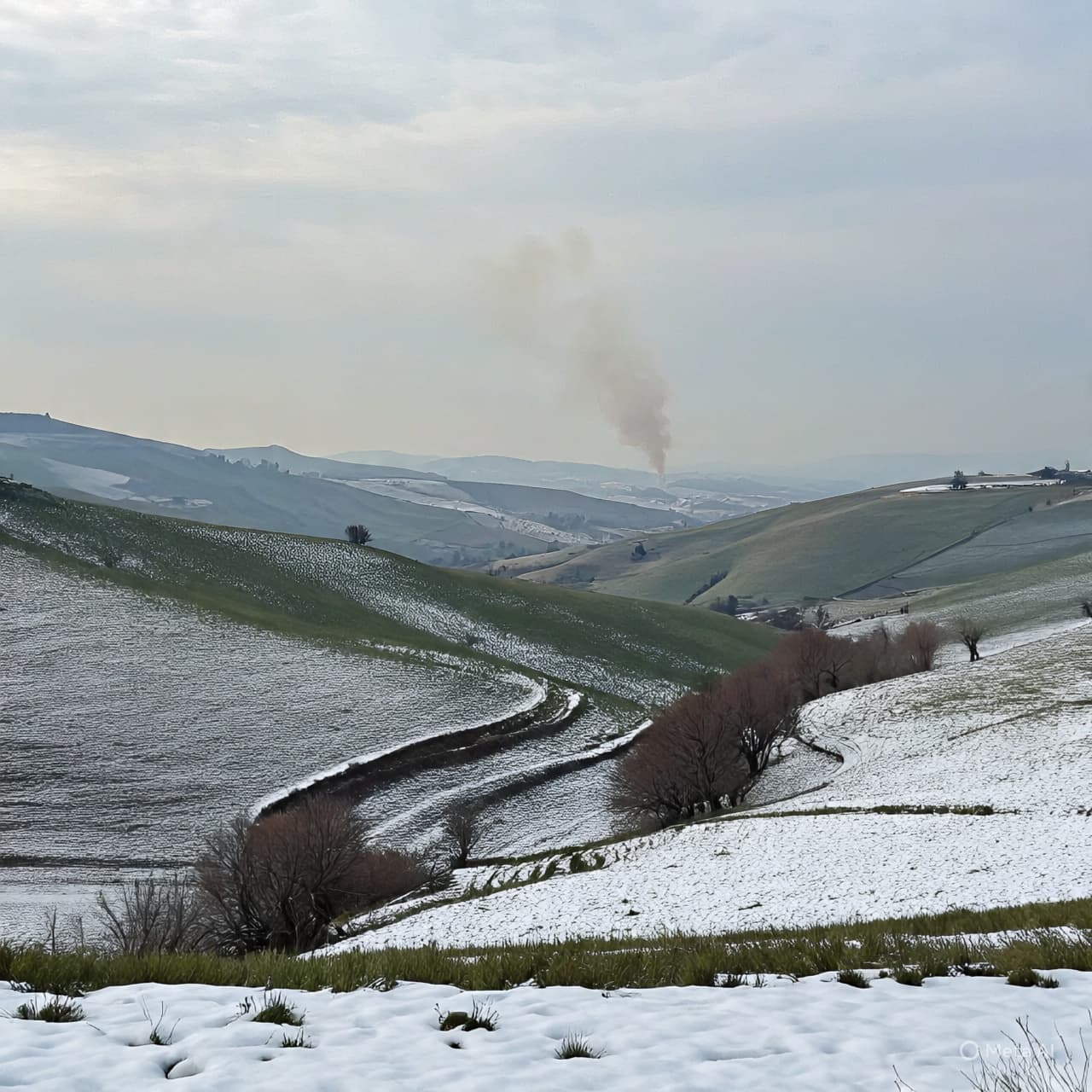
Along the frontier itself, the landscape tells its own story. Smoke rises faintly where trees once shaded small farms. The roads are quieter now, the villages half-empty, their inhabitants waiting out each strike with the practiced composure of those who have seen such cycles before. Night falls quickly, and the hills return to silence, though one that carries the weight of expectation.
In clear news terms, Israel has escalated its military operations in southern Lebanon, striking Hezbollah targets in what officials describe as an effort to degrade the group’s capabilities amid rising regional tensions linked to Iran. Hezbollah has vowed to defend Lebanese territory but stated it does not seek a new war. Lebanese authorities continue discussions over plans to extend state control and prevent further destabilization. The situation remains tense as both sides weigh action and restraint.
AI Image Disclaimer
Visuals were created using AI tools and serve as conceptual representations.
Sources (Media Names Only)
Reuters The Jerusalem Post Al Jazeera Associated Press Le Monde
Published by Banx Network. This article is part of the Banx decentralized media programme, powered by the BXE token on the XRP Ledger.