
Key Highlights
- Recent Israeli airstrikes targeted Iranian fuel supplies linked to the IRGC.
- The strikes aim to disrupt Iran's military logistics and missile capabilities.
- Fuel infrastructure plays a critical role in sustaining military operations.
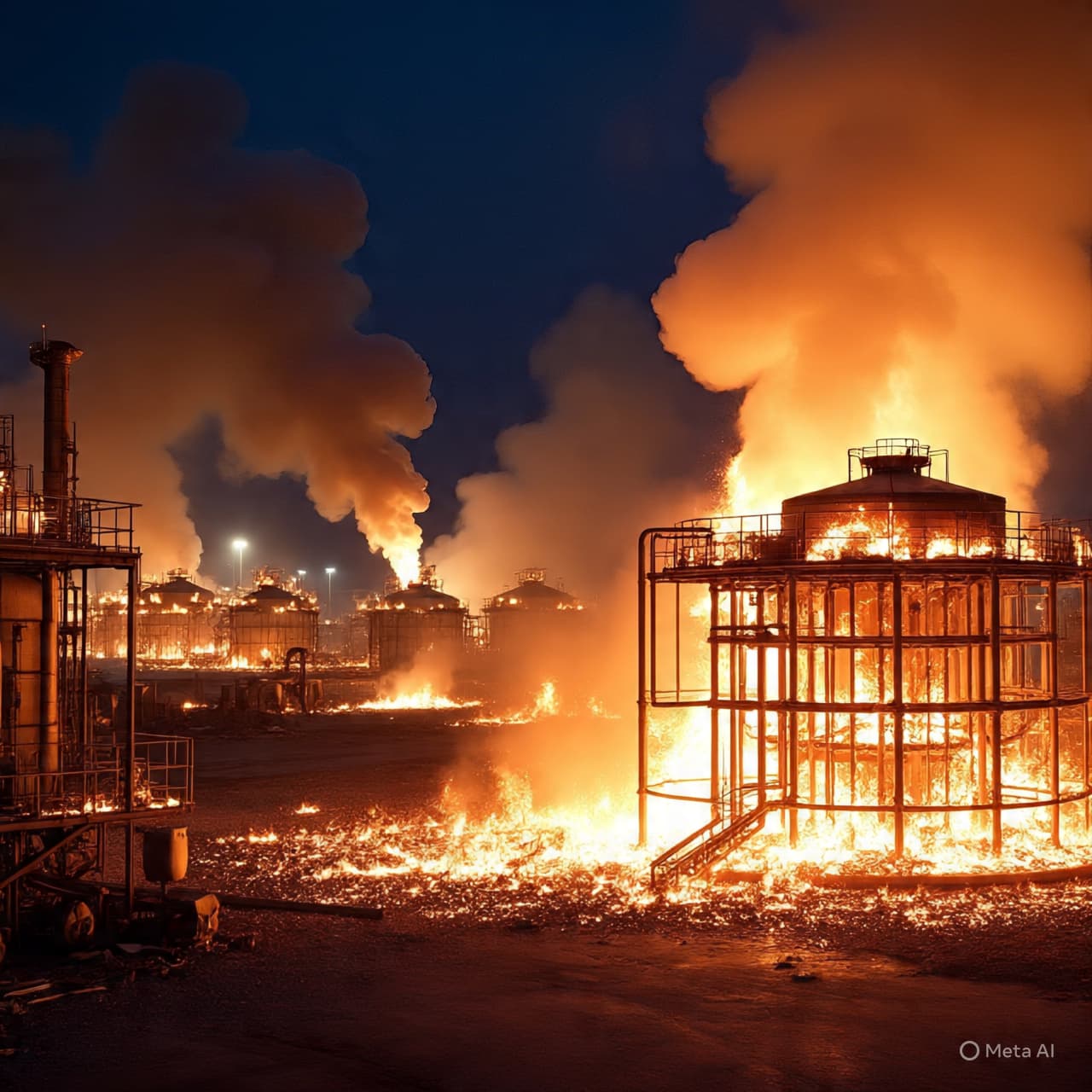
In the industrial outskirts of many Middle Eastern cities, fuel depots often go unnoticed. These facilities, characterized by rows of storage tanks and pipelines, serve as the backbone of everyday life, ensuring that engines run and lights stay on. However, in times of conflict, such ordinary infrastructure can transform into strategic assets, drawing the attention of military planners and analysts alike.
Recently, Israeli forces announced a series of strikes aimed at fuel supplies associated with the Islamic Revolutionary Guard Corps (IRGC), a powerful branch of Iran’s military. According to Israeli military statements, these operations targeted fuel depots and logistical facilities believed to support the movement of missiles, drones, and other military equipment linked to the IRGC's operations. This campaign is part of a broader strategy to disrupt what Israel describes as the logistical backbone of Iran’s military capabilities.
While missile launch sites and command centers often dominate headlines, the importance of supply lines—particularly fuel—cannot be overstated. Modern warfare relies heavily on the steady flow of energy, which powers aircraft sorties, drone launches, and long-distance missile deployments. By targeting these supplies, military planners aim to slow down operations without directly striking populated urban centers, thus minimizing civilian casualties while still achieving strategic objectives.
The facilities linked to the IRGC reflect a complex economic and military structure that has evolved in Iran over decades. Originally formed after the 1979 revolution, the IRGC now wields significant influence across various sectors, including construction, shipping, and energy. This extensive network has become increasingly relevant in the ongoing conflict between Israel and Iran, as both sides seek to undermine each other's military capabilities.
Israel has framed its campaign as an effort to weaken the infrastructure supporting Iran’s missile program and its network of allied armed groups throughout the Middle East. In response, Iranian officials have condemned the strikes as acts of aggression, continuing to launch retaliatory missile and drone strikes toward Israeli territory. This exchange has gradually expanded the geography of the conflict, with potential targets now including not only missile launch sites and radar stations but also airports and supply depots.
For civilians living near these infrastructures, the shift can feel abrupt. Areas that once exuded the mundane scents of fuel and machinery may suddenly find themselves at the center of a larger geopolitical narrative. As the conflict escalates, analysts note that strikes on logistical networks often indicate a strategic phase of warfare—one that aims not only for immediate destruction but also for long-term disruption of an opponent’s operational capacity.
The recent attacks on fuel supplies underscore the often-overlooked architecture of modern conflict. Wars are not solely fought where missiles are launched or aircraft take flight; they are sustained in the quieter spaces where energy is stored, transported, and transformed into motion. As the conflict continues to unfold across the Middle East, these once-ignored pieces of industrial geography have become critical components in the ongoing narrative of war, one depot and runway at a time.
Published by Banx Network. This article is part of the Banx decentralized media programme, powered by the BXE token on the XRP Ledger.



