In Munich, the future of the automobile is increasingly being imagined not only through steel, batteries, and engines, but through lines of code. BMW has entered a new phase of restructuring, placing artificial intelligence, electric vehicles, regional production, and organizational efficiency at the center of its strategy as the luxury automaker seeks to strengthen its position in a rapidly changing global market.
The strategy, presented under new chief executive Milan Nedeljković, comes after a difficult period for BMW. The company has faced weaker profitability and pressure from changing conditions in China, tariffs, and the accelerating competition surrounding electric vehicles. Its latest plan therefore reaches beyond individual models, touching the way the company organizes its operations and develops technology.
One of the clearest elements is the planned reduction of organizational layers. BMW intends to cut around 20% of divisions and management roles by the middle of 2027. The company has also outlined plans to reduce approximately 8,000 jobs in Germany, part of a broader effort to make its structure more efficient.
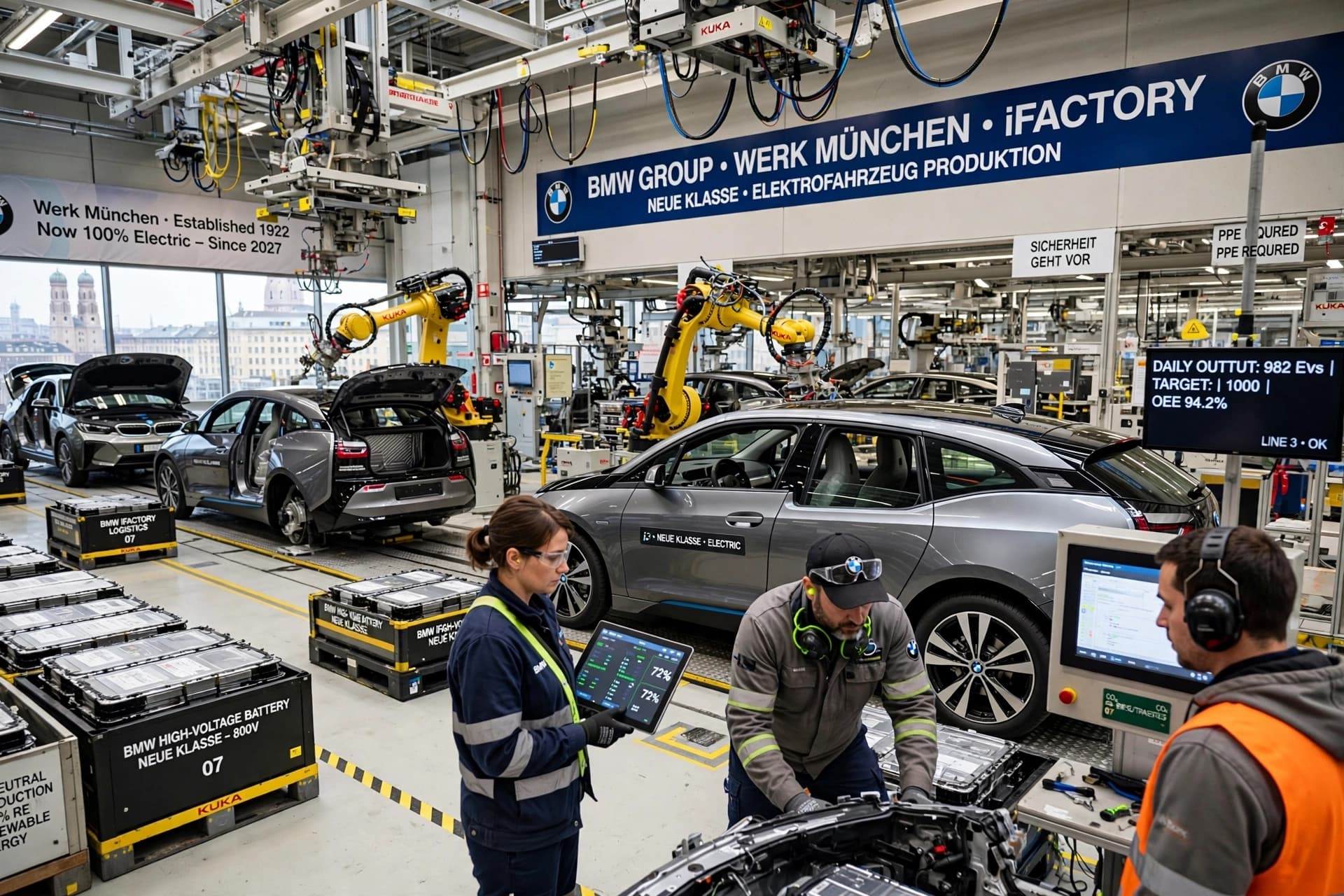
At the same time, the company is preparing for a more electric road ahead. BMW plans to introduce a new entry-level electric vehicle in Europe in 2028 as part of its Neue Klasse range. The move places another electric model on a product path that the company sees as important for its European future.
China occupies another important part of the strategy. BMW intends to increase local production and adapt a greater share of its vehicles to Chinese consumer preferences. By 2030, the company aims for around 95% of its vehicles in China to be tailored to the local market, reflecting the growing importance of regional design and production.
The United States will follow a different path. BMW plans to introduce a new luxury SUV positioned above the X7 while making greater use of regional production. Its Spartanburg plant in South Carolina is already operating at full capacity, making the balance between local demand and manufacturing capacity an important part of the company’s American strategy.
Artificial intelligence is woven through nearly every part of the plan. BMW intends to expand AI across its value chain, using the technology to improve decision-making and operational processes while also developing autonomous-driving capabilities. The company expects Germany to serve as an important starting point for that expansion.
The company is also looking outward for partnerships involving critical raw materials and semiconductors. Such relationships have become increasingly important as automakers compete for batteries, chips, software capabilities, and other components needed for increasingly digital vehicles. BMW’s strategy reflects that broader shift from traditional manufacturing toward a more interconnected technology ecosystem.
Financial targets provide another measure of the transformation. BMW is targeting an automotive profit margin of 3% to 5% by 2028, with a longer-term goal of 8% to 10% in the early 2030s. The company also expects free cash flow of more than €7 billion annually by the early 2030s.
The road ahead will therefore be measured not simply by how many vehicles BMW sells, but by how effectively it combines electric technology, software, artificial intelligence, regional manufacturing, and cost discipline. For now, the company has laid out a strategy extending from its Bavarian headquarters toward markets in Europe, China, and the United States, with implementation unfolding over the coming years.
Published by Banx Network. This article is part of the Banx decentralized media programme, powered by the BXE token on the XRP Ledger.