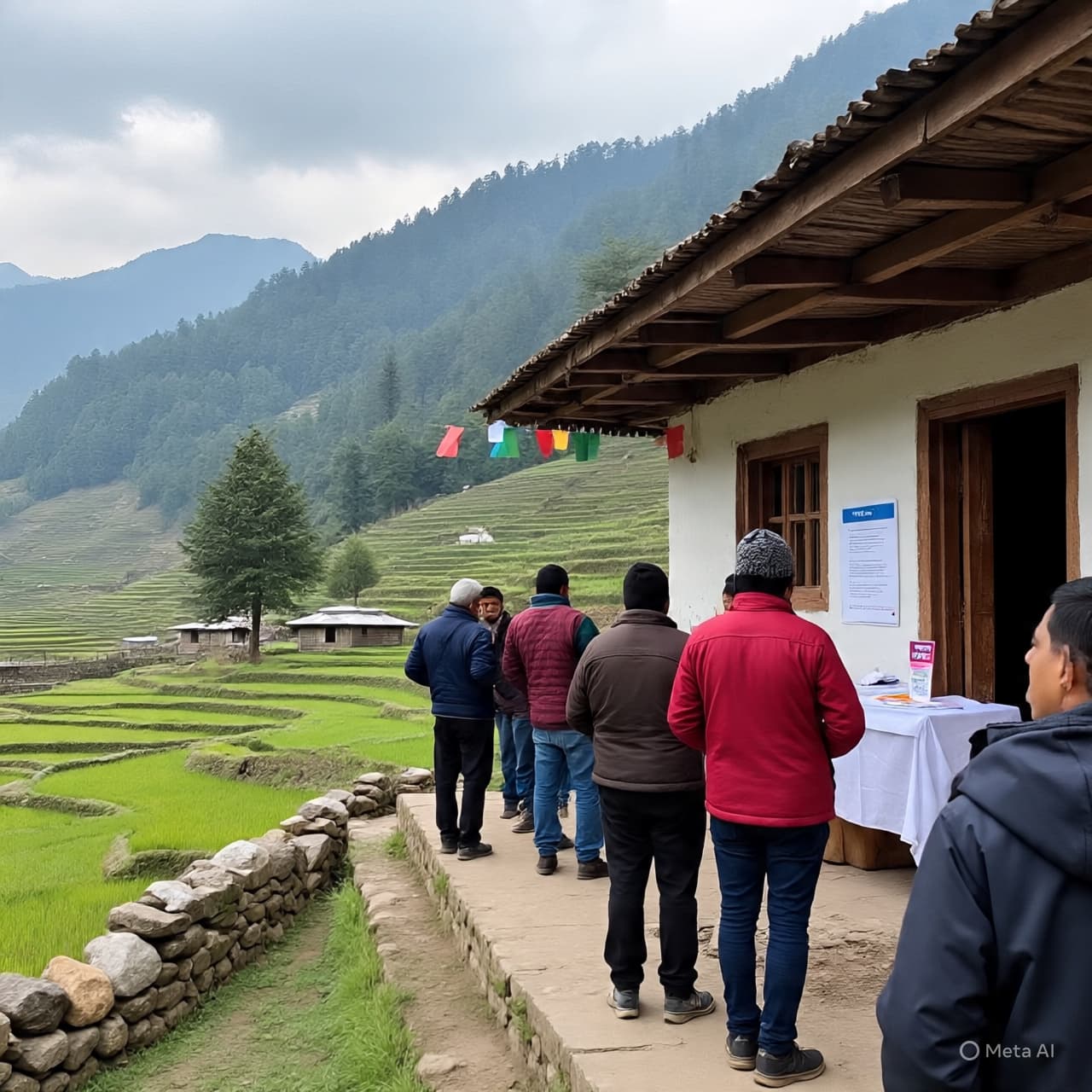
Morning comes gently to the Himalayan foothills. Mist rises from terraced fields, and narrow roads begin to fill with the quiet motion of buses, bicycles, and villagers heading toward markets. In towns scattered between mountains and rivers, the rhythm of public life returns after days of anticipation—days when classrooms, community halls, and municipal buildings briefly transformed into polling stations.
In Nepal, elections have long carried a sense of both routine and renewal. Ballots are cast in places where the terrain itself seems to remind citizens of the country’s layered history—kingdoms and revolutions, constitutions rewritten, governments reshaped by the will of voters. Each election becomes another step in a long democratic journey that continues to unfold between the Himalayas and the plains.
This week, that journey reached another milestone. As Nepal completed its latest round of elections, India’s Prime Minister Narendra Modi extended congratulations to the Nepalese government and the country’s citizens, praising the successful conduct of the polls and the democratic participation that carried them forward.
The message, shared through diplomatic and public channels, reflects the close and complex relationship between the two neighboring nations. India and Nepal share an open border, deep cultural ties, and longstanding economic cooperation. Millions of people cross between the two countries each year for work, family visits, and trade, creating connections that reach far beyond official agreements.
In this context, elections in Nepal are often observed closely in New Delhi. Political stability in Kathmandu can shape regional cooperation on infrastructure, energy projects, and cross-border development initiatives. From hydropower investments in Nepal’s rivers to expanding road and rail links between the two countries, the direction of Nepal’s government carries implications for both domestic governance and regional planning.
The recent elections, conducted across a landscape of cities, valleys, and mountain communities, drew large numbers of voters to polling stations despite logistical challenges that are familiar in a country of dramatic geography. Election officials coordinated ballot transport through remote districts while security forces worked to ensure that voting could proceed peacefully.
For many citizens, the act of voting remains both practical and symbolic. It is a way of participating in the slow shaping of national policy—deciding who will guide economic development, infrastructure planning, and social reforms in the years ahead. But it is also a reaffirmation of Nepal’s democratic identity, forged through decades of political transformation.
Prime Minister Modi’s congratulatory message acknowledged that broader significance. In his remarks, he commended the Nepalese people for their participation in the democratic process and expressed hope that the results would strengthen cooperation between the two countries. Diplomatic language often carries layers of meaning, and such statements signal both respect for sovereignty and an interest in maintaining stable regional partnerships.
Across Kathmandu, the capital city that often serves as the stage for Nepal’s political life, conversations about the election results continue to ripple through cafés, offices, and university campuses. Political leaders analyze the numbers, journalists discuss possible coalition arrangements, and citizens debate the direction the new government might take.
Yet beyond the capital’s discussions, the country’s quieter landscapes also mark the moment in their own way. In villages where ballot boxes were carried down mountain paths and across rivers, daily routines have resumed. Farmers return to their fields. Children walk to school. The temporary intensity of election day fades into memory.
The ballots have been counted, the results acknowledged, and congratulations offered from across the border. What remains now is the longer process that follows every election: turning public trust into policy, and transforming a moment of participation into the steady work of governance.
As the Himalayan morning stretches into another ordinary day, Nepal’s democratic journey continues—one vote, one government, and one chapter at a time.
AI Image Disclaimer Illustrations were created using AI tools and are not real photographs.
Sources Reuters Associated Press The Hindu BBC News The Kathmandu Post
Published by Banx Network. This article is part of the Banx decentralized media programme, powered by the BXE token on the XRP Ledger.