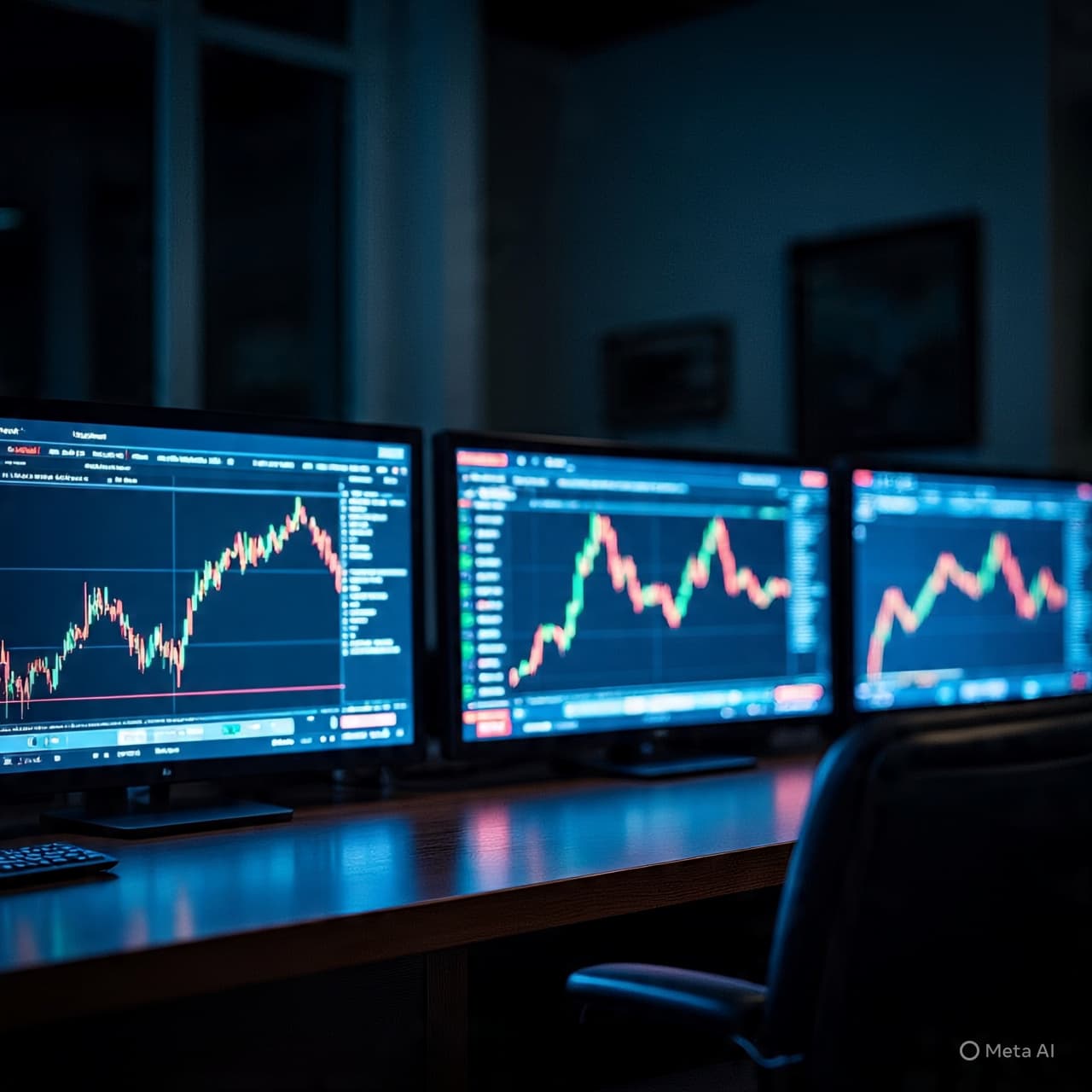
In the late afternoon hush of the trading day, as screens flicker between green and red and the pace of decisions begins to slow, markets sometimes reveal their mood not in sudden shocks but in a steady, gathering weight. Across Australia, that weight settled over the benchmark S&P/ASX 200, drawing it closer to a threshold that carries both technical meaning and quiet unease.
The movement was not driven by a single force, but by a convergence. Resource stocks, often guided by the distant pull of global commodity demand, edged lower as expectations softened. In the banking sector, which tends to anchor the index, shares reflected a more cautious outlook shaped by interest rate uncertainty and shifting economic signals. Consumer stocks followed a similar path, mirroring households that are beginning to weigh spending decisions more carefully in an environment of persistent cost pressures.
Individually, each sector tells a familiar story. Together, they form a broader pattern—one that has gradually pulled the index toward what is commonly defined as a bear market, a decline of 20 percent or more from recent highs. The S&P/ASX 200 has not fully crossed that line, but its proximity has become part of the day’s quiet narrative, shaping sentiment as much as the numbers themselves.
Beyond the local market, wider currents continue to move. Global investors are navigating an uncertain landscape marked by inflation concerns, fluctuating commodity prices, and ongoing geopolitical tensions. For a market like Australia’s—closely tied to exports and financial flows—these external pressures are rarely distant. They arrive subtly, reflected in valuations, expectations, and the gradual repositioning of capital.
By the close, the decline across resources, banks, and consumer stocks had left a clear imprint. The losses were measured rather than abrupt, but their consistency carried weight, nudging the index closer to a point that often signals a shift in market tone—from confidence toward caution.
And so, as evening settles over the financial centers, the market rests in a state that feels neither fully stable nor fully unsettled. It remains in motion, shaped by forces both local and global, its next direction still forming—quietly, increment by increment, in the space between numbers and sentiment.
Published by Banx Network. This article is part of the Banx decentralized media programme, powered by the BXE token on the XRP Ledger.