For years, Indonesia’s digital economy has been closely associated with rapid expansion: more users, more transactions, more services and increasingly integrated platforms. But as the sector matures, another measure has begun to receive greater attention—whether growth can eventually translate into sustained profitability.
GoTo entered the second quarter of 2026 with that question becoming increasingly visible. The company reported its second consecutive quarterly net profit, following another profitable quarter at the beginning of the year.
According to GoTo’s own financial release, the company recorded Rp252 billion in net profit during the second quarter, following Rp171 billion in the first quarter. Net revenue reached Rp5.7 trillion, representing 31 percent year-on-year growth, while core gross transaction value increased 83 percent to Rp164 trillion.
Behind the broader numbers was a noticeable shift in the contribution of the company’s financial technology business. GoPay’s adjusted EBITDA reached Rp481 billion in the quarter, rising sharply from the previous year and exceeding the adjusted EBITDA contribution of GoTo’s on-demand services for the first time.
That change is significant because GoTo’s ecosystem was built around several interconnected activities. Mobility, delivery, e-commerce and financial services operate under the same broader digital ecosystem, but their economics are not identical. The latest figures suggest that financial services are becoming an increasingly important part of the group’s earnings structure.
The fintech business also recorded growth in user activity. GoTo reported that monthly transacting users reached 28.8 million, while transactions increased significantly year-on-year. The company also reported growth in its outstanding loan book, reflecting the expanding role of financial services within its platform.
At the same time, the company continues to operate in an environment where growth must be balanced against costs and changing regulations. GoTo has maintained a full-year adjusted EBITDA guidance of Rp3.2 trillion to Rp3.4 trillion, while adjusting the relative expectations for its fintech and on-demand businesses.
Reuters similarly reported that the company’s second-quarter performance was supported by strong fintech growth and continued cost discipline. The figures underline a broader transition in Indonesia’s technology sector, where scale alone is increasingly accompanied by questions about efficiency and the durability of earnings.
For consumers, the change may be less visible than it is in financial statements. A digital wallet can appear simply as a payment tool, just as a ride-hailing application can appear to be merely a transportation service. Behind those everyday interactions, however, platforms are building increasingly interconnected ecosystems in which payments, lending, mobility and commerce influence one another.
GoTo’s latest results therefore offer a snapshot of a digital economy moving into a more mature phase. The story is no longer only about how quickly platforms can attract users. It is also about how effectively those users, transactions and services can form an economically sustainable system.
The coming quarters will show whether the recent profitability represents the beginning of a longer pattern. For now, the numbers provide one clear sign: within GoTo’s expanding ecosystem, financial technology has become an increasingly important part of the journey from digital scale toward financial sustainability.
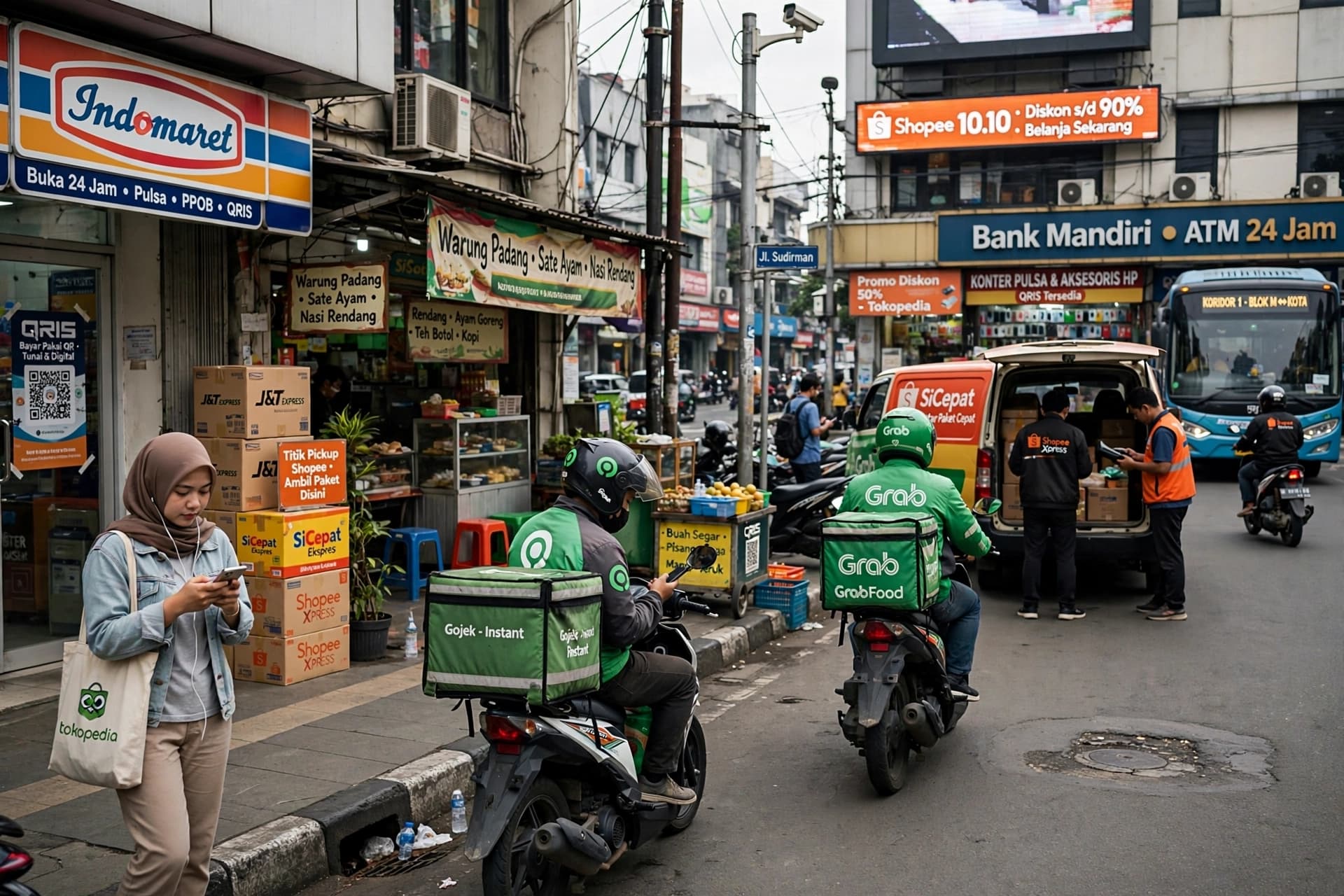
IMAGE DISCLAIMER
The illustrations are conceptual visualizations for editorial presentation. They are not photographs of actual GoTo facilities, employees, customers or financial events.
SOURCES
Reuters — “Indonesia’s GoTo posts second straight quarterly profit on fintech strength,” July 29, 2026
GoTo Group — Second Quarter 2026 Earnings Release, July 29, 2026
ANTARA — GoTo first-half 2026 financial results
Published by Banx Network. This article is part of the Banx decentralized media programme, powered by the BXE token on the XRP Ledger.