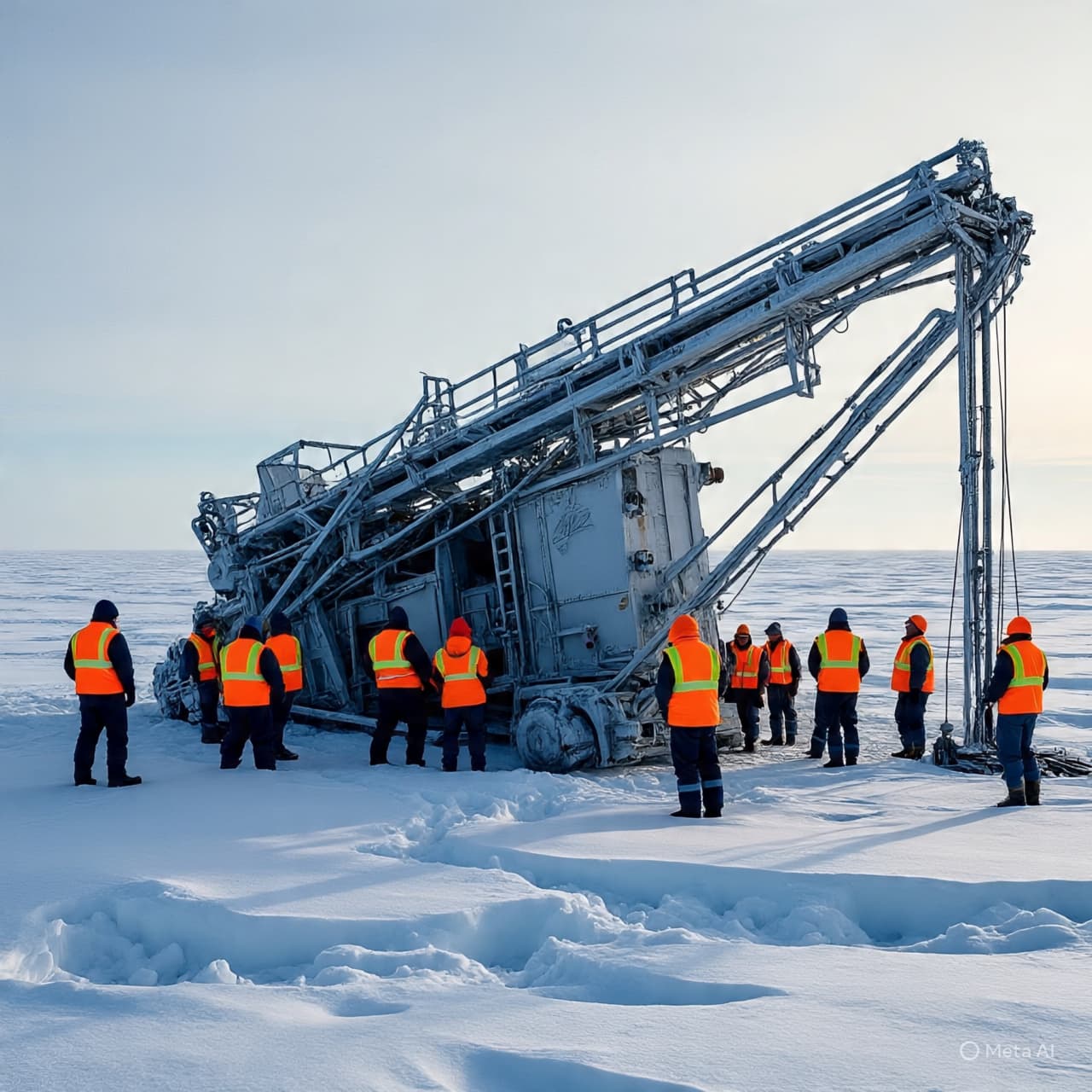
The tundra stretches endlessly under a pale, winter sun, a quiet expanse that hums with the distant pulse of industry. On Alaska’s North Slope, the rhythm of extraction was briefly interrupted when a massive drilling rig toppled, a sudden reminder of the delicate balance between human endeavor and nature’s vast, immutable presence. Officials report no major injuries, but the event casts a reflective light on the challenges of operating in one of the planet’s harshest landscapes.
The rig, engineered to withstand cold and wind, became a monument to both ambition and vulnerability. Workers moved with care amid the metal skeleton, assessing damage and ensuring safety, their breath rising in clouds that merge with the Arctic chill. For communities and companies alike, the incident underscores the invisible choreography that allows energy to flow from remote fields to cities far beyond the horizon. Even minor miscalculations, a gust of wind, or a shift in icy ground can ripple through operations, reminding all that the North Slope yields its resources only to careful attention and respect.
Beyond the immediate logistics, the scene evokes broader reflection. The infrastructure that fuels modern life—heating homes, powering industries, sustaining economies—is built atop landscapes both beautiful and unforgiving. The rig’s fall, silent yet dramatic, is a meditation on human ambition, environmental challenge, and the constant negotiation between risk and reward. In the Arctic stillness, the world is reminded that progress and fragility often walk hand in hand.
AI Image Disclaimer
“Visuals are AI-generated and serve as conceptual representations.”
Sources (up to 5 credible names)
Alaska Oil & Gas Association Reuters Associated Press (AP) Anchorage Daily News U.S. Bureau of Safety and Environmental Enforcement (BSEE)
Published by Banx Network. This article is part of the Banx decentralized media programme, powered by the BXE token on the XRP Ledger.