

Key Highlights
- Recent protests at Iranian universities mark a resurgence of student activism.
- Demonstrations focus on political restrictions, economic hardship, and detainee treatment.
- The protests occur in the context of ongoing national tensions following the death of Mahsa Amini.
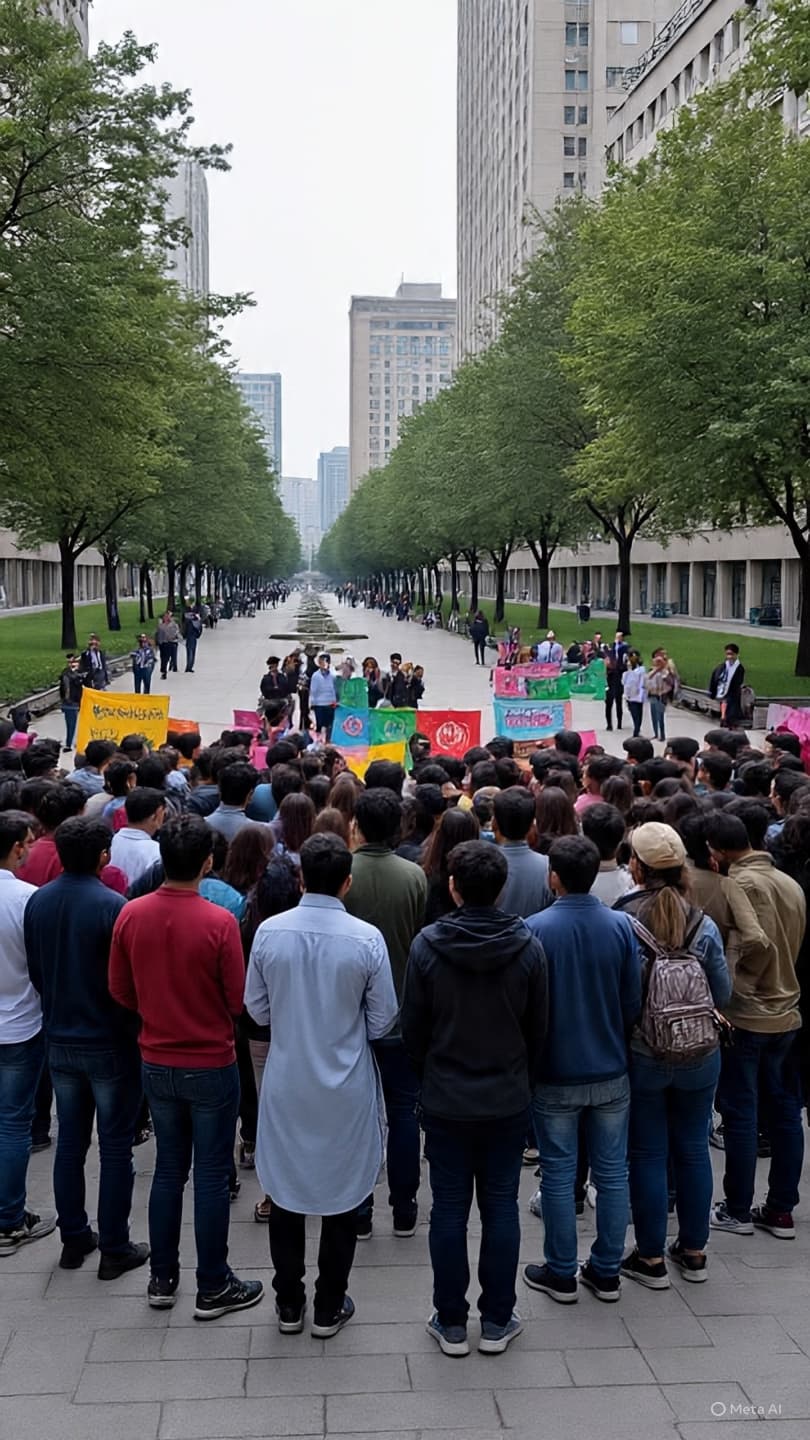
In recent days, university campuses across Iran have transformed into vibrant centers of dissent, as students engage in large-scale protests against the government. This wave of demonstrations is notable as it represents the first significant student activism since the violent crackdown that followed the nationwide unrest sparked by the death of Mahsa Amini in 2022. Reports indicate that students in Tehran and other major cities have gathered to express their frustrations over political restrictions, economic challenges, and the treatment of those detained during previous protests.
Eyewitness accounts and videos shared on social media depict students chanting slogans demanding greater freedoms, while security forces have been deployed to monitor the gatherings. The limited coverage by state media contrasts sharply with the visible enthusiasm of the protesters, suggesting a renewed spirit of activism on campuses that had been relatively quiet in recent months. The scale of participation remains difficult to verify independently, but the energy of the protests signals a significant shift in the political climate within these academic institutions.
The backdrop to these demonstrations is steeped in the memory of the harsh government response to earlier protests. Following Amini's death, the Iranian government faced widespread condemnation and backlash, leading to a crackdown that resulted in hundreds of deaths and thousands of arrests. This history looms large over the current protests, as students navigate the precarious balance between expressing their views and the risks associated with dissent in a repressive environment.
Historically, Iranian university students have played a crucial role in shaping political discourse, often acting as a barometer for broader societal sentiments. From advocating for reformist policies to protesting against economic injustices, student movements have frequently mirrored the tensions present in Iranian society. The recent protests indicate that these issues remain unresolved, and students are once again willing to raise their voices in pursuit of change.
Despite the growing unrest, government officials have not indicated any immediate policy changes in response to the protests. Authorities have reiterated the importance of maintaining stability and adhering to national laws, while some state-affiliated commentators have attempted to downplay the significance of the demonstrations. Families and faculty members are reportedly watching the situation closely, aware of the potential repercussions that could follow if the protests escalate.
The protests occur against a backdrop of ongoing economic difficulties, exacerbated by international sanctions, inflation, and currency devaluation. Diplomatic tensions with Western nations further complicate the situation, as debates over social freedoms and governance remain sensitive topics. In this context, student gatherings—though confined to university grounds—carry substantial symbolic weight, reflecting the aspirations and frustrations of a generation grappling with uncertainty about their future.
As reports of arrests surface, the situation remains fluid, with heightened security measures in place at various campuses. The future trajectory of these protests—whether they will expand into broader public demonstrations or remain localized within academic institutions—remains uncertain. For now, Iranian universities find themselves at a pivotal juncture, caught between the desire for stability and the enduring human need for expression. The choices made by both students and state officials in the coming days will be critical in shaping the narrative of dissent in Iran.
Published by Banx Network. This article is part of the Banx decentralized media programme, powered by the BXE token on the XRP Ledger.




